


Round ligament pain is a common type of lower abdominal or groin pain during pregnancy. It is thought to happen when the round ligaments that help support the uterus stretch or tighten as the uterus grows.
The pain is usually brief and may be triggered by sudden movements, such as standing up, coughing or turning in bed. It most often begins after the first trimester and does not usually harm the pregnant person or baby.
Treatment mainly involves changing activities, moving more slowly and using simple comfort measures. Medical assessment is important when the pain is severe, persistent or accompanied by symptoms such as bleeding, fever, contractions or urinary problems.
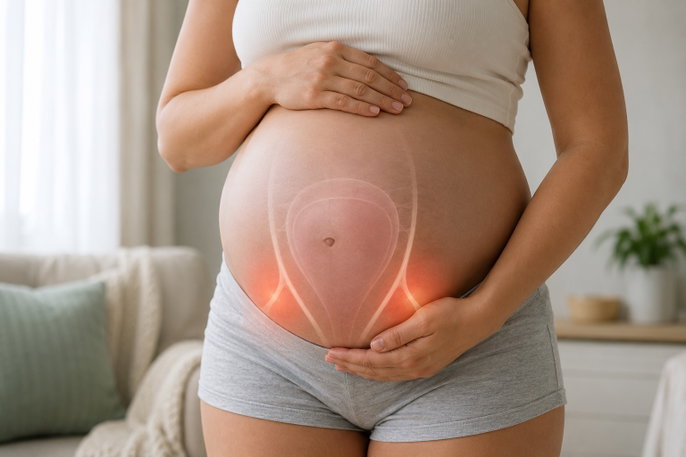
Where it is felt
Round ligament pain is usually felt in the lower abdomen, pelvis or groin. It may occur on one side or both sides, although it is often more noticeable on the right side.
The pain can start near the lower part of the abdomen and spread toward the groin or upper thigh. Some pregnant people describe it as a sharp, pulling or stabbing feeling that appears suddenly with movement.
It is commonly triggered by standing up quickly, rolling over in bed, coughing, sneezing, laughing or exercising. The discomfort usually lasts only a few seconds or minutes and improves with rest or a change in position.
Pain that is severe, constant or felt with bleeding, fever, contractions, vomiting or urinary symptoms may not be round ligament pain and should be assessed by a healthcare professional.
Common causes
Round ligament pain is mainly linked to the physical and hormonal changes that occur during pregnancy, such as:
1. Growth of the uterus
The round ligaments connect the uterus to tissues near the groin and help keep the uterus in position. As the uterus becomes larger and heavier, these ligaments are stretched.
A sudden movement may cause a ligament to tighten or go into a brief spasm. This can produce a sharp pain in the lower abdomen or groin.
2. Pregnancy hormones
Hormonal changes make ligaments and other supporting tissues more flexible during pregnancy. This flexibility helps the body adjust to the growing uterus and prepare for childbirth.
However, looser supporting tissues may be more sensitive to stretching and rapid movements. This may contribute to pain in the abdomen, pelvis and groin.
3. Abdominal wall nerve irritation
Some researchers have questioned whether every case called round ligament pain is actually caused by the ligament. In some pregnant people, the pain may come from irritation or trapping of small nerves in the abdominal wall.
This type of nerve pain can feel sharp, burning or very sensitive in a specific area. More research is needed to determine how often abdominal wall nerve irritation explains pain that is labeled as round ligament pain.
4. Round ligament varicosities
Round ligament varicosities are enlarged veins that develop along the round ligament, usually during pregnancy. They are uncommon but may cause groin pain, swelling or a lump.
These veins can resemble an inguinal hernia. Doppler ultrasound is usually used to examine blood flow and distinguish enlarged veins from a hernia or another mass.
How to treat ligament pain
Round ligament pain can be treated with:
1. Activity changes
Movements that bring on the pain can be limited until symptoms improve. Standing up slowly, turning gradually and avoiding sudden twisting may reduce rapid stretching of the supporting tissues.
Physical activity does not always need to stop completely. Gentle movement can usually continue when it does not worsen the pain and no pregnancy-related activity restrictions have been given.
2, Rest and positioning
Resting on the side with support from pillows may reduce pressure on the abdomen and pelvis. Bending the hips slightly before coughing, sneezing or laughing may also help prevent a sudden pull on the painful area.
A pregnancy support belt may provide additional support for the abdomen. It should fit comfortably and should not cause pressure, numbness or increased pain.
3. Heat
A warm compress or warm bath may help relax tense muscles and reduce discomfort. Heat should be gentle rather than very hot.
Heating products should not be placed directly against the skin for long periods. Activities that can raise the body’s core temperature too much should be avoided during pregnancy.
4. Stretching and physiotherapy
Gentle stretches, pelvic movements and posture exercises may help reduce strain around the abdomen, pelvis and lower back. A physiotherapist with experience in pregnancy can recommend exercises based on the location and triggers of the pain.
Exercises should be stopped if they cause increasing pain, dizziness, bleeding, contractions or other concerning symptoms.
5. Medication
Pain medication may occasionally be considered when movement changes and comfort measures are not enough. Acetaminophen is commonly used during pregnancy, but medication should be taken only according to guidance from a doctor or another qualified healthcare professional.
Anti-inflammatory medicines and other pain relievers may not be appropriate during some stages of pregnancy. Medication should not be started without checking whether it is safe for the individual pregnancy.
6. Treatment of round ligament varicosities
Round ligament varicosities are usually treated conservatively when ultrasound confirms the diagnosis and there are no complications. Observation and symptom control are often sufficient because the enlarged veins commonly shrink after delivery.
Surgery is generally avoided unless the diagnosis is uncertain or a complication is suspected. Correct ultrasound diagnosis can help prevent an unnecessary operation for a condition mistaken for an inguinal hernia.
When to seek medical care
Medical assessment is recommended when pain is severe, persistent, getting worse or different from previous episodes. Urgent care may be needed when abdominal or groin pain occurs with:
-
Vaginal bleeding
-
Fluid leaking from the vagina
-
Regular contractions
-
Fever or chills
-
Nausea or vomiting that does not improve
-
Pain or burning during urination
-
Blood in the urine
-
Dizziness, weakness or fainting
-
A painful or growing lump in the groin
-
Difficulty walking
-
Reduced fetal movement later in pregnancy
These symptoms may be related to conditions other than round ligament pain, such as a urinary infection, inguinal hernia, appendicitis, ovarian torsion, ectopic pregnancy or preterm labor.