


- The respiratory system supports breathing, speech, smell, air filtration, and the body’s acid-base balance.
- Gas exchange occurs in the alveoli, where oxygen enters the bloodstream and carbon dioxide is removed.
- Common respiratory conditions include the flu, asthma, bronchitis, pneumonia, and tuberculosis.
The respiratory system includes the nasal cavities, trachea, bronchi, and lungs. These structures work together to move air in and out of the lungs, making breathing, speech, and the sense of smell possible.
The main purpose of breathing is to deliver oxygen to every cell in the body. It also removes carbon dioxide, a waste product produced when cells use oxygen.
Breathing occurs in two phases: inhalation and exhalation. Although this process happens continuously and involuntarily, many organs and muscles work together to make it possible.
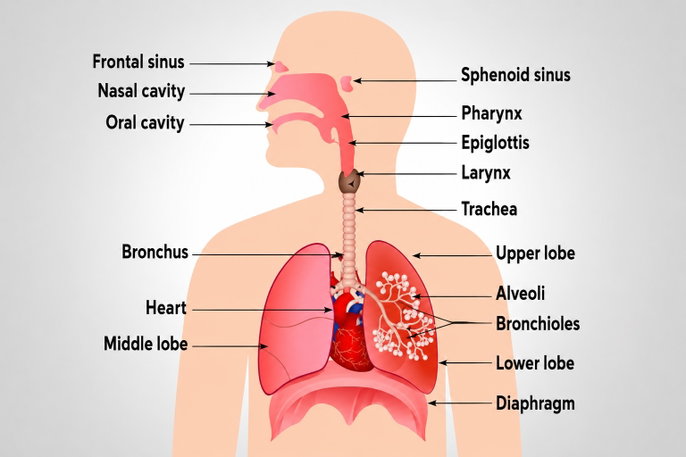
Respiratory system organs
The main organs and structures that make up the respiratory system are:
1. Nasal cavities
The upper respiratory tract begins in the nose. The nasal cavities extend from the nostrils to the pharynx and are the main entryway for air into the body.
The nasal cavities contain sebaceous glands and hair follicles that help prevent harmful particles, including viruses, bacteria, and other foreign substances, from entering the respiratory tract.
When microorganisms are detected in the nasal cavities, the body’s defense system is activated.
2. Paranasal sinuses
The paranasal sinuses are air-filled spaces around the nose. They warm and humidify inhaled air, reduce the weight of the skull and facial bones, absorb impact, and enhance voice resonance.
The mucous membrane and respiratory epithelium found in the nasal cavity and paranasal sinuses also trap dust, bacteria, and other particles that may be harmful to the body.
3. Pharynx
After passing through the nose and paranasal sinuses, inhaled air travels through the posterior nasal openings and enters the pharynx.
The pharynx is a funnel-shaped muscular tube divided into three sections:
-
Nasopharynx: This is the upper part of the pharynx and is used only for the passage of air. During swallowing, the nasopharynx closes to prevent food from entering the nasal cavity.
-
Oropharynx: This section is located behind the mouth and serves as a passageway for both air entering from the nasopharynx and food entering through the mouth.
-
Laryngopharynx or hypopharynx: This is the lowest part of the pharynx and is the point where the respiratory and digestive systems separate.
At the front, the laryngopharynx continues into the larynx. At the back, it continues into the esophagus as part of the digestive system.
4. Larynx
The larynx is a hollow structure located in front of the esophagus. Its main function is to direct air to the lower structures of the respiratory system.
The larynx also contains and protects the vocal cords, which are essential for producing sound and speech.
During swallowing, the epiglottis closes the entrance to the larynx. This prevents food and liquids from entering the lower respiratory tract.
5. Trachea
The trachea is the first part of the lower respiratory tract. It carries air from the upper airways toward the lungs.
The trachea is located in the mediastinum and divides into the right and left main bronchi, with one bronchus entering each lung.
6. Bronchi and bronchioles
After passing through the trachea, air enters the bronchi. These two branching structures resemble an upside-down tree, which is why they are collectively called the bronchial tree.
The bronchi divide into smaller airways called bronchioles. These airways allow air to move into and out of the lungs.
The bronchioles are lined with tiny hair-like structures called cilia and produce mucus. Together, the cilia and mucus help remove microorganisms and particles that enter with inhaled air.
7. Lungs
The lungs are two organs located in the chest cavity. They are divided into lobes, with three lobes in the right lung and two in the smaller left lung.
The lungs contain pulmonary alveoli and expand and contract as air enters and leaves the body during breathing.
8. Alveoli
The alveoli are the final structures of the respiratory system. They are closely connected to blood vessels and allow oxygen to pass into the bloodstream, where it can be transported to cells throughout the body.
This process is called gas exchange. In addition to transferring oxygen into the blood, the alveoli remove carbon dioxide from it.
Oxygen-rich blood travels away from the lungs through the arteries, while blood containing more carbon dioxide returns through the veins. Carbon dioxide is then eliminated from the body during exhalation.
The respiratory muscles, including the intercostal muscles, and the diaphragm also help produce the movements needed for breathing.
Respiratory system function
The main functions of the respiratory system are:
These respiratory system functions are essential for maintaining homeostasis and supporting the body’s overall health.
According to the Centers for Disease Control and Prevention (CDC), these natural defense mechanisms help remove germs and irritants from the respiratory tract and reduce the spread of infection.
How breathing works
Breathing begins automatically at birth and does not need to be learned. It is controlled primarily by the autonomic nervous system.
During inhalation, air enters through the nostrils and passes through the nasal cavities, pharynx, larynx, and trachea before reaching the lungs. It then travels through the bronchi and bronchioles until it reaches the alveoli, where oxygen diffuses into the bloodstream.
Inhalation and exhalation
Breathing can be divided into two main stages:
-
Inhalation: The respiratory muscles between the ribs contract, and the diaphragm moves downward. This increases the amount of space in the chest, allowing the lungs to fill with air and lowering the pressure inside the chest.
-
Exhalation: The respiratory muscles and diaphragm relax, and the diaphragm moves upward. The volume of the chest cavity decreases, pressure inside the chest rises, and air is pushed out of the lungs.
Shortness of breath can occur when a problem in the respiratory system prevents air from moving in or out properly. This makes gas exchange less effective and may cause carbon dioxide levels in the blood to rise while oxygen levels fall.
Carbon dioxide is a waste product created when the body uses food for energy. The lungs remove it from the body during exhalation.
Common respiratory diseases
Common respiratory conditions include:
1. Flu or common cold
The flu and the common cold occur when viruses enter the respiratory system.
With a cold, the virus mainly affects the nasal passages and may spread to the pharynx, causing nasal congestion and discomfort.
With the flu, the infection can also affect the lower respiratory tract. Flu symptoms may include fever, cough, and increased mucus production.
Also recommended: Cold vs. Flu: How to Tell the Difference (Symptom Chart & Timeline) tuasaude.com/en/cold-vs-flu2. Sinusitis
Sinusitis is caused by inflammation of the lining of the paranasal sinuses. This inflammation can lead to fluid buildup, causing headache, a runny nose, and a feeling of pressure or heaviness in the face, especially around the forehead and cheeks.
3. Asthma
Asthma causes episodes in which the bronchi or bronchioles become narrow and may produce additional mucus.
This makes it harder for air to move through the airways and may cause a high-pitched wheezing sound during breathing.
4. Bronchitis
Bronchitis causes inflammation and narrowing of the bronchi and bronchioles.
This inflammation leads to increased mucus production. The mucus may be coughed up as phlegm or swallowed after it reaches the pharynx and then passes into the stomach.
5. Allergies
An allergy occurs when the immune system overreacts to substances in the air that it identifies as harmful. Symptoms may appear when a person is exposed to dust, fragrances, pollen, or other triggers.
Respiratory allergies can contribute to allergic rhinitis, allergic sinusitis, or an allergy-related cough.
6. Pneumonia
Pneumonia is usually caused by bacteria or viruses that infect the lungs. It can also develop when food, liquids, vomit, or other foreign material is inhaled into the lungs, a condition known as aspiration pneumonia.
According to the CDC, influenza can cause pneumonia, lead to a secondary bacterial infection, and worsen chronic medical conditions.
A common cold is much less likely to cause pneumonia, although some viruses that cause cold-like symptoms can occasionally infect the lungs.
7. Tuberculosis
Tuberculosis develops when the bacteria that cause the disease enter the lungs through the respiratory tract. Symptoms may include fever, a persistent cough with mucus, and, in some cases, blood in the sputum.
Tuberculosis is contagious and spreads through the air when a person with active pulmonary tuberculosis releases infectious particles.
Tuberculosis treatment is essential because the bacteria can enter the bloodstream and spread to other parts of the body, causing tuberculosis outside the lungs.
Also recommended: Phlegm Color: What It Means & Common Causes tuasaude.com/en/what-your-phlegm-color-meansWhen to see a doctor
See a healthcare provider if you develop fever, wheezing, a persistent cough with mucus, difficulty breathing, or blood in the sputum.
Seek emergency medical care for severe difficulty breathing, chest pain, or coughing up large amounts of blood.
Which doctor treats respiratory diseases?
A primary care physician can evaluate most cold, flu, and mild respiratory symptoms.
An ear, nose, and throat specialist may be recommended when symptoms mainly affect the nose, sinuses, throat, or ears.
A pulmonologist may be recommended for chronic or more complex lung conditions, such as difficult-to-control asthma or chronic bronchitis.