


- Red under eyes with swelling, warmth, and tenderness may signal an infection like periorbital cellulitis and requires prompt medical evaluation.
- Seek medical attention if redness is accompanied by fever, worsening pain, or rapid spreading, as these may indicate a more serious underlying condition.
- Persistent or worsening red under eyes that do not improve with basic care may point to chronic skin disease and should be assessed by a healthcare professional.
Red under eyes is a common symptom that usually points to irritation or inflammation of the delicate skin around the eyes. It often appears as redness, dryness, or swelling in the lower eyelid area and can be linked to skin conditions or mild infections.
Red under eyes are most often caused by eczema-like conditions, allergic reactions, or irritation from everyday products. In some cases, infections or chronic skin diseases can also lead to persistent redness in this area.
Treatment depends on the cause and may include avoiding triggers, using gentle skincare, or taking medications to reduce inflammation or infection. Medical attention is recommended if symptoms worsen, spread, or are associated with pain, fever, or vision changes.
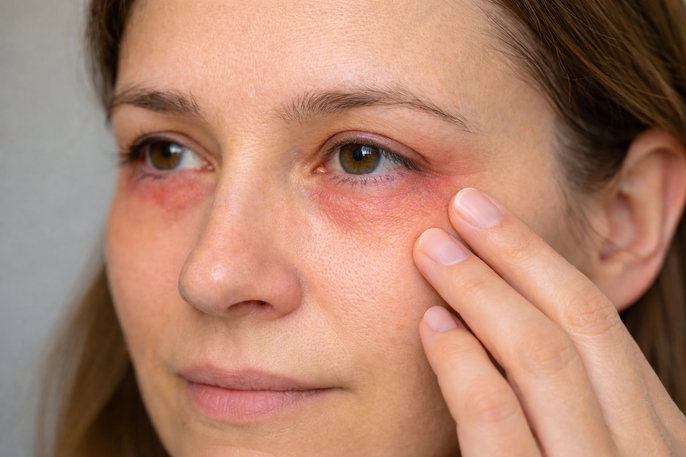
What causes red under eyes?
The main causes of red under eyes may include:
1. Periocular (eyelid) dermatitis
This condition is a type of eczema that affects the eyelids and nearby skin, often caused by allergies or irritation. It is one of the most common reasons for red under eyes. The skin in this area is very thin, which makes it more sensitive to triggers.
People with this condition often notice itching, burning, and dry or scaly skin around the eyes. Swelling is also common and may cause puffiness, especially in the morning.
In long-term cases, the skin may become thicker or darker due to repeated irritation and rubbing.
What to do: Treatment involves identifying and avoiding triggers like cosmetics or skincare products. Mild topical medications and moisturizers are often used to reduce inflammation and repair the skin. In persistent cases, medical guidance may be needed to adjust treatment safely for the eye area.
2. Allergic contact dermatitis
This occurs when the skin reacts to substances such as makeup, fragrances, or eye drops. It is a frequent cause of sudden red under eyes and can develop even after using a product for a long time. The reaction happens when the immune system responds to a specific substance.
The affected area usually becomes red and swollen, often with itching or discomfort. Some people may also notice small blisters, oozing, or crusting in more severe reactions. The rash is usually limited to the area that came into contact with the allergen.
What to do: Treatment focuses on avoiding the allergen and using anti-inflammatory creams when needed. Patch testing may help identify the exact trigger causing the reaction. Switching to gentle, fragrance-free products can also help prevent future episodes.
3. Irritant dermatitis
This type of dermatitis happens when the skin is damaged by harsh products or frequent rubbing. It can lead to red under eyes due to irritation of the delicate skin barrier. Unlike allergic reactions, it does not involve the immune system.
Burning and stinging sensations are common, along with dryness and flaking of the skin. The area may feel tight or sensitive, especially after washing the face or applying products. Symptoms often affect both eyes, particularly when caused by cleansers or environmental exposure.
What to do: Treatment includes stopping the use of irritating products and switching to gentle skincare. Moisturizers help restore the skin barrier and reduce discomfort. Short-term anti-inflammatory treatments may be used if symptoms are more intense.
4. Atopic dermatitis
Atopic dermatitis is a chronic form of eczema that can affect the eyelids and under-eye area. It often causes recurring red under eyes, especially in people with allergies, asthma, or sensitive skin. The condition tends to flare up and improve over time.
This condition typically causes dry, itchy patches that may become thickened with repeated scratching. The skin around the eyes may also appear darker due to inflammation and rubbing. Other areas of the body, such as the neck or arms, are often affected as well.
What to do: Treatment includes regular use of moisturizers to protect the skin barrier. Avoiding triggers like harsh products or allergens is also important. In more severe cases, doctors may recommend prescription creams or other treatments.
5. Periorificial dermatitis
This is a skin condition that causes small red bumps around the eyes and other facial areas. It can develop after using certain creams, especially corticosteroids or heavy moisturizers. The condition may also be linked to certain cosmetic or hygiene products.
It often presents as clusters of red bumps on irritated skin, sometimes with mild burning or sensitivity. The surrounding skin may look dry, rough, or slightly scaly. In some cases, similar changes may also appear around the mouth or nose.
What to do: Treatment usually involves stopping the triggering product, which may initially worsen symptoms before improvement. Topical or oral medications are often used to reduce inflammation. Recovery may take a few weeks, and patience is important during treatment.
6. Periorbital cellulitis
This is a bacterial infection of the skin around the eye and can cause significant red under eyes. It is more common in children but can occur at any age. The infection usually develops after minor injuries, insect bites, or nearby infections.
The area around the eye may become red, swollen, warm, and tender to the touch. Fever can occur, especially in younger individuals or more severe cases. Unlike more serious eye infections, vision and eye movement are usually not affected.
What to do: Treatment requires antibiotics, either oral or intravenous depending on severity. Close monitoring is important to ensure the infection does not spread. Medical evaluation should be done quickly to prevent complications.
7. Other skin conditions around the eyes
Some less common skin conditions can also lead to red under eyes. These include seborrheic dermatitis, rosacea, and psoriasis. Each condition has different underlying causes but can affect the same sensitive area.
These conditions may cause flaky patches, persistent redness, or inflamed areas around the eyes. The skin may appear oily, scaly, or thickened depending on the condition. Symptoms often appear alongside similar changes on the scalp, face, or other parts of the body.
What to do: Treatment depends on the specific condition and may include medicated creams or gentle cleansing routines. Avoiding known triggers can help reduce flare-ups. Some cases require long-term management with medical supervision.
