


A push pull legs routine is a resistance training plan that separates workouts by movement type: pushing, pulling and leg exercises. Push workouts train the chest, shoulders and triceps, pull workouts train the back, biceps and rear shoulders, and leg workouts train the quadriceps, hamstrings, glutes and calves.
This type of routine can be done at home or in the gym, using body weight, resistance bands, dumbbells, machines or barbells. Research on resistance training shows that home-based and gym-based exercise can both improve muscle strength and support muscle growth when the routine is done consistently and progressed over time.
A push pull legs routine is one way to organize weekly training, but it is not the only effective option. The total amount of training, good technique, recovery and training each major muscle group regularly are more important than the name of the workout split.
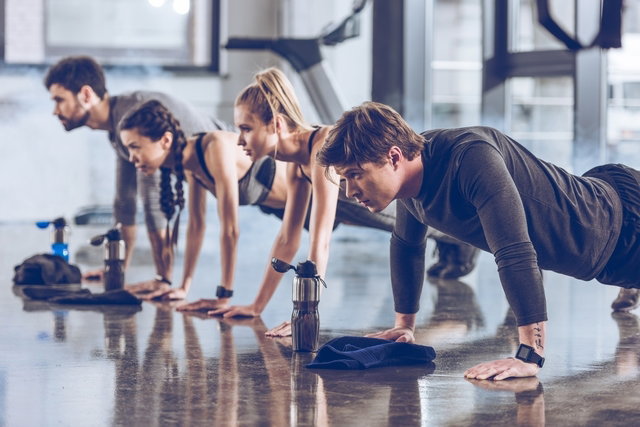
Push workout
A push workout includes exercises that involve pushing weight or body weight away from the body. These exercises mainly train the chest, shoulders and triceps.
1. Push-up
Push-ups mainly work the chest, shoulders and triceps. They also use the core to keep the body stable.
To do this exercise, start in a high plank with hands slightly wider than shoulder-width apart and the body in a straight line from head to heels. Bend the elbows and lower the chest toward the floor. Push through the hands to return to the starting position.
Do 2 to 4 sets of 8 to 15 reps, 1 to 2 times per week as part of a push workout. If needed, the exercise can be done with the knees on the floor or with the hands on a raised surface.
2. Barbell bench press
The bench press targets the chest, shoulders and triceps. It is a common push exercise because it trains several upper-body muscles at the same time.
To do this exercise, lie on a flat bench with feet on the floor and eyes under the bar. Hold the bar slightly wider than shoulder-width apart and lower it toward the mid-chest. Press the bar back up until the arms are almost straight.
Do 3 to 4 sets of 6 to 12 reps, 1 to 2 times per week on push day.
3. Machine chest press
The machine chest press works the chest, shoulders and triceps with more support than a free-weight press. This can help beginners learn the pushing movement.
To do this exercise, sit with the back against the pad and feet flat on the floor. Hold the handles at chest level and press them forward until the arms are almost straight. Slowly return the handles to the starting position.
Do 2 to 4 sets of 8 to 12 reps on push day.
4. Dumbbell or band shoulder press
The shoulder press helps grow the shoulders and triceps, especially the front and side parts of the shoulder.
To do this exercise, sit or stand with a dumbbell in each hand or a resistance band under the feet. Start with the hands at shoulder height and palms facing forward. Press the hands upward until the arms are almost straight, then lower them back to shoulder height with control.
Do 2 to 4 sets of 8 to 12 reps, 1 to 2 times per week on push day.
5. Cable triceps pressdown
Cable triceps pressdowns isolate the triceps and can help add extra work for the back of the upper arm after pressing exercises.
To do this exercise, stand facing a cable machine with a rope or straight bar attached at a high setting. Start with elbows close to the sides and forearms bent. Push the attachment down until the arms are straight, then return slowly to the starting position.
Do 2 to 4 sets of 10 to 15 reps on push day.
6. Chair triceps dip
Chair triceps dips target the triceps, the muscles at the back of the upper arm. They can also work the shoulders and chest.
To do this exercise, sit on the edge of a sturdy chair with hands beside the hips. Walk the feet forward and slide the hips off the chair. Bend the elbows to lower the body, then press through the hands to return to the starting position.
Do 2 to 3 sets of 8 to 12 reps on push day. The knees can stay bent to make the movement easier.
Pull workout
A pull workout includes exercises that involve pulling weight or resistance toward the body. These exercises mainly train the back, biceps and rear shoulders.
1. Lat pull-down
The lat pull-down works the lats, upper back and biceps. It is a useful pull exercise for building the muscles that help create a wider-looking back.
To do this exercise, sit at the machine with the thighs secured under the pad. Hold the bar wider than shoulder-width apart and start with arms overhead. Pull the bar down toward the upper chest, then slowly return it upward until the arms are extended.
Do 3 to 4 sets of 8 to 12 reps, 1 to 2 times per week on pull day.
2. Seated cable row
The seated cable row strengthens the middle back, lats, rear shoulders and biceps. It helps balance pushing exercises by training the muscles that pull the shoulders back.
To do this exercise, sit at the cable row machine with feet on the platform and knees slightly bent. Start with arms straight and back tall. Pull the handle toward the lower ribs, squeeze the shoulder blades together, then return to the starting position with control.
Do 3 to 4 sets of 8 to 12 reps on pull day.
3. Resistance band row
Resistance band rows work the back muscles, including the lats, rhomboids and middle back. They also train the biceps.
To do this exercise, sit on the floor with legs extended and loop a resistance band around the feet, or anchor the band safely in front of the body. Hold the band with both hands and start with arms straight. Pull the elbows back close to the body, squeeze the shoulder blades together, then return the arms forward with control.
Do 2 to 4 sets of 10 to 15 reps, 1 to 2 times per week on pull day.
4. Dumbbell biceps curl
Dumbbell biceps curls strengthen the biceps and can improve arm strength for pulling movements.
To do this exercise, stand tall with a dumbbell in each hand and arms by the sides. Bend the elbows to lift the dumbbells toward the shoulders without swinging the body. Lower the dumbbells back to the starting position.
Do 2 to 4 sets of 8 to 15 reps on pull day.
5. Dumbbell or backpack biceps curl
Biceps curls help strengthen and grow the front of the upper arms. They also support pulling exercises.
To do this exercise, stand tall while holding dumbbells, a resistance band or a loaded backpack. Start with arms by the sides and palms facing forward. Bend the elbows to lift the weight toward the shoulders, then lower it slowly to the starting position.
Do 2 to 4 sets of 8 to 15 reps on pull day.
Leg workout
A leg workout trains the main lower-body muscles, including the quadriceps, hamstrings, glutes and calves. Some leg exercises feel more like pushing movements, while others feel more like pulling movements, but they are usually grouped together in a push pull legs routine.
1. Bodyweight squat
Bodyweight squats train the quadriceps, glutes and hamstrings. They are a simple home exercise for building leg strength.
To do this exercise, stand with feet shoulder-width apart. Bend the knees and hips to lower the body as if sitting down, keeping the knees in line with the toes. Push through the feet to return to standing.
Do 3 to 4 sets of 10 to 20 reps, 1 to 2 times per week on leg day.
2. Barbell back squat
The back squat trains the quadriceps, glutes, hamstrings and core. It is a key leg exercise because it uses several large lower-body muscles at once.
To do this exercise, place the bar across the upper back and stand with feet about shoulder-width apart. Bend the knees and hips to lower the body while keeping the chest lifted and knees in line with the toes. Push through the feet to return to standing.
Do 3 to 4 sets of 6 to 12 reps, 1 to 2 times per week on leg day.
3. Leg press
The leg press works the quadriceps, glutes and hamstrings with support from the machine. It can be useful for adding leg volume without needing as much balance as a squat.
To do this exercise, sit on the machine with the back against the pad and feet on the platform. Bend the knees to lower the platform toward the body, keeping the feet flat. Push the platform away until the legs are almost straight, then repeat.
Do 3 to 4 sets of 8 to 12 reps on leg day.
4. Reverse lunge
Reverse lunges work the quadriceps, glutes and hamstrings. They also help train balance and single-leg strength.
To do this exercise, stand tall with feet hip-width apart. Step one foot backward and bend both knees until the back knee moves toward the floor. Push through the front foot to return to the starting position, then repeat on the other side.
Do 2 to 4 sets of 8 to 12 reps per leg on leg day.
5. Romanian deadlift
The Romanian deadlift targets the hamstrings, glutes and lower back muscles. It helps train the back of the legs and hips.
To do this exercise, stand with feet hip-width apart and hold a barbell or dumbbells in front of the thighs. Keep the back straight and push the hips backward while lowering the weight along the legs. Stop when a stretch is felt in the hamstrings, then squeeze the glutes to return to standing.
Do 2 to 4 sets of 8 to 12 reps on leg day.
6. Glute bridge
Glute bridges mainly work the glutes and hamstrings. They are useful for training the back of the hips at home.
To do this exercise, lie on the back with knees bent and feet flat on the floor. Press through the heels and lift the hips until the body forms a straight line from shoulders to knees. Lower the hips back to the floor with control.
Do 2 to 4 sets of 10 to 15 reps on leg day.
7. Standing calf raise
Standing calf raises work the calf muscles, especially the gastrocnemius. They help complete the leg portion of the routine.
To do this exercise, stand with the balls of the feet on a step or calf raise machine and the heels slightly lowered. Push through the balls of the feet to lift the heels as high as possible. Lower the heels back down with control.
Do 2 to 4 sets of 10 to 20 reps on leg day.
Free workout plans
A sample push pull legs routine can be done 3 days per week or 6 days per week, depending on fitness level, recovery and schedule. Beginners may start with 3 days per week, while more experienced people may repeat the cycle twice weekly if recovery is good.
1. Home 3-day plan
This plan uses bodyweight, bands or dumbbells and can be done on nonconsecutive days.
2. Gym 3-day plan
This plan uses machines and free weights and can be done with at least 1 rest day between sessions.
3. Optional 6-day plan
A 6-day plan repeats the push, pull and legs sequence twice in the same week. This can train each major muscle group about twice weekly, which may support muscle growth when total weekly training volume and recovery are well managed.
Rest days can be added sooner if soreness, fatigue or poor form occurs