


- Purple nail beds that appear suddenly, especially with pain or discoloration in only one toe or finger, may signal a circulation problem such as a blocked blood vessel and should be medically evaluated.
- Episodes of purple nail beds accompanied by numbness, tingling, or significant color changes in the fingers or toes may indicate a vascular condition like Raynaud phenomenon.
- Persistent purple nail beds with swelling, burning pain, or skin changes such as blisters or ulcers may suggest an underlying vascular or inflammatory disorder that requires medical assessment.
Purple nail beds are a change in nail color that usually occurs when blood flow or oxygen levels in the small vessels of the fingers or toes are affected. This discoloration may appear suddenly or develop gradually, depending on the underlying cause.
In many cases, purple nail beds are linked to temporary blood vessel spasms or circulation changes in the extremities. Certain vascular conditions can lead to a bluish or purple color in the nails along with other symptoms affecting the hands, feet, or toes.
Treatment for purple nail beds depends on the condition causing the symptom. Some causes are benign and improve with lifestyle measures, while others require medical evaluation to identify circulation problems or vascular disease.
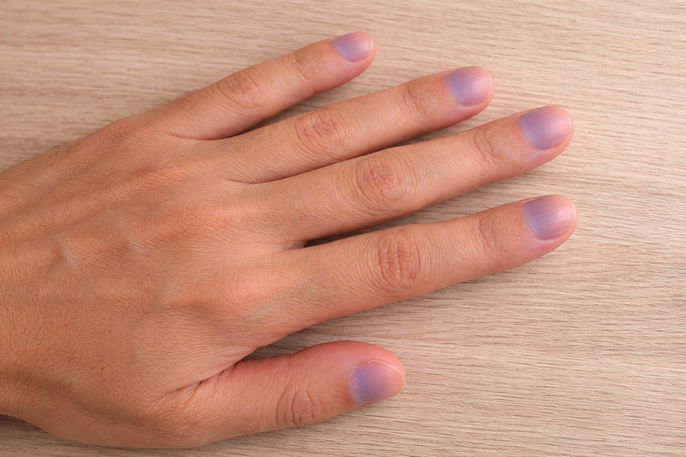
What causes purple nail beds?
The main causes of purple nail beds ainclude:
1. Primary acrocyanosis
Primary acrocyanosis is a benign vascular disorder that causes persistent bluish or purple discoloration of the nail beds and extremities. It occurs due to spasms in small blood vessels that reduce blood flow to the skin.
People with this condition may also experience cold hands or feet, mild swelling, and excessive sweating in the affected areas. The discoloration is usually symmetrical and painless, and pulses in the fingers or toes remain normal.
How to treat: Treatment usually focuses on avoiding cold exposure and protecting the hands and feet from temperature changes. In cases where symptoms are bothersome, doctors may prescribe vasodilator medications such as calcium channel blockers to improve blood flow.
2. Blue toe syndrome
Blue toe syndrome is a condition in which small blood vessels in the toes become blocked, often due to microemboli or vascular obstruction. This blockage can cause sudden purple or blue discoloration of the nail beds and surrounding skin.
Additional symptoms may include toe pain, small skin spots called petechiae, and discoloration affecting one or more toes. Blood flow in larger arteries is usually preserved, which means pulses in the foot may still be present.
How to treat: Treatment focuses on identifying and managing the underlying cause of the vascular blockage. Depending on the cause, doctors may prescribe anticoagulants, cholesterol-lowering medications, or other treatments to prevent further emboli.
3. Raynaud phenomenon
Raynaud phenomenon is a vascular disorder that causes episodes of reduced blood flow to the fingers or toes. During an attack, the digits typically change color in stages, becoming pale, then purple or blue, and later red when blood flow returns.
Along with purple nail beds during the cyanotic phase, symptoms can include numbness, tingling, and pain in the fingers or toes. Attacks are commonly triggered by cold exposure or emotional stress.
How to treat: Management often includes protecting the extremities from cold and avoiding triggers that provoke attacks. In more persistent cases, medications that relax blood vessels, such as nifedipine, may be prescribed to improve circulation.
4. Chilblains (perniosis)
Chilblains, also known as perniosis, are inflammatory skin lesions that develop after exposure to cold and damp environments. They appear as red or purple areas on the fingers, toes, ears, or nose and can occasionally affect areas near the nails.
Symptoms may include swelling, itching, burning, or pain in the affected areas. In more severe cases, lesions may develop blisters, erosions, or ulcers, especially if cold exposure continues.
How to treat: Treatment usually focuses on avoiding cold and damp conditions and keeping the extremities warm. Topical corticosteroids may be used to reduce inflammation, while medications such as nifedipine or pentoxifylline may be prescribed in moderate or persistent cases.
5. Erythromelalgia
Erythromelalgia is a rare vascular and nerve-related condition that affects the hands or feet. Although it is mainly associated with redness and warmth in the extremities, episodes can sometimes cause color changes that include purplish discoloration around the digits.
This condition typically causes burning pain, tingling, and increased skin temperature in the affected areas. Symptoms often worsen with heat, exercise, or prolonged standing and improve with cooling measures.
How to treat: Management focuses on avoiding triggers such as heat and tight footwear while using careful cooling strategies to relieve symptoms. In some cases, medications such as aspirin, pain-modulating drugs, or other targeted therapies may be prescribed depending on the underlying cause.
Other considerations
Purple nail beds can sometimes be temporary and may occur when the body is exposed to cold temperatures. When circulation returns to normal, the nail color often improves.
However, persistent discoloration or symptoms such as pain, numbness, or sudden color changes in the fingers or toes may indicate a vascular condition that requires medical evaluation. A healthcare professional may assess circulation, review symptoms, and order tests to identify the cause and guide treatment.