


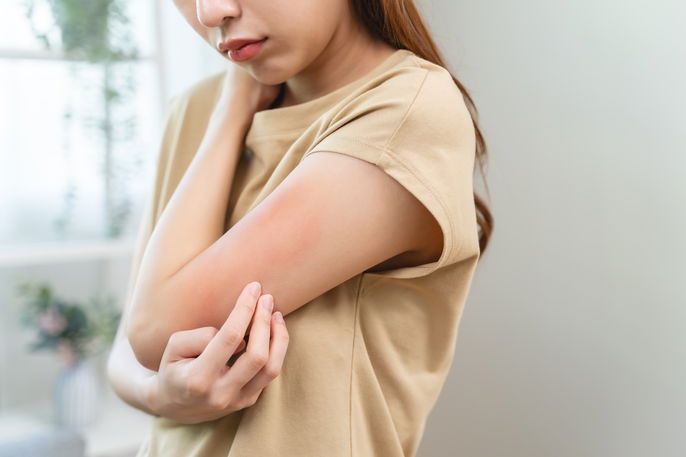
Pruritis, or itching, is an uncomfortable skin sensation that can occur anywhere on the body. It may be caused by dry skin, stress, anxiety, allergies, atopic dermatitis, scabies, or pregnancy, among other factors.
In addition to itching, which can range from mild to intense, pruritis may also lead to other symptoms such as dry or cracked skin, burning sensations, redness, or small pimple-like bumps on the skin.
It is important to consult a dermatologist, especially if the itching is severe, persistent, or accompanied by other symptoms, so the cause can be identified and the most appropriate treatment recommended.
Common causes
The main causes of pruritis include:
1. Dry skin
Dry skin can cause itching and other symptoms such as flaking and thickening of the skin.
Dryness can occur due to hot showers, sun exposure, dry or cold weather, warm environments, or contact with irritating products. It is also more common in older adults due to the natural aging process, which decreases the skin’s oil production.
What to do: drink plenty of fluids, apply moisturizer regularly, avoid very hot showers, and minimize contact with harsh cleaning products. It’s also important to protect exposed areas such as the hands and face from intense sunlight or cold weather.
2. Stress and anxiety
Pruritis can also be triggered by stress and anxiety, especially in people with skin conditions such as atopic dermatitis, acne, lichen planus, or chronic kidney disease.
What to do: if you have a condition that affects the skin, adopting stress-reducing habits such as regular exercise and adequate rest can help relieve itching. If anxiety becomes frequent or interferes with daily activities, a psychiatrist may recommend talk therapy or medications to help manage the symptoms.
Also recommended: Stress vs. Anxiety: Key Differences & How to Relieve Symptoms tuasaude.com/en/stress-vs-anxiety3. Allergy
Allergic reactions occur when the immune system overreacts, which can cause itching, redness, sneezing, or coughing depending on the type and location of the allergy.
Allergies can be triggered by animal dander, detergents, cosmetics, insect bites, sweat, dust, mites, specific foods, or certain medications.
What to do: see an allergist or primary care provider for evaluation. Treatment may include antihistamines or corticosteroids. It’s also important to avoid exposure to the trigger, such as dust, mold, animal fur, or a specific food, to prevent the allergy from returning.
4. Atopic dermatitis
Atopic dermatitis can cause pruritis, dryness, flaking, redness, sores, and changes in skin color, which may appear lighter or darker on affected areas.
This condition tends to worsen when the skin is exposed to irritating products such as detergents and cosmetics.
What to do: consult a dermatologist, who may recommend moisturizers and topical creams containing corticosteroids or immunosuppressants, along with general skin care measures.
5. Scabies
Scabies is caused by the mite Sarcoptes scabiei, which burrows into the skin and causes intense itching that gets worse at night.
Other symptoms include small red bumps, especially between the fingers, on the buttocks, armpits, around the nipples in women, and on the penis or scrotum in men.
What to do: treatment is prescribed by a dermatologist and depends on the severity of the infestation. Common medications include ivermectin or permethrin cream.
6. Hemorrhoids
Hemorrhoids can cause anal itching, which is often accompanied by other symptoms such as rectal bleeding, burning, and local discomfort.
External hemorrhoids may also cause mild swelling in the area.
What to do: a proctologist may recommend creams containing hydrocortisone or lidocaine to relieve anal pruritis and discomfort.
7. Genital yeast infection
Genital yeast infections can cause itching accompanied by burning, redness, and, in women, a thick white vaginal discharge.
What to do: consult a primary care provider, gynecologist, or urologist. Treatment generally involves antifungal creams or oral medications such as fluconazole or clotrimazole. See yeast infection creams.
8. Pregnancy
During pregnancy, hormonal changes can affect the skin and lead to pruritis.
In some cases, itching during pregnancy may indicate a skin condition such as atopic eruption of pregnancy or pemphigoid gestationis, often accompanied by dryness, redness, or blisters.
What to do: moisturizing creams can help relieve itching during pregnancy. However, if other symptoms occur, it’s important to see an obstetrician, who may prescribe corticosteroid creams or antihistamines.
If itching is intense or mainly affects the palms of the hands and soles of the feet, it may be a sign of intrahepatic cholestasis of pregnancy (ICP), a liver condition that requires medical evaluation.
9. Fungal skin infection
A fungal skin infection can occur anywhere on the body, causing itching, scaling, or white patches on the skin. Fungal infections in the nails can cause yellowing or whitening, and athlete’s foot can lead to cracks between the toes.
What to do: see a dermatologist to confirm the type of fungal infection. Treatment is usually done with antifungal creams or oral medications.
10. Hives (urticaria)
Hives are a type of skin allergy that cause intense itching, redness, flaking, and sometimes burning or stinging sensations.
This condition can be triggered by insect bites, medications, foods, fabrics, pollen, latex, sweat, or extreme temperatures.
What to do: treatment depends on the cause and may include antihistamines, immunosuppressants, or biologic therapy. It’s also important to avoid the substance that triggered the reaction, and allergy testing may be recommended to identify specific triggers.
11. Heat rash
Heat rash develops when sweat ducts become blocked due to excessive heat or sweating, causing itching and a burning sensation.
It often appears as small red bumps on the face, neck, back, chest, and thighs.
What to do: there is no specific treatment, but a dermatologist or pediatrician may recommend taking cool baths and using fragrance-free, dye-free soaps to soothe the skin.
12. Jaundice
Jaundice occurs when bilirubin builds up in the bloodstream and deposits in the skin, causing widespread pruritis.
Other symptoms include yellowing of the skin and eyes, dark urine, pale stools, and fatigue.
What to do: treatment depends on the underlying cause, such as hepatitis, cirrhosis, bile duct inflammation, liver or pancreatic tumors, or hemolytic anemia, and should be managed by a hepatologist, gastroenterologist, or hematologist. To relieve itching, warm baths and antihistamines may be recommended.
13. Chronic kidney disease
Chronic kidney disease can cause uremic pruritis, which happens when the kidneys can’t filter toxins properly, leading to a buildup that triggers itching.
What to do: treatment is managed by a nephrologist and may involve dialysis to remove toxins, along with antihistamines to relieve the itching.
14. COVID-19
Some people with COVID-19 may experience pruritis along with skin changes such as red patches or peeling. Other symptoms may include fever, cough, and a runny nose.
Also recommended: 9 COVID-19 Symptoms (with Online Symptom Checker & By Variant) tuasaude.com/en/covid-symptomsWhat to do: if COVID-19 is suspected, consult a healthcare provider. Treatment may include fever reducers, pain relievers, or antiviral medications, along with isolation to prevent spreading the infection. Severe cases with shortness of breath, chest pain, or drowsiness may require hospital care.