


Prune belly syndrome is a rare and serious condition that a baby is born with. It causes partial or complete absence of the abdominal wall muscles, urinary tract malformations, and undescended testicles in males.
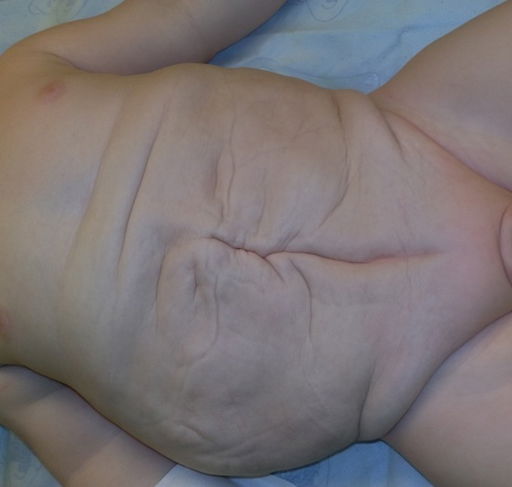
This syndrome can cause the skin on the abdomen to look wrinkled, similar to a prune. In some cases, the intestines may be visible through the thin abdominal skin.
Prune belly syndrome can be treated with surgery. However, it should be diagnosed as early as possible so the child can grow and develop as healthily as possible.
Common symptoms
The main symptoms of prune belly syndrome are:
-
Wrinkled skin in the abdominal area, similar to a prune
-
Thin abdominal skin, which may make the intestines visible
-
Urine leaking through the umbilical scar
-
Undescended testicles in males
-
Recurrent urinary tract infections and urinary tract problems
-
Breathing problems
-
Delayed motor development, such as delayed walking
Depending on symptom severity, some babies with prune belly syndrome may have a high risk of death before birth or within the first few weeks of life.
For this reason, early diagnosis is very important so that treatment and surgical planning can begin as soon as possible.
Confirming a diagnosis
The diagnosis of prune belly syndrome can be made by an obstetrician during pregnancy through a second-trimester anatomy scan.
A classic sign of this condition is an unusually large and swollen abdomen in the baby.
After birth, the diagnosis is confirmed by a neonatologist or pediatrician through a physical exam of the newborn, as well as an abdominal ultrasound and, in some cases, additional imaging such as X-ray or MRI.
In addition, the doctor may order a voiding cystourethrogram to evaluate the urethra and bladder while the baby urinates.
Possible causes
The exact cause of prune belly syndrome is not fully known, but it may be related to problems with urinary tract or abdominal muscle development before birth. In some cases, genetic factors may also play a role.
Treatment options
Treatment for prune belly syndrome is usually managed by a multidisciplinary team, including pediatric urologists and surgeons. Surgery may be performed to reconstruct the abdominal wall and urinary tract, improving muscle support, protecting internal organs, and supporting breathing function.
To help prevent urinary tract infections and protect kidney function, the doctor may perform a vesicostomy. This procedure involves creating an opening in the bladder so urine can drain through the abdomen.
Physical therapy is also part of treatment for prune belly syndrome. It helps strengthen muscles, improve breathing capacity, and support motor development.
