


- The prostate produces fluid that helps nourish and protect sperm and is located below the bladder around the urethra.
- Common prostate conditions include enlarged prostate, prostatitis, and prostate cancer, especially as men get older.
- Persistent urinary symptoms should be evaluated, and PSA testing, a digital rectal exam, urine tests, or biopsy may be recommended.
Prostate gland function includes producing fluid that helps nourish and protect sperm. The prostate is a gland in the male reproductive system located below the bladder and around the urethra, and it is about the size of a walnut.
The prostate begins to develop during adolescence under the influence of testosterone. In adulthood, it typically measures about 3 to 4 cm across the base, 4 to 6 cm from top to bottom, and 2 to 3 cm from front to back.
Several conditions can affect the prostate at different stages of life, although they become more common after age 50. The most common include prostatitis, benign prostatic hyperplasia, and prostate cancer, which may require medical evaluation depending on symptoms, age, and individual risk factors.
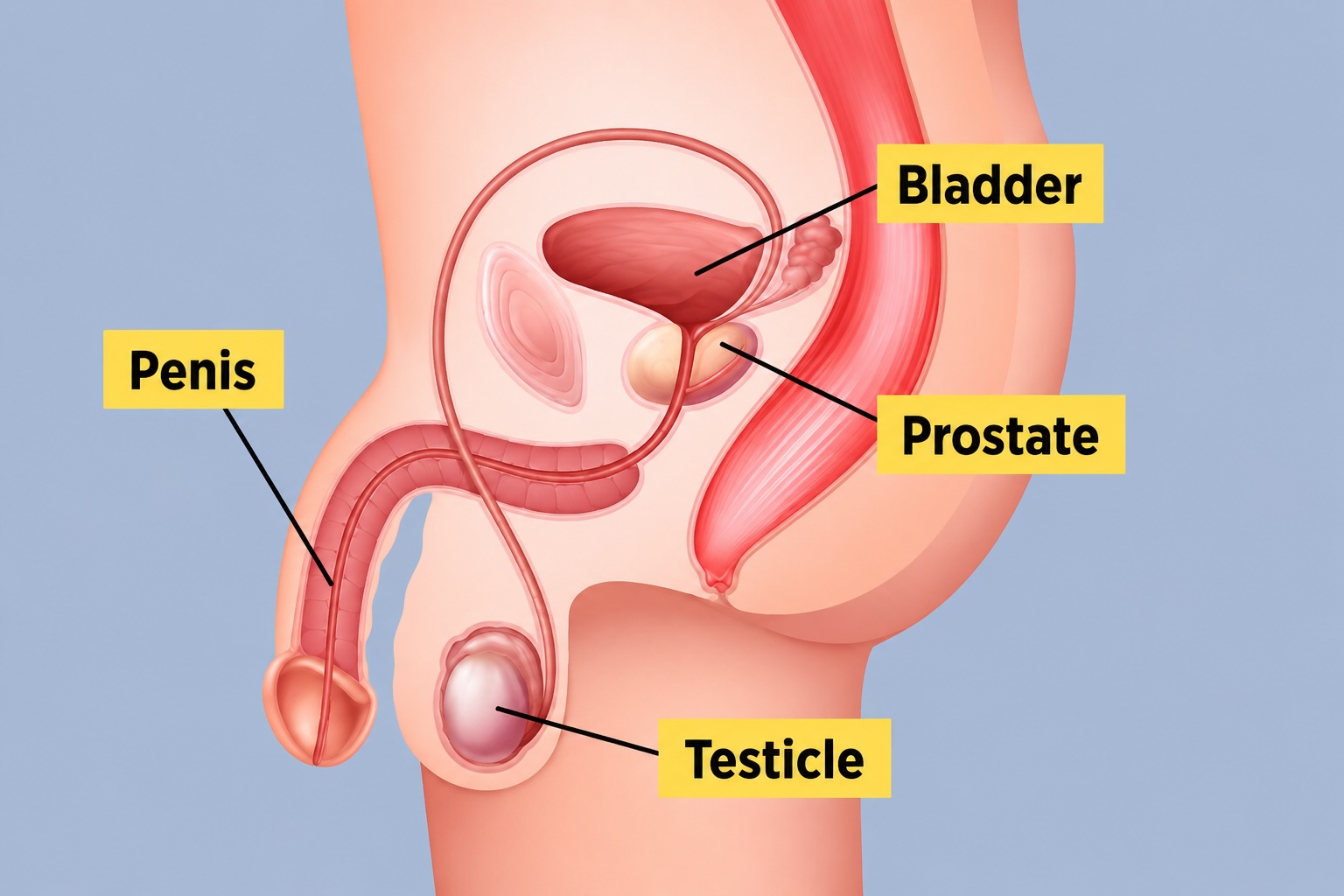
Where is the prostate located?
The prostate is located below the bladder and surrounds part of the urethra. It is also positioned in front of the rectum, which allows a healthcare provider to feel the prostate during a digital rectal exam.
What does the prostate do?
The prostate produces part of the fluid that makes up semen, helping to nourish and protect sperm.
Common prostate conditions
The main conditions that affect the prostate are prostate cancer, benign prostatic hyperplasia (enlarged prostate), and prostatitis. Depending on the condition, contributing factors may include genetics, hormonal changes, or infections.
1. Prostate cancer
Prostate cancer is more common in men over age 50, although it can also occur at a younger age. The risk may be higher in people with a family history of prostate cancer.
Treatment for prostate cancer may include surgery to remove the prostate. Other options may include radiation therapy or hormone therapy, which may be used instead of surgery in some cases or after surgery to help control the cancer and reduce the risk of progression.
Read more about prostate cancer symptoms and when to see a doctor.
2. Benign prostatic hyperplasia
Benign prostatic hyperplasia, also known as BPH or an enlarged prostate, is a noncancerous increase in prostate size. It is a common prostate change because the gland tends to grow naturally with age and may eventually cause urinary symptoms.
Treatment for benign prostatic hyperplasia may include medications that relax the muscles of the prostate and bladder neck, medications that reduce prostate size, or surgery or other procedures to remove or reduce excess prostate tissue.
3. Prostatitis
Prostatitis is inflammation of the prostate and may sometimes be caused by a bacterial infection. In some cases, bacterial prostatitis can occur in association with a urinary tract infection (UTI), although prostatitis is not always caused by an infection.
Treatment depends on the type of prostatitis. According to the National Institute of Diabetes and Digestive and Kidney Diseases, bacterial prostatitis is treated with antibiotics, and severe acute cases may require hospitalization and intravenous (IV) antibiotics. Pain relievers and other medications may also be used to control symptoms.
Signs of prostate problems
The signs and symptoms of different prostate conditions can be similar. Anyone with persistent or bothersome urinary symptoms should consult a healthcare provider or urologist for evaluation.
A prostate symptom questionnaire may help assess the type and severity of urinary symptoms and identify concerns to discuss with a healthcare provider. However, it cannot diagnose a prostate condition or replace a medical evaluation.
Prostate health
Tests that may be used to evaluate prostate health include:
-
Digital rectal exam: a healthcare provider feels the prostate through the rectum to assess its size, consistency, firmness, and whether any abnormal areas or nodules are present.
-
PSA test: a blood test that measures prostate-specific antigen. According to the National Institute of Diabetes and Digestive and Kidney Diseases, elevated PSA levels can occur with prostate cancer as well as noncancerous conditions such as benign prostatic hyperplasia and prostatitis, so a high PSA result does not necessarily indicate cancer.
-
Biopsy: a small sample of prostate tissue is removed and examined in a laboratory to evaluate the cells and determine whether prostate cancer is present.
-
Urine test: may be used to look for signs of infection or other abnormalities, particularly when prostatitis or a UTI is suspected.
These tests may be recommended at any age if symptoms or other signs of a prostate problem are present, based on the healthcare provider’s assessment.
Prostate cancer screening recommendations vary by age and individual risk factors. Decisions about PSA screening should be made with a healthcare provider after considering the potential benefits and risks, especially for people with a family history of prostate cancer.
