


Pitted keratolysis is a superficial bacterial infection that affects the outer layer of the skin, usually on the soles of the feet. It causes small, shallow pits in the skin and is commonly associated with strong foot odor.
The condition is more likely to develop when the feet remain warm and damp for long periods. Excessive sweating, closed shoes and humid environments allow the bacteria responsible for the infection to multiply.
Treatment usually involves topical antibacterial products, measures to keep the feet dry and management of excessive sweating. Pitted keratolysis generally improves with treatment, although it may return when moisture and sweating are not controlled.
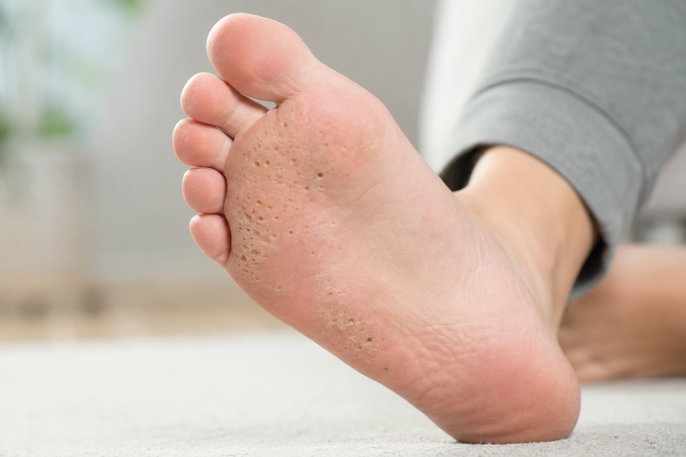
Main symptoms
Common symptoms of pitted keratolysis include:
-
Numerous small, shallow pits in the skin
-
Pits that may join together and form larger, irregular areas
-
Strong or unpleasant foot odor
-
White, gray, yellow or brown changes in the affected skin
-
Soft or soggy-looking skin after the feet become wet
-
Excessive sweating of the feet
-
Mild itching, burning or tenderness in some cases
-
Lesions on the toes or between the toes
-
Rare involvement of the palms
Pitted keratolysis most often affects areas of the feet that bear weight, such as the heels and the balls of the feet.
The pits and odor may become more noticeable after wearing closed shoes or when the feet have been wet.
Common causes
Pitted keratolysis is caused by an overgrowth of bacteria on the outer layer of the skin, including Kytococcus sedentarius, Corynebacterium species and Dermatophilus congolensis. These bacteria release enzymes that break down keratin, forming the small pits seen on the soles, while sulfur-containing substances contribute to the unpleasant odor.
Excessive foot sweating, also known as plantar hyperhidrosis, is a major risk factor because constant moisture softens the skin and allows bacteria to multiply. Recurrence is more likely when sweating remains uncontrolled after treatment.
Closed or poorly ventilated shoes can trap heat and moisture, especially when worn for long periods. This is why the condition is more common among athletes, military personnel and people who wear work boots, particularly in hot and humid environments.
Confirming a diagnosis
A doctor or dermatologist can usually diagnose pitted keratolysis by examining the feet. Typical findings include many small crater-like pits on weight-bearing areas of the soles, often combined with excessive sweating and a noticeable odor.
The appearance of the skin and the location of the lesions help distinguish the condition from fungal infections, plantar warts and other disorders that affect the soles. Dermoscopy, which uses a magnifying device to examine the skin, may reveal the shape and distribution of the pits more clearly.
Skin scrapings, bacterial cultures or a biopsy are not usually required. These tests may be considered when the appearance is unusual, treatment has not worked or another condition, such as athlete’s foot, is suspected.
Treatment options
Treatment is aimed at removing the bacteria, reducing foot odor and controling the moisture that allows the infection to continue. This can be achieved through:
1. Topical antibiotics
Topical antibiotics are commonly applied directly to the affected skin. Options described in clinical reports include erythromycin, clindamycin, mupirocin and fusidic acid.
Treatment is usually continued for a limited period according to medical guidance. Oral antibiotics are rarely needed but may be considered for extensive or persistent cases.
2. Benzoyl peroxide
Benzoyl peroxide has antibacterial properties and may be recommended as a wash or gel. A randomized clinical trial found that both 2.5% and 5% benzoyl peroxide improved the pits and unpleasant odor associated with pitted keratolysis.
The lower concentration may be preferred because it can provide similar benefits while potentially reducing irritation. Benzoyl peroxide can cause dryness, redness or mild burning in some people.
3. Antiseptic products
Antiseptic washes can help reduce the number of bacteria on the feet. Chlorhexidine scrub has shown similar treatment results to topical erythromycin in clinical research and may be a practical option in some cases.
Antiseptics should be used according to medical or product instructions. Overuse may cause skin irritation or dryness.
4. Treatment for excessive sweating
Reducing sweat helps the skin heal and lowers the risk of recurrence. Antiperspirants containing aluminum salts may be applied to the feet to decrease moisture.
Topical glycopyrrolate has also been described as an option for people whose condition is closely linked to excessive sweating. This treatment should be used under medical supervision because anticholinergic medicines can cause side effects.
5. Foot care measures
The feet should be washed regularly and dried thoroughly, especially between the toes. Socks should be changed whenever they become damp, and shoes should be allowed to dry completely before being worn again.
Rotating footwear can prevent moisture from building up inside the same pair of shoes. Breathable shoes and moisture-wicking socks may also help keep the skin dry.
Prevention measures
Measures that reduce moisture and bacterial growth can help prevent pitted keratolysis from returning. These include:
-
Washing the feet regularly
-
Drying the soles and spaces between the toes thoroughly
-
Changing sweaty or damp socks promptly
-
Wearing clean, moisture-wicking socks
-
Choosing breathable footwear when possible
-
Avoiding the same pair of shoes on consecutive days
-
Allowing shoes to dry fully between uses
-
Removing closed shoes when they are not needed
-
Using foot antiperspirant when recommended
-
Treating excessive sweating
-
Avoiding shared damp footwear
Recurrence is common when the feet continue to remain sweaty or enclosed for long periods. Long-term moisture control is therefore just as important as antibacterial treatment.
When to see a doctor
Medical evaluation may be appropriate when foot pits or odor do not improve with hygiene measures, repeatedly return or cause discomfort. A doctor can confirm whether the symptoms are caused by pitted keratolysis or another condition, such as a fungal infection.
Assessment is also recommended when the affected person has diabetes, circulation problems or another condition that may interfere with skin healing. Persistent redness, swelling, drainage, worsening pain or spreading skin changes should be evaluated because these findings are not typical of uncomplicated pitted keratolysis.