


Perioral dermatitis is a skin condition that causes inflammation around the mouth, leading to redness, dryness, peeling, and small red bumps. These symptoms often worsen after stopping the use of corticosteroid ointments or with exposure to heat, sunlight, or wind.
Although perioral dermatitis has no specific cause, it is more common in women between 15 and 45 years of age. It may be triggered by topical or inhaled corticosteroids, cosmetics, or facial sunscreens.
Treatment for perioral dermatitis usually involves topical or oral antibiotics, such as metronidazole or doxycycline, prescribed by a dermatologist. It is also important to identify and avoid triggers, as corticosteroid creams can worsen the condition.
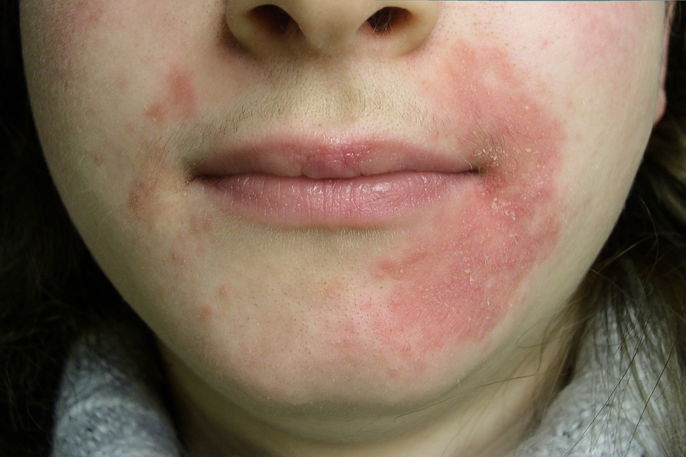
Perioral dermatitis symptoms
The main symptoms of perioral dermatitis are:
- Red blisters around the mouth;
- Dryness and peeling of the skin;
- Redness of the skin;
- Itching around the mouth;
- Burning sensation on the affected skin.
Sometimes, the red blisters can also appear near the nostrils or eyes. When they break, they can release a clear or pus-filled discharge.
Redness tends to worsen after stopping the use of corticosteroid ointments, or with exposure to heat, sunlight or wind. Symptoms can also worsen with make-up use, or before a menstrual period.
Online symptom checker
Perioral dermatitis is a type of dermatitis, like contact dermatitis and seborrheic dermatitis. To find out if you have dermatitis, report your symptoms below:
This quiz is only a guidance tool, and should not be used to confirm a diagnosis, nor does it replace consultation with a dermatologist or general practitioner.
Confirming a diagnosis
The diagnosis of perioral dermatitis should be made by a dermatologist based on an evaluation of the person’s signs and symptoms.
To rule out other skin conditions that may cause similar symptoms, the doctor may order additional tests, such as a skin scraping or a biopsy.
Also recommended: Rash on Face: Contact Dermatitis, Allergies & More tuasaude.com/en/rash-on-facePossible causes
Perioral dermatitis does not have a specific cause, but it is believed to occur due to changes in the protective function of the skin and the immune system. It may also be a consequence of an imbalance in microorganisms that live on the surface of the skin.
Perioral dermatitis is more common in women between 15 and 45 years old, and can appear as a result of using corticosteroid ointments on the face, inhaled corticosteroids, cosmetics, and facial sunscreens.
Perioral dermatitis can also sometimes be caused by seborrheic dermatitis or contact dermatitis, which is why it is important to consult a dermatologist to confirm the diagnosis and indicate the most appropriate treatment.
Perioral dermatitis treatment
Treatment of perioral dermatitis involves the use of ointments prescribed by a dermatologist, such as metronidazole or clindamycin. These help to reduce the inflammation and discomfort.
However, if the ointments are not effective, a doctor may prescribe oral antibiotics with anti-inflammatory properties, such as doxycycline. These are typically taken for prolonged periods, ranging from 2 to 3 months.
Ointments for perioral dermatitis
Ointments initially prescribed for perioral dermatitis treatment usually contain metronidazole, clindamycin, erythromycin, sulfur, or azelaic acid. It may take a few weeks to see any noticeable effect.
Sometimes a dermatologist may also prescribe the use of oral antibiotics at the beginning of treatment to reduce skin inflammation more quickly.
Furthermore, it is important to avoid using ointments containing corticosteroids when treating perioral dermatitis, as they can worsen symptoms.
Supportive therapy
Simple home measures that can help soothe the skin and support medical treatment for perioral dermatitis include:
- Not using corticosteroid ointments without medical advice;
- Identifying possible triggers, such as heat, wind, sunlight, moisturizing creams, skin cleansers, or toothpastes;
- Avoiding use of products that may be worsening dermatitis, especially until the peeling and redness of the skin improves;
- Wearing hats and sunglasses to protect your skin from the sun;
- Avoiding hot environments, and keeping the house airy and ventilated.
Additionally, compresses with boric acid water, thermal water or iced chamomile tea, which have anti-inflammatory properties, can also be recommended to complement the treatment recommended by the dermatologist.