


Pemphigus foliaceus is a rare autoimmune disease in which the immune system produces antibodies that mistakenly attack skin cells. An endemic form of pemphigus foliaceus found in certain rural areas of Brazil is known as fogo selvagem.
Pemphigus foliaceus can cause superficial blisters and sores on the scalp, face, neck, chest, or back. These skin lesions may cause burning, stinging, and pain, and the condition is more common in adults and older adults living in rural areas.
Treatment for pemphigus foliaceus is prescribed by a dermatologist and may include corticosteroids or immunosuppressants. Treatment aims to relieve symptoms, control the disease, and prevent complications.
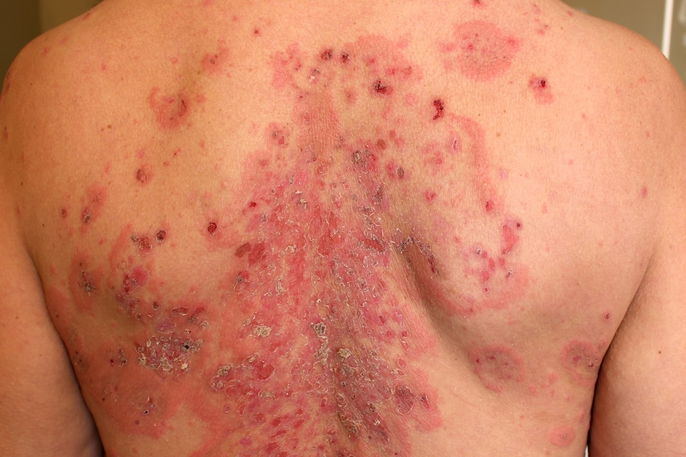
Main symptoms
The main symptoms of pemphigus foliaceus are:
-
Superficial skin blisters that break easily
-
Painful sores or ulcers after the blisters rupture
-
A stinging or burning sensation on the skin
-
Itching and pain in the affected area
-
Red, well-defined patches on the skin
-
Crusting on the skin
Pemphigus foliaceus symptoms usually develop on the scalp, face, neck, chest, and upper back.
According to the National Institute of Arthritis and Musculoskeletal and Skin Diseases (NIAMS), pemphigus foliaceus affects the skin and typically does not involve the mucous membranes.
It is important to see a dermatologist if symptoms of pemphigus foliaceus develop. A dermatologist can confirm the diagnosis and recommend the most appropriate treatment.
Is it contagious?
Pemphigus foliaceus is not contagious because it is caused by the person's own immune system.
This means that pemphigus foliaceus cannot spread from one person to another.
Confirming a diagnosis
Pemphigus foliaceus is diagnosed by a dermatologist based on an evaluation of symptoms, medical history, medication use, and a physical examination of the skin lesions.
According to NIAMS, diagnosis may also involve a skin biopsy to examine affected tissue and detect the antibodies attacking skin cells.
Possible causes
Pemphigus foliaceus develops when the immune system mistakenly produces antibodies that attack healthy skin cells.
The exact cause is not fully understood, but both genetic and environmental factors may contribute to its development.
Possible environmental triggers include bites from black flies or biting midges, certain medications such as captopril, nifedipine, or penicillins, and exposure to mercury.
Treatment options
Treatment for pemphigus foliaceus should be prescribed by a dermatologist to relieve and control symptoms, reduce the formation of blisters and sores, and prevent complications such as infections.
The main treatments for pemphigus foliaceus are:
1. Medications
Medications for pemphigus foliaceus may be prescribed by a dermatologist to reduce inflammation and suppress immune system activity.
The main medications used for pemphigus foliaceus include:
-
Corticosteroids, such as prednisone or methylprednisolone
-
Immunosuppressants, such as azathioprine, mycophenolate mofetil, methotrexate, or cyclophosphamide
-
Monoclonal antibodies, such as rituximab
-
Intravenous immunoglobulin (IVIG)
In addition, the doctor may prescribe other medications, such as pain relievers to reduce pain or antibiotics to treat infections.
2. Stopping certain medications
If a medication is suspected of triggering pemphigus foliaceus, stopping the medication may help improve the condition. However, additional treatment may still be needed.
Medications should only be stopped or changed under the guidance of the prescribing healthcare provider or a dermatologist.
3. Skin care
Some skin care measures recommended during treatment for pemphigus foliaceus include:
-
Caring for sores and wounds as instructed by a doctor or nurse
-
Using a mild soap and washing the skin gently
-
Avoiding sun exposure, as ultraviolet radiation may trigger new blisters
-
Avoiding activities that could injure the skin, such as contact sports
These measures can help protect the skin, support healing, and reduce the risk of new symptoms developing.