


Pediculosis is an infestation of lice that can appear on the scalp, body, or pubic area, leading to intense itching, redness, and sometimes sores caused by scratching.
Lice are parasites that cannot fly or jump, but they spread through direct contact with the hair of an infested person or by sharing combs, brushes, hats, pillows, or sheets. This condition is especially common among school-aged children.
Treatment for pediculosis is provided by a pediatrician, dermatologist, or general practitioner, who may recommend shampoos, lotions, or oral medications depending on the type of infestation and its severity.
Main symptoms
The main symptoms of pediculosis include:
-
Intense itching in the affected area
-
Small sores where the lice are present
-
Redness and local irritation
-
Small white specks on the scalp, usually nits (lice eggs)
-
Inflammation caused by lice saliva and waste
These symptoms can appear on the scalp, body, or pubic region, depending on the type of lice. If these signs are present, a pediatrician, general practitioner, or dermatologist should be consulted for diagnosis and proper treatment.
Confirming a diagnosis
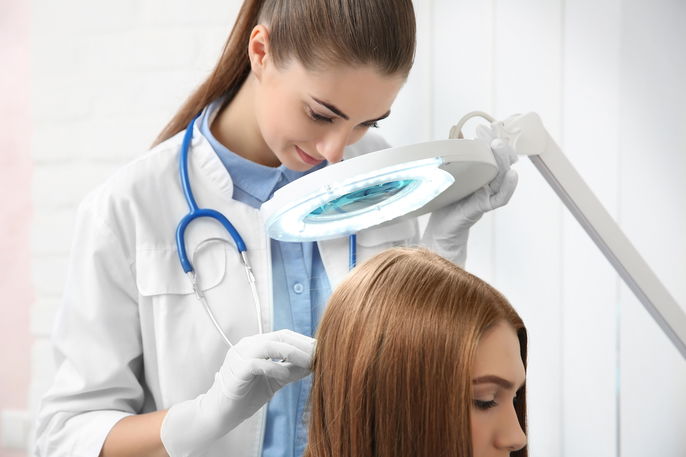
Pediculosis is diagnosed by a pediatrician, general practitioner, or dermatologist based on symptoms and a physical exam. A doctor may also use a Wood’s lamp, which emits UV light, since nits can show a yellow-green fluorescence. In some cases, a tape test may be used by pressing adhesive tape against the infested area to collect lice and then examining them under a microscope.
How lice spread
Lice do not fly or jump. They spread through direct contact with the skin or hair of an infested person, or through shared items such as combs, brushes, hats, helmets, pillows, or bedding. In the case of pubic lice, transmission may also occur through sexual contact or by sharing bed linens, towels, or underwear. Once infested, lice feed on blood and lay eggs (nits) that stick firmly to hair strands.
Types of pediculosis
There are three main types of pediculosis:
-
Head lice: the most common form, affecting the scalp, caused by Pediculus humanus capitis
-
Body lice: affects the skin on various parts of the body, caused by Pediculus humanus humanus
-
Pubic lice (crabs): affects pubic hair, caused by Pthirus pubis
The type of pediculosis is determined by a doctor based on symptoms and diagnostic tests.
Treatment options
Treatment for pediculosis should be guided by a pediatrician, general practitioner, or dermatologist, and depends on the site of infestation. Options include:
1. Lice shampoos
Lice shampoos containing permethrin 1% are commonly prescribed for all types of pediculosis. The shampoo should be applied to dry or damp hair as directed on the product label, massaged gently into the scalp, body, or pubic hair, and left on for about 10 minutes. Treatment may need to be repeated for several days, depending on medical advice.
After application, a fine-tooth comb should be used to remove lice and nits killed by the product. These shampoos kill or paralyze lice but are less effective against nits, which is why treatment is often repeated 7 to 10 days later.
2. Lice lotion
Lice lotions, usually containing permethrin 5%, may also be prescribed to treat pediculosis. The lotion should be applied to clean, dry skin, gently massaging areas such as the scalp, body, between fingers, underarms, and the outer genital region, then left on for about 10 minutes.
The application is generally repeated after 7 days as directed by the doctor. The dosage and use of 5% permethrin lotion should always be determined by the doctor according to age.
3. Oral antiparasitic medication
In some cases, instead of shampoos or lotions, the doctor may prescribe oral antiparasitic medication such as ivermectin, usually given as a single dose.
Along with medical treatment, some natural remedies like vinegar rinses or essential oils may be used as supportive measures. These can help remove lice but should not replace standard treatment.
Treatment for pubic lice
For pubic pediculosis, treatment usually involves using a fine-tooth comb to remove lice and nits, combined with sprays, lotions, or creams that are safe for the genital area and effective in eliminating lice infestations.