


Paronychia is an infection that affects the skin around the fingernails or toenails. It is usually caused by bacteria naturally found on the skin, such as Staphylococcus and Streptococcus. Common symptoms include redness around the nail, swelling, pain, and pus buildup.
This condition often develops after biting or pulling at the skin around the cuticle, or when nail clippers or other tools injure the area. These small wounds make it easier for bacteria or other infectious agents to enter and spread.
Treatment for paronychia typically involves anti-inflammatory and healing ointments prescribed by a dermatologist to relieve symptoms and fight the infection.
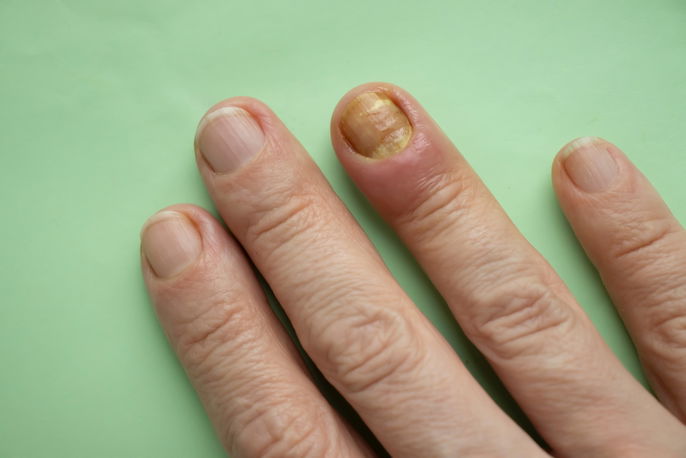
Main symptoms
The main symptoms of paronychia include:
-
Redness around the nail
-
Pain near the nail
-
Swelling
-
Warmth in the area
-
Pus buildup
If paronychia is not treated, the nail may change in color or shape, become brittle, or even separate from the skin.
Confirming a diagnosis
A dermatologist can usually diagnose paronychia by examining the affected nail and surrounding skin. No specific tests are needed.
If paronychia occurs frequently, the doctor may drain pus from the area and send it for a microbiological test. This helps identify the microorganism responsible and allows for more targeted treatment.
Common causes
Paronychia is most often caused by Staphylococcus or Streptococcus bacteria, which are normally found on the skin. They can enter through cuts or small wounds around the nail, multiply, and trigger infection.
Other causes include ingrown toenails, skin irritation from chemicals, or prolonged exposure to water.
In rare cases, paronychia may be caused by the herpes virus. This type, called herpetic paronychia, happens when a person with active oral herpes spreads the virus to the nail area, often by biting or picking at the skin. This form is more common in fingernails.
Treatment options
Treatment for paronychia should be guided by a dermatologist. In most cases, topical antibiotics with or without corticosteroids are prescribed, such as:
-
Mupirocin
-
Gentamicin
-
Bacitracin
-
Neomycin
-
Polymyxin B
-
Betamethasone
These medications help reduce inflammation and eliminate the infection.
For more severe cases, oral antibiotics such as amoxicillin with clavulanic acid or clindamycin may be prescribed. Sometimes, a small surgical incision is needed to drain pus from the area.
During treatment, it is important to keep the area clean and avoid biting nails or removing cuticles, as these habits can worsen the infection.
Paronychia typically lasts from 3 to 10 days, and treatment should continue until the skin fully heals. To prevent irritation, it is best to avoid prolonged contact with water and wear gloves when washing dishes or clothes.
For paronychia on the feet, open shoes are recommended during recovery.
Home care for paronychia
Paronychia should not be squeezed, as this can make the infection worse.
Applying a warm compress to the area for about 15 minutes can help reduce swelling and discomfort. Afterward, the area should be dried thoroughly.