


- Otitis externa often starts after swimming or moisture gets trapped in the ear canal, and can also be triggered by earbuds, hearing aids, or contact allergies.
- Common signs include ear pain (often worse when the outer ear is pulled), itching, muffled hearing, flaking skin in the ear canal, and sometimes whitish drainage.
- Seek medical care urgently if there is severe pain, fever, spreading redness or swelling, drainage that persists, symptoms lasting more than a few days, or if the person has diabetes, a weakened immune system, or is a young child.
Otitis externa (swimmer's ear) is an inflammation of the outer ear canal, the section of the ear closest to the outside. It often causes ear pain, itching, dry or flaky skin inside the ear canal, and a sensation of muffled hearing.
It often happens after spending time in hot, humid environments, like after swimming at a pool or beach. It can also be linked to frequent earbud use or contact allergies.
If you have symptoms that suggest otitis externa, it’s important to see your primary care provider or an ear, nose, and throat (ENT) specialist to confirm the diagnosis. Treatment depends on the cause and may include pain relievers, anti-inflammatory medicines, corticosteroids, and/or antibiotics.
Main symptoms
The main symptoms of otitis externa include:
-
Ear pain, which may start or get worse when the outer ear is gently pulled;
-
Itching in the ear;
-
Reduced hearing;
-
Flaking or peeling skin in the ear canal;
-
Redness or swelling of the outer ear;
-
Whitish discharge.
In children, otitis may be suspected when a child repeatedly touches their ear, cries more than usual, and seems more irritable, for example. According to the American Academy of Pediatrics (AAP), otitis externa most often occurs after swimming or other activities that allow water into the ears.
It’s important to see your primary care provider, pediatrician, or an ENT as soon as symptoms of otitis externa appear, so the ear can be properly evaluated and the most appropriate treatment started.
Confirming a diagnosis
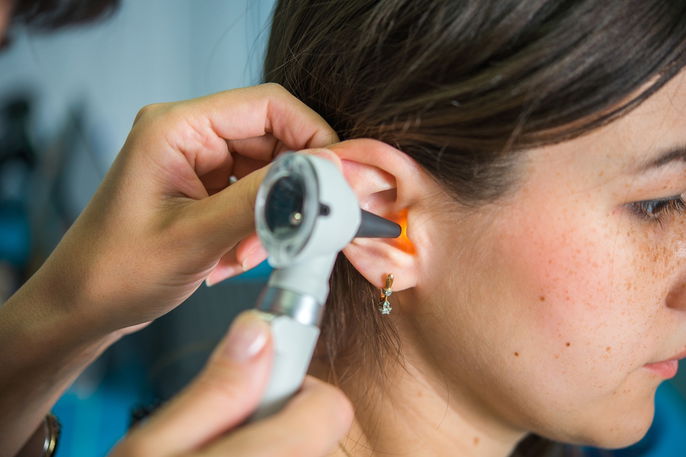
Otitis externa is diagnosed by a primary care provider, pediatrician, or ENT specialist based on the symptoms, their duration and severity, and findings from an ear exam that checks for signs of inflammation or infection.
If symptoms persist for several weeks after treatment, the doctor may suggest collecting a small sample from the ear for laboratory analysis to check for a possible infection.
This can help identify the infectious agent causing the inflammation so a more targeted treatment can be started.
Main causes
According to the Centers for Disease Control and Prevention (CDC), water that stays in the outer ear canal can break down protective earwax and skin and create a moist environment where bacteria can multiply.
Otitis externa can develop for several reasons, including:
-
Heat and moisture, which are common after going to the beach or swimming pool and can encourage bacterial growth;
-
Using cotton swabs;
-
Small objects in the ear, which is more common in young children;
-
Using hearing aids;
-
Using earbuds or headphones;
-
A topical allergy, which may occur due to a medication applied as an ointment or cream in or around the ear, or from products such as shampoos.
Malignant (necrotizing) otitis externa is a more aggressive and serious form of infection. It is more common in people with weakened immune systems or uncontrolled diabetes, starts in the outer ear, and can progress over weeks to months, causing severe ear damage and intense symptoms.
In these cases, treatment with stronger antibiotics for a longer period (4 to 6 weeks) may be recommended.
Treatment options
Otitis externa treatment should be guided by an ENT specialist, pediatrician, or primary care provider, depending on the symptoms and the cause of the inflammation.
In general, topical treatments (ear drops) may be recommended to help clean the ear, such as saline solution and alcohol-based solutions.
Common medications
Depending on the cause of otitis externa, the doctor may also recommend other medications, such as corticosteroids or antibiotics, such as ciprofloxacin. If a perforated eardrum is found, the doctor may also recommend aluminum acetate 1.2%, 3 drops 3 times a day, or as directed.
The doctor may also recommend medications that help relieve pain and reduce inflammation, especially in babies and children.
Treatment duration
Treatment length can vary depending on the cause. When antibiotics are used, treatment typically lasts 8 to 10 days, but when only pain relievers and anti-inflammatory medicines are used, treatment usually lasts 5 to 7 days, with symptom improvement often starting by the second day.
Home remedies
To support the treatment recommended by the doctor, these home measures may help you recover faster:
-
Avoid cleaning the ear with fingers, cotton swabs, or objects like pen caps; instead, gently dry only the outer ear with the corner of a towel after bathing;
-
If you swim often, place a cotton ball lightly coated with petroleum jelly at the opening of the ear to help keep water out;
-
When washing your hair, tilt your head forward and dry the outer ear right afterward;
-
Drinking guaco and poejo (pennyroyal) tea can help loosen mucus, which may speed recovery from a cold or the flu. Since excess mucus can worsen an ear infection, this may be a helpful remedy for teens or adults.
If there is flaking skin or pus, gently clean the outer area with the corner of a clean towel moistened with warm water. Ear flushing/irrigation should not be done at home, because if the eardrum is perforated it can worsen the infection.