


Osgood-Schlatter disease is a condition that causes pain below one or both knees, swelling, a painful bump on the knee, redness, and tenderness in the affected area.
This condition often occurs during periods of rapid growth, especially in children between the ages of 8 and 15. It can also be triggered by repetitive activities, such as running and jumping, that cause stress and inflammation in the knee tendon.
If your child is experiencing symptoms of Osgood-Schlatter disease, it is recommended to consult a pediatrician or pediatric orthopedic surgeon for an evaluation. Treatment may include ice application, physical therapy, and anti-inflammatory medications.
Main symptoms
The key symptoms of Osgood-Schlatter disease include:
-
Pain below the kneecap of one or both knees;
-
Painful bump below the kneecap;
-
Redness in the knee;
-
Swelling in the affected area;
-
Tenderness in the knee.
The pain associated with Osgood-Schlatter disease may develop gradually over time or appear suddenly. It typically worsens with activities like running, jumping, or climbing stairs.
Fortunately, most symptoms tend to resolve once the child has passed the peak of their growth spurt. For girls, this is usually around age 14, and for boys, it typically occurs around age 16.
Confirming the diagnosis
Osgood-Schlatter disease is diagnosed by a pediatrician or pediatric orthopedic surgeon based on the child’s symptoms and the results of a physical exam.
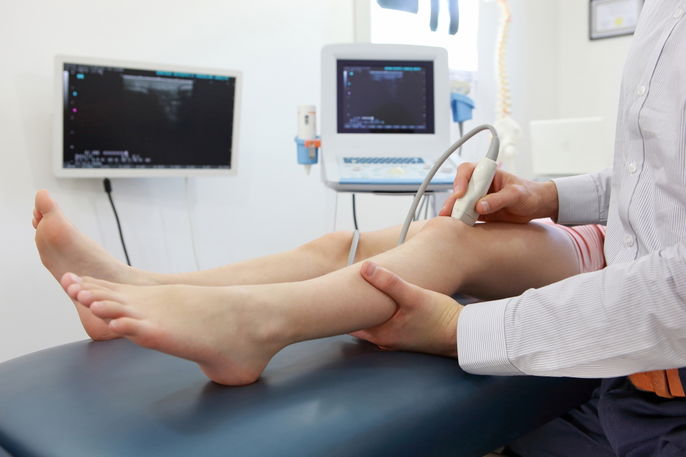
To further confirm the diagnosis, a doctor may recommend additional imaging tests, such as X-rays or an ultrasound of the knee.
Possible causes
Osgood-Schlatter disease can be caused by repetitive activities that place stress on the knee tendon, such as jumping and running, leading to inflammation.
Other contributing factors include previous knee injuries and a growth spurt. Growth spurts typically occur between the ages of 10 and 15 for boys, and between 8 and 13 for girls.
Boys are at a higher risk of developing Osgood-Schlatter disease, likely due to higher levels of physical activity.
Treatment options
Treatment for Osgood-Schlatter disease includes:
-
Stretching and strengthening exercises: These exercises, often guided by a physical therapist, help reduce pain and strengthen the affected muscles;
-
Anti-inflammatory medications: Drugs like ibuprofen, aspirin, and naproxen may be prescribed to reduce pain and swelling;
-
Cold compresses: Applying ice to the affected area for 15 to 20 minutes, 3 to 4 times a day, can help alleviate pain and swelling;
-
Physical therapy: If symptoms persist despite other treatments, a doctor may recommend physical therapy.
Children can continue participating in sports during treatment as long as they do not experience pain during rest periods and the activities do not worsen symptoms.
Indications for surgery
Surgery is usually not required for Osgood-Schlatter disease, as non-surgical treatments are typically effective. Surgery carries potential risks and does not offer additional benefits over conservative treatments. Symptoms of Osgood-Schlatter disease generally subside after the child’s growth spurt.
However, if the child has already completed their growth spurt and still experiences symptoms, the doctor may consider surgery to remove the bone growth beneath the kneecap.
Potential complications
A possible long-term effect of Osgood-Schlatter disease is the formation of a painful bump on the tibia, located just below the knee.