


- See a dermatologist if oily hair is difficult to control, especially during puberty, pregnancy, menopause, or periods of high stress.
- Dandruff, seborrheic dermatitis, or signs of a scalp infection may develop if oil, sweat, dirt, and bacteria build up on the scalp.
- Oily hair that does not improve with gentle washing, oily-hair products, and avoiding greasy formulas on the roots may need medical evaluation.
Oily hair can happen because of hormonal changes, high stress levels, oily hair products, or a diet high in fat.
How oily your hair gets can vary from person to person. This is mainly related to genetics, which can influence your hair type and how much oil your scalp produces.
Some ways to manage oily hair include avoiding very hot water, using products made for oily hair, and limiting high-fat foods. If oily hair is related to hormonal changes, a dermatologist can recommend the most appropriate treatment.
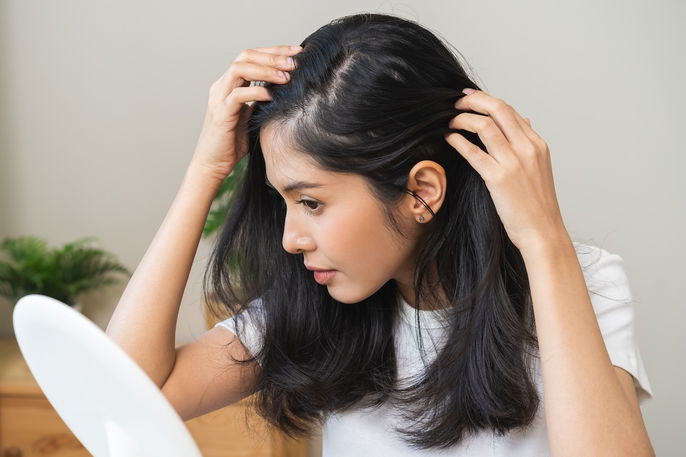
9 causes of oily hair
The main causes of oily hair are:
1. Hormonal changes
Hormonal changes during puberty, pregnancy, or menopause can make the hair oilier.
This happens because hormones can stimulate the scalp to produce more sebum, which is the natural oil that can make hair look greasy.
What to do: these phases are usually temporary, and the hair often goes back to normal over time. During these periods, it is best to see a dermatologist if oiliness is difficult to control or if treatment is needed.
2. Excess stress
Periods of intense stress or frequent worry can make the hair oilier because of increased cortisol levels.
Cortisol can stimulate the scalp to produce more sebum, which can make the hair feel greasier.
Stress can also increase sweating, which may make oily hair look or feel worse.
What to do: it is recommended to see a dermatologist for treatment to help control oiliness. It may also help to reduce stress with relaxation techniques, such as yoga or meditation.
3. Use of oily products on the hair
Using oily hair products, such as conditioner or styling cream, can make hair oilier, especially when they are applied to the roots.
Products that contain silicone can also leave the hair feeling heavier or greasier.
What to do: avoid applying these products directly to the scalp. They should only be used on the ends or along the length of the hair.
It is also best to choose products made specifically for oily hair, as they can help cleanse the roots more deeply and remove oily residue from the scalp.
4. Diet high in fats
Eating a lot of fatty foods, such as fried foods, fast food, butter, heavy cream, yellow cheeses, or sauces, can also contribute to oily hair.
These foods may contribute to sebum production in the scalp because they can affect the body’s metabolism and the way hair follicles function.
What to do: it is best to limit these foods and follow a healthy diet that is lower in fat.
It is also important to include foods rich in vitamin A, biotin, silicon, zinc, beta-carotene, omega-3, amino acids, and collagen, as these nutrients help strengthen the hair strands and support hair health.
Watch this video from Tati to learn how to prepare a smoothie to strengthen hair:
5. Washing hair with hot water
Washing hair with hot water can dry out the scalp. When this happens, the scalp may produce more sebum, leaving the hair oilier.
Blow-drying the hair at a very high temperature can have a similar effect.
What to do: it is recommended to wash the hair with lukewarm or cold water and avoid washing it for too long. When using a blow dryer, use a lower heat setting and keep the dryer away from the scalp.
6. Using cosmetics on the hair roots
Applying a hair mask, styling cream, or heat protectant directly to the scalp, or using moisturizing ampoules, can increase oil buildup at the roots.
What to do: these products can still be used, but very greasy formulas should be avoided. They should only be applied to the ends of the hair.
7. Wearing hats, scarves, or caps
Wearing hats, scarves, or caps can stimulate sebum production in the scalp and trap sweat, which can make the hair oilier.
What to do: hair that tends to be oily should ideally be worn loose. Accessories such as hats, scarves, or caps can make it harder for the scalp to stay ventilated.
8. Dirty hairbrush or pillowcase
A dirty hairbrush or pillowcase can collect dirt, hair products, dead skin cells, and bacteria. These can transfer to the hair and make it oilier.
Dandruff, seborrheic dermatitis, or even fungal infections may also develop on the scalp.
What to do: pillowcases should be changed at least once a week and washed well, preferably in hot water. Hair should also be removed from the hairbrush every day after brushing.
The brush should be cleaned once a week by soaking it in warm, soapy water, scrubbing it until it foams, and letting it sit for about 10 minutes. Then, scrub the bristles with a small brush and rinse well.
9. Regularly running your hands through your hair
Regularly running your hands through your hair, such as pushing it back or to the side, can stimulate sebum production and make oiliness worse.
This habit can also transfer dirt from the hands to the hair, making it look dirtier and feel heavier.
What to do: avoid running your hands through your hair often, or wash your hands well before touching your hair to help prevent excess oiliness.
