


Nystagmus is an involuntary, repetitive, and uncontrolled movement of the eyes that can occur even when the head is still. It may cause symptoms such as difficulty focusing on objects, blurred or shaky vision, nausea, vomiting, or loss of balance.
These eye movements can occur side to side or up and down and are usually caused by conditions in adults such as multiple sclerosis, labyrinthitis, stroke, or strabismus. However, nystagmus can also be present from birth due to congenital cataracts or abnormalities in the development of the optic nerve.
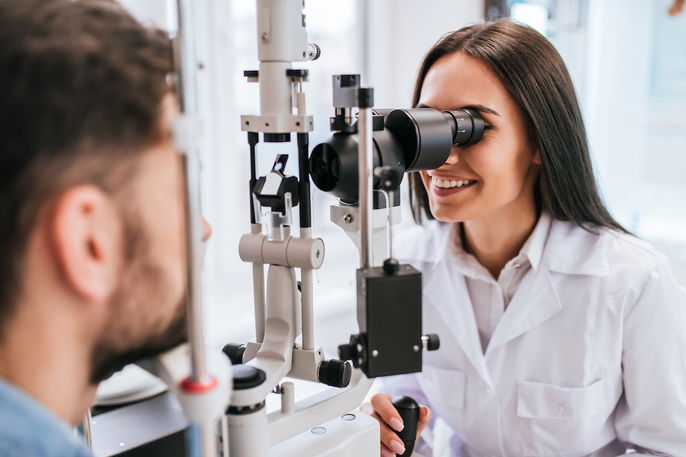
The diagnosis of nystagmus is made by an ophthalmologist, who will recommend the most appropriate treatment based on the type of eye movement, the form of nystagmus, and the underlying cause. Treatment may involve medication or, in some cases, surgery.
Main symptoms
The main symptoms of nystagmus include:
-
Uncontrolled, slow, or rapid eye movements;
-
Blurred or shaky vision;
-
Increased sensitivity to light;
-
Difficulty seeing at night;
-
Trouble focusing on objects;
-
Reduced depth perception;
-
Poor coordination and balance;
-
Dizziness, nausea, or vomiting.
In people with nystagmus, the eyes may move vertically, horizontally, or in circular patterns. It is also common for the person to tilt their head to help improve focus.
Confirming a diagnosis
Nystagmus is diagnosed by an ophthalmologist through an evaluation of symptoms, observation of eye movements, and specific tests such as electro-oculography and video-oculography, which measure involuntary eye movements in real time for more accurate results.
Other exams may include detailed eye tests to assess the retina, optic nerve, and lens to identify conditions that could be causing nystagmus, such as cataracts, optic nerve problems, or retinal disorders.
The doctor may also refer the person to a neurologist to help identify or rule out neurological diseases that could be responsible for nystagmus. Imaging exams like a CT scan or MRI of the brain may also be requested.
Possible causes
Nystagmus may be acquired, when it develops later in life due to a health condition, or congenital (infantile), when it appears in babies between 3 and 6 months of age.
The main causes of nystagmus include:
-
Abnormal development of the optic nerve or eye movement control during infancy;
-
Retinal or optic nerve disorders, including optic atrophy;
-
Eye problems such as strabismus, myopia, astigmatism, cataracts, or ocular tumors;
-
Diseases such as neurosyphilis, multiple sclerosis, labyrinthitis, or Ménière’s disease;
-
Neurological conditions due to head injuries or brain tumors;
-
Stroke (cerebrovascular accident);
-
Excessive alcohol consumption;
-
Side effects of medications such as lithium or anticonvulsants;
-
Nutritional deficiencies, particularly vitamin B12 deficiency.
People with Down syndrome or albinism are also more likely to develop nystagmus.
Different types
Nystagmus can be classified into different types based on the characteristics of the eye movements:
-
Horizontal nystagmus: the eyes move side to side, from left to right or right to left.
-
Vertical nystagmus: the eyes move up and down or down and up.
-
Optokinetic or pendular nystagmus: the eyes move in multiple directions (vertical, horizontal, or torsional) in response to moving visual fields or rotating objects.
-
Rotational nystagmus: the eyes move in circular or rotational patterns.
-
Physiological nystagmus: normal eye movement that helps maintain focus when the head moves.
-
Pathological nystagmus: abnormal eye movements that occur even when the head is still, usually indicating problems with the vestibular system, which helps maintain balance and sends electrical signals to the brain regions that control eye movement.
Another type, spasmus nutans nystagmus, occurs in children between 6 months and 3 years of age. It involves head tilting and pendular eye movements, which can occur in any direction. This condition typically improves naturally between the ages of 5 and 12 without treatment.
Treatment options
Treatment for nystagmus should always be guided by an ophthalmologist and aims to reduce involuntary eye movements. Depending on the cause, the doctor may prescribe medications such as gabapentin, baclofen, memantine, or fampridine, as well as vitamin supplements if the condition is related to nutritional deficiencies.
The ophthalmologist may also recommend glasses or contact lenses to correct vision problems that may be contributing to the condition.
In more severe cases, when involuntary movements are frequent and occur regardless of head position, surgery may be required to adjust the position of the eye muscles. This helps improve focus and overall visual ability.