


Nummular dermatitis is a skin condition that causes round, coin-shaped red patches that can be very itchy. It may also cause the skin to become dry, irritated, and flaky.
This type of dermatitis, also called nummular eczema, is more common during the winter because the skin tends to become drier. It is seen more often in adults between 40 and 50 years old, although it can also affect children.
A dermatologist can diagnose this condition by examining the patches and discussing your symptoms. Once the diagnosis is confirmed, the doctor will recommend the best treatment to help relieve discomfort, which may include medications or medicated ointments.
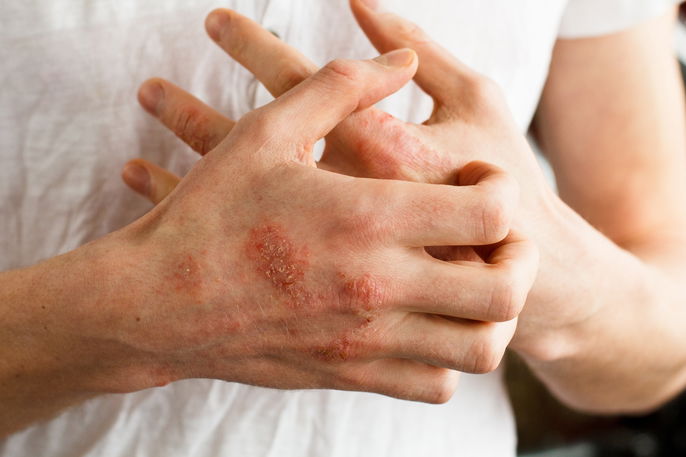
Main symptoms
The main symptoms of nummular dermatitis are:
-
Red, coin-shaped patches on the skin
-
Intense itching
-
Small blisters that may break open and form crusts
-
A burning sensation on the skin
-
Skin flaking
According to the American Academy of Dermatology, nummular eczema often develops on the legs, forearms, or backs of the hands and may also cause intense itching, burning or stinging, and very dry skin.
It’s important to see a dermatologist as soon as symptoms appear so they can examine the skin lesions, confirm the diagnosis, and begin the most appropriate treatment.
Symptom quiz
Nummular dermatitis is a type of dermatitis, like stasis dermatitis and seborrheic dermatitis. To see how likely it is that you have dermatitis, select the symptoms that apply to you below:
This test is only a tool. It is not intended to give a diagnosis or replace an appointment with a dermatologist or primary care provider.
Confirming a diagnosis
A dermatologist diagnoses nummular dermatitis by assessing a person’s signs and symptoms. The diagnosis is based mainly on the appearance and characteristics of the skin patches.
If there are signs of inflammation, the healthcare provider may take a sample of fluid from the lesion to see if a bacterial infection is also present.
Possible causes
The causes of nummular dermatitis are not yet fully understood. However, it is believed to be related to atopic dermatitis.
Some factors may make symptoms more likely to appear, such as dry skin caused by hot showers, very dry or cold weather, skin contact with irritants like detergents and certain fabrics, and bacterial infections.
Treatment options
Treatment for nummular eczema is usually guided by a dermatologist and often includes oral medicines or topical creams containing corticosteroids or antibiotics.
According to the American Academy of Dermatology, treatment may also include skin-hydrating measures such as short lukewarm baths or showers, frequent moisturizer use, and, in some cases, phototherapy.
