


- Nasal turbinates are small structures inside the nose that warm, humidify, and filter the air before it reaches the lungs.
- When they become enlarged, they can cause chronic nasal congestion, snoring, sinus infections, and reduced sense of smell.
- Treatment ranges from saline rinses and steroid sprays to surgical reduction in more severe cases.
Nasal turbinates are long, narrow, shell shaped bones inside the nose that are covered by soft tissue and a rich blood supply. They help control airflow and prepare the air before it reaches the lungs. There are three pairs called the superior, middle, and inferior turbinates.
These structures act like a built in heating and cooling system for the body. By adjusting airflow and surface contact, nasal turbinates warm, humidify, and filter the air that is breathed in. The inferior turbinates are the largest and are most often linked to nasal blockage.
When nasal turbinates become enlarged or chronically swollen, a condition called turbinate hypertrophy can occur. This may lead to long lasting nasal congestion, breathing problems, and sleep issues. Diagnosis and treatment depend on the cause, which may include allergies, infections, structural problems, or medication overuse.
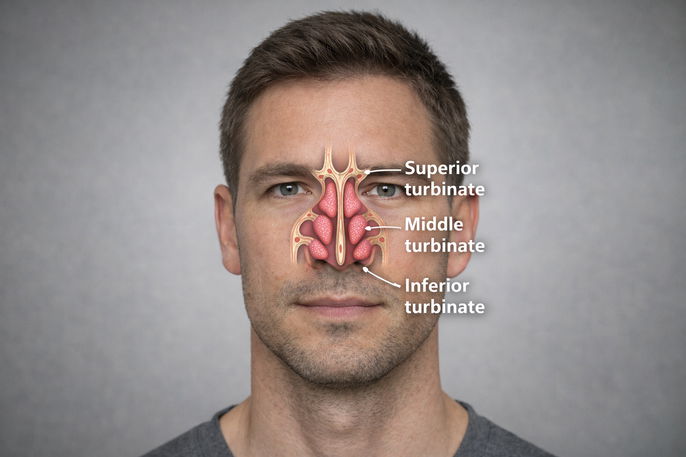
Functions of nasal turbinates
Nasal turbinates help prepare the air before it reaches the lungs, making breathing safer and more comfortable.
1. Humidification
The lining of the nasal turbinates contains glands and a rich blood supply that add moisture to the air with each breath. This moisture prevents the nasal passages, throat, and lungs from becoming too dry. Proper humidification also helps maintain healthy mucus flow, which is important for clearing debris.
2. Warming
As air passes over the turbinates, it is warmed by the blood vessels inside the surrounding tissue. This process helps bring cold air closer to body temperature before it reaches the lower airways. Warming the air reduces irritation and supports normal lung function.
3. Filtration
The surface of the turbinates is covered with mucus that traps dust, pollen, bacteria, and other particles. Tiny hair like structures move this trapped material toward the throat, where it can be swallowed or expelled. This filtering system helps protect the respiratory tract from infection and inflammation.
Together, these functions allow nasal turbinates to act as a protective and conditioning system for the air that enters the body.
Common conditions
Turbinate hypertrophy occurs when the turbinates become chronically enlarged or swollen. This can narrow the nasal passages and make breathing through the nose difficult.
The nasal cycle is a normal process in which one side of the nose feels more open while the other feels slightly congested. This alternates throughout the day. However, constant or severe blockage is not considered normal.
Concha bullosa is a common anatomical variation in which the middle turbinate contains an air filled pocket. In some cases, it may contribute to nasal obstruction or sinus problems.
Causes of swollen turbinates
Swelling of the nasal turbinates can occur for several reasons.
1. Allergies
Allergic rhinitis, also known as hay fever, can cause ongoing inflammation of the nasal lining. This often leads to enlargement of the inferior turbinates.
2. Environmental irritants
Exposure to smoke, pollution, or strong odors may irritate the nasal lining and trigger swelling.
3. Infections
Common colds and chronic sinus infections can cause temporary or persistent inflammation of the turbinates.
4. Structural issues
A deviated septum can reduce space on one side of the nose. The turbinate on the opposite side may enlarge over time to compensate.
5. Medication overuse
Frequent use of over the counter decongestant nasal sprays may lead to rhinitis medicamentosa. This rebound effect causes persistent swelling once the medication is stopped.
Symptoms: how does it feel?
When nasal turbinates are enlarged, breathing may become uncomfortable or difficult. Common symptoms include:
-
Persistent nasal congestion or blocked nose
-
Snoring or sleep apnea
-
Frequent sinus infections
-
Dry mouth from mouth breathing
-
Reduced sense of smell
These symptoms can vary in intensity depending on the cause and the degree of obstruction.
Diagnosis of abnormal turbinates
Doctors usually begin with a physical exam of the nose using a lighted instrument such as an otoscope. This allows them to look for swelling, structural changes, or signs of infection.
If symptoms continue, a nasal endoscopy may be performed. This involves a thin camera inserted into the nose for a closer view. In some cases, a CT scan is used to assess bone structure, rule out polyps, or evaluate sinus involvement.
Treatment options
Abnormal nasal turbinates can be treated depending on their underlying condition:
1, Non surgical treatment
Non surgical treatment is usually the first step for enlarged nasal turbinates, especially when symptoms are linked to allergies or irritation. The goal is to reduce inflammation, improve airflow, and control triggers.
Nasal saline rinses, including neti pots or saline sprays, help wash away mucus, allergens, and irritants from the nasal passages. Regular use can soothe the lining of the nose and support normal mucus movement.
Steroid nasal sprays are often recommended to reduce ongoing inflammation inside the turbinates. These sprays work gradually and are most effective when used consistently over time.
If allergies are the main cause, antihistamines may help control sneezing, runny nose, and swelling. In addition, simple environmental changes such as using a humidifier, improving indoor air quality, or avoiding known irritants can further reduce nasal swelling and discomfort.
Surgical treatment
When medications and other conservative measures do not provide enough relief, surgery may be considered to reduce the size of the nasal turbinates and improve airflow. The main goal of these procedures is to relieve obstruction while preserving as much normal function as possible.
Turbinoplasty is one common approach. It reshapes or reduces the bone and soft tissue of the turbinate while keeping the protective lining intact. This helps widen the nasal passage without completely removing the structure.
Radiofrequency ablation is a minimally invasive option that uses controlled heat to shrink excess tissue from within. Over time, the treated tissue becomes smaller, creating more space for air to pass through.
In more severe cases, a total or partial turbinectomy may be performed, which involves removing part of the turbinate to open the airway. However, removing too much tissue can lead to a rare but serious complication called Empty Nose Syndrome. This condition may cause a persistent feeling of nasal blockage, dryness, and breathing discomfort, even when the nasal passages appear open.
When to see a doctor
Medical evaluation is recommended if nasal congestion lasts more than a few weeks, does not improve with over the counter allergy medication, or is associated with chronic snoring or suspected sleep apnea. Persistent difficulty breathing through the nose or frequent sinus infections also require professional assessment.