


- Male infertility can be related to sperm production problems, hormonal changes, infections, varicocele, genetic conditions, or lifestyle factors.
- Diagnosis usually involves a reproductive health history, physical exam, and semen analysis.
- Treatment depends on the cause and may include medications, surgery, assisted reproduction, or lifestyle changes.
Male infertility is a condition that affects the male reproductive system. It can interfere with the ability to get a partner pregnant after 12 months or more of unprotected sex, or after 6 months if the female partner is 35 or older.
This condition can be caused by hormonal or genetic factors, chronic health conditions, or lifestyle factors. Depending on the cause, men may also have symptoms like difficulty getting or keeping an erection, low libido, fatigue, and abnormal breast growth.
If male infertility is suspected, it is recommended to see a urologist for an accurate diagnosis. Treatment may include lifestyle changes, medication, or surgery.
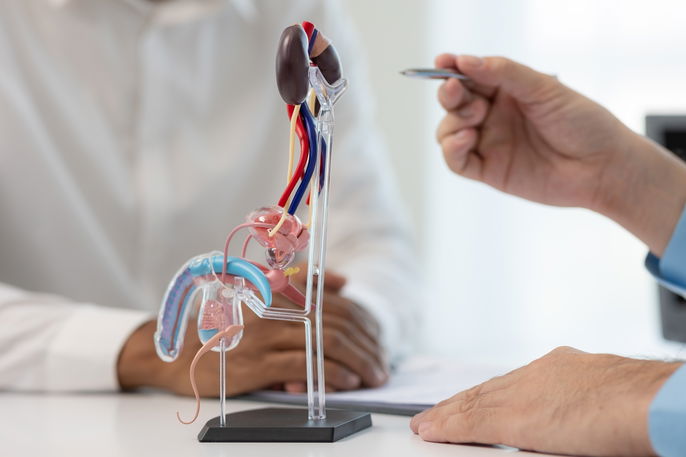
Signs and symptoms
Depending on the underlying cause, male infertility may present with the following signs and symptoms:
-
Not achieving pregnancy after 12 months or more of regular, unprotected sex, or after 6 months if the female partner is 35 or older
-
Difficulty getting or keeping an erection
-
Decreased sex drive (low libido)
-
Pain, swelling, or a lump in the testicle area
-
Abnormal breast growth (gynecomastia)
-
Small and/or soft testicles
-
Fatigue, weight gain, and loss of interest
In addition, male infertility can also cause stress, relationship difficulties, and feelings of depression and failure.
Confirming a diagnosis
Male infertility is diagnosed by a urologist through a reproductive health history, physical exam, and semen analysis.
Semen analysis evaluates the amount and quality of sperm produced and, according to the American Urological Association and American Society for Reproductive Medicine, is part of the initial evaluation for male infertility.
The doctor may also order other tests, such as hormone testing, genetic testing, urine tests, and scrotal or transrectal ultrasound, but these are usually requested only when clinically indicated.
Possible causes
The main causes of male infertility are:
-
Problems with sperm production, such as low sperm count or motility, or no sperm (azoospermia)
-
Blockage of the ducts that transport sperm, caused by vasectomy, varicocele, infections, or surgery
-
Ejaculation problems, such as retrograde ejaculation or no ejaculation
-
Genital infections, such as gonorrhea, chlamydia, epididymitis, and orchitis
-
Chronic diseases, such as cancer, diabetes, multiple sclerosis, and thyroid or liver disorders
-
Genetic or congenital factors, such as mutations in the AZF region or CFTR gene, Klinefelter syndrome, and cryptorchidism
-
Lifestyle factors, such as smoking, excessive alcohol intake, use of illicit drugs like marijuana and cocaine, excess weight, poor diet, and paternal age of 40 or older
The use of anabolic steroids and some medications and treatments, such as testosterone, calcium channel blockers, chemotherapy, and radiation therapy, can also affect sperm production and cause infertility.
Prolonged exposure to industrial chemicals, pesticides, herbicides, organic solvents, heavy metals such as lead and mercury, or radiation is also associated with male infertility.
Treatment options
Treatment for male infertility, as recommended by a doctor, includes:
1. Medications
Medications that may be prescribed by a doctor, depending on the cause of male infertility, include:
-
Gonadotropins, such as hCG and FSH, which stimulate spermatogenesis and help restore fertility in cases of hypogonadotropic hypogonadism
-
Aromatase inhibitors, hCG, selective estrogen receptor modulators, or a combination of these, to increase serum testosterone in selected cases
-
Dopamine agonists, such as cabergoline, to treat hyperprolactinemia
-
Selective estrogen receptor modulators (SERMs), such as clomiphene (Clomid) or tamoxifen, for male infertility with no clear cause in selected cases, although this use is off-label in the US
-
FSH analogs, which may be prescribed to improve sperm concentration, pregnancy rates, and live birth rates
Medications and hormones may be used to correct hormonal imbalances, treat infections, and, in some cases, stimulate sperm production.
According to the FDA, follitropin alfa is indicated to induce spermatogenesis in infertile men with primary or secondary hypogonadotropic hypogonadism when infertility is not due to primary testicular failure.
2. Surgery
Surgery may be recommended by a doctor to correct problems such as varicocele and to remove blockages that prevent sperm from passing through, such as vasectomy reversal, vasoepididymostomy, and transurethral resection of the ejaculatory ducts.
3. Assisted reproduction
Assisted reproduction techniques may be recommended when medical treatment or surgery does not work, or when the cause of infertility is irreversible.
Sperm retrieval can be performed through microdissection testicular sperm extraction, also known as micro-TESE, a surgery that removes sperm from the testicle and epididymis. This technique may be recommended for men who do not produce sperm, with or without obstruction.
Intracytoplasmic sperm injection (ICSI), which involves injecting a single sperm directly into an egg, is used when semen contains very low numbers of sperm or sperm quality is too low for conventional in vitro fertilization.
In vitro fertilization involves combining the partner’s eggs with sperm in a laboratory, followed by transferring the fertilized embryo to the uterus.
Intrauterine insemination is done by placing semen directly into the partner's uterus and may be recommended when the total number of motile sperm is low.
4. Lifestyle changes
Lifestyle changes recommended to improve male fertility include:
-
Quitting smoking and limiting or avoiding alcohol
-
Avoiding illicit drugs, such as marijuana, and anabolic steroids
-
Maintaining a healthy weight
-
Avoiding prolonged exposure of the testicles to excessive heat, such as in saunas and hot tubs
-
Maintaining a healthy and varied diet
In addition, it is also important to exercise regularly, for at least 150 minutes per week.
Is male infertility curable?
Male infertility may be curable when it is reversible, depending on the cause, such as in cases of varicocele, vasectomy, hormonal changes, and lifestyle factors.
However, in irreversible conditions, such as bilateral testicular atrophy, Klinefelter syndrome, and mutations in the AZF region, male infertility cannot be cured. In these cases, medical treatment aims to increase the chances of pregnancy.