


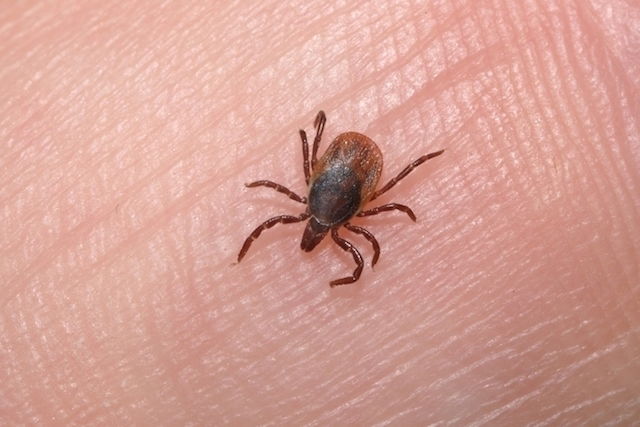
Lyme disease is an infection caused by a tick infected with the bacteria Borrelia burgdorferi. When the tick latches onto the skin, it transmits the bacteria, which often leads to a red circular rash on the skin that slowly expands over time.
Many people don’t realize they’ve been bitten because ticks are so small, and symptoms often don’t appear right away. Once the first symptoms show up, it’s important to see a primary care doctor or an infectious disease specialist to confirm the infection and begin treatment, which usually involves antibiotics.
Lyme disease can be cured if treatment starts early. If it’s left untreated or treated incorrectly, serious complications like arthritis, meningitis, or heart problems can develop and impact quality of life.
Common symptoms
The main symptoms of Lyme disease include:
-
A red expanding rash on the skin (2 to 30 cm wide)
-
Fatigue
-
Muscle aches, joint pain, and headaches
-
Fever and chills
-
Stiff neck
These symptoms typically appear 3 to 30 days after a tick bite. If any of these symptoms develop, especially when there’s a rash, it’s recommended to see a doctor right away to confirm the diagnosis and start antibiotics.
Severe symptoms of Lyme disease
If treatment isn’t started in time, later-stage symptoms can appear, often related to complications:
-
Arthritis, usually in the knee, causing pain and swelling in the joints
-
Neurological issues like numbness and pain in the hands or feet, facial paralysis, memory problems, and trouble focusing
-
Meningitis, which causes severe headaches, neck stiffness, and light sensitivity
-
Heart problems, including palpitations, shortness of breath, and fainting
If any of these symptoms appear, it’s best to go to the hospital immediately. Prompt treatment can help prevent complications that can be life-threatening.
Also recommended: Tick-Borne Diseases: 10 Illnesses You Can Get From Tick Bites tuasaude.com/en/tick-diseasesHow Lyme disease is diagnosed
Lyme disease is usually diagnosed with blood tests that can be done 3 to 6 weeks after a tick bite. This allows enough time for the infection to develop and show up in the results.
Doctors often order a blood test to check for antibodies to the bacteria. A complete blood count (CBC) or a skin biopsy, called a Warthin-Starry test, may also be done. While the biopsy isn’t specific for Lyme disease, it can help with the diagnosis when combined with other findings.
What causes Lyme disease
Lyme disease is most often caused by the bite of a tick infected with Borrelia burgdorferi. In the US, the deer tick (Ixodes scapularis) is the main species that transmits the bacteria. Ticks have to stay attached to the skin for at least 24 hours to pass on the bacteria.
These bacteria live in animals like deer and mice, and ticks become infected when they feed on these animals. The bacteria can then be passed on to humans.
How Lyme disease spreads
Ticks are tiny and easy to miss, so many people don’t know they’ve been bitten. If there’s a chance of exposure, it’s important to check the body carefully.
Ticks often hide behind the ears, on the scalp, in the belly button, under the arms, in the groin, or behind the knees. The risk of infection is much higher if the tick stays attached for more than 24 hours.
People who spend time outdoors in wooded or grassy areas—like hikers, campers, farmers, forestry workers, and soldiers—are at a higher risk of tick bites and Lyme disease.
How to remove a tick
The safest way to remove a tick is to use clean, fine-tipped tweezers disinfected with 70% alcohol. Grasp the tick as close to the skin as possible and pull upward with steady pressure.
After removal, clean the area with soap and water or chlorhexidine. Never squeeze, crush, or twist the tick, as this can spread bacteria.
If the head breaks off and stays in the skin, try to remove it with the tweezers. If that’s not possible, see a doctor.
It’s important to watch for signs of infection or Lyme disease symptoms for 1 to 4 weeks after a tick bite.
Lyme disease treatment
Treatment for Lyme disease involves antibiotics. The sooner treatment starts, the faster the recovery and the lower the risk of complications.
1. Antibiotics
A doctor will typically prescribe antibiotics like doxycycline (100 mg twice a day for 2 to 4 weeks) to treat Lyme disease.
For children and pregnant women, amoxicillin or azithromycin is often recommended for the same length of time. Most people can take antibiotics by mouth, but in more severe cases, treatment in the hospital with IV antibiotics may be needed.
Breastfeeding mothers can also take antibiotics safely.
2. Physical therapy
In more advanced cases, Lyme disease can lead to arthritis, especially in the knee. This causes pain and swelling that can make it hard to move.
Physical therapy may be recommended to restore joint mobility and improve daily function. Treatment may include stretching, mobility exercises, and equipment-based therapy depending on the severity.
Doctors may also recommend anti-inflammatory medication like ibuprofen to help reduce joint inflammation.