


- Luteinizing hormone is a pituitary hormone essential for triggering ovulation and progesterone production in women, while directly regulating testosterone and sperm production in men.
- Doctors evaluate the LH/FSH ratio to help differentiate between conditions like Polycystic Ovary Syndrome (PCOS) and Premature Ovarian Insufficiency (POI).
- Accurate leuteinizing hormone blood test results require disclosing the use of biotin supplements, hormonal contraceptives, or fertility medications, as these substances can significantly interfere with laboratory readings
Luteinizing hormone, also referred to as LH, is a hormone produced by the pituitary gland. In women, is responsible for the maturation of follicles, ovulation and production of progesterone, and therefore plays a fundamental role in a woman's reproductive capacity. In men, LH is also directly related to fertility, and acts directly on the testicles to trigger sperm production.
In the menstrual cycle, LH levels are higher during ovulation, however it is present in the blood throughout the cycle and the woman's lifetime. Understanding the function of leuteinizing hormone is vital for monitoring reproductive health and identifying hormonal imbalances.
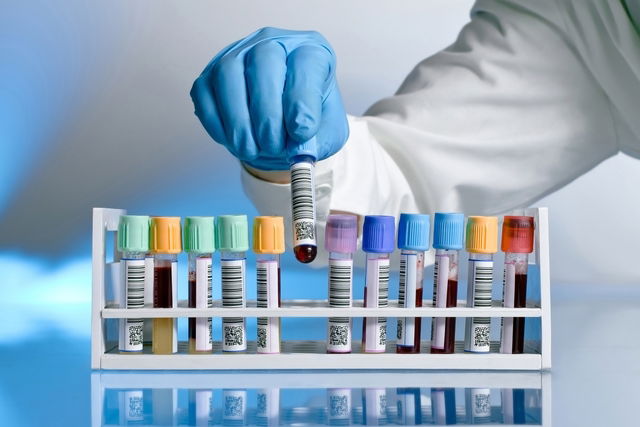
In addition to playing an important role in fertility, LH levels can be tested to help diagnose pituitary tumors and to identify any abnormalities in the ovaries, like the presence of cysts. Doctors often order these tests when patients experience difficulty conceiving or irregular menstrual cycles.
Why it is ordered
Luteinizing hormone tests can be ordered for the following reasons:
-
Diagnose infertility
-
Assess sperm production
-
Assess for the likelihood of menopause
-
Determine what is causing the absence of a period
-
Evaluate egg production in women
-
Help with the diagnosis of a pituitary tumor
In men, LH production is regulated by the pituitary gland and acts directly on the testicles. It helps to regulate sperm production as well as the production of other hormones, mainly testosterone. In women, LH production in the pituitary gland stimulates the production of progesterone and estrogen, which are essential for pregnancy.
To assess fertility in men and women, the doctor may also request an FSH blood test. This hormone is also present in different levels during the menstrual cycle and can also influences sperm production.
Normal reference levels
The typical values for leuteinizing hormone can vary significantly based on an individual's age, biological sex, and specific stage of the menstrual cycle.
Because these ranges are provided as general guidelines, it is essential for a doctor to interpret these results alongside other diagnostic markers and a physical assessment.
LH/FSH ratio
The relationship between leuteinizing hormone and follicle-stimulating hormone (FSH) provides significant diagnostic value for various reproductive conditions. Doctors often analyze these two hormones together to differentiate between specific health issues:
-
Polycystic Ovary Syndrome (PCOS): An elevated LH/FSH ratio, often exceeding 2:1 or 3:1, is a common biochemical marker that supports a PCOS diagnosis. This is particularly noted in lean women with PCOS where neuroendocrine disturbances are more pronounced.
-
Premature Ovarian Insufficiency (POI): In cases of premature ovarian failure, FSH typically rises before LH due to reduced feedback from inhibin B. A lower LH/FSH ratio, driven by very high FSH levels, serves as a hallmark of depleted ovarian reserves.
Comparing these levels helps clinicians determine if hormonal issues originate from the brain or the ovaries themselves.
How to prepare for the LH test
Adequate preparation for a leuteinizing hormone test is necessary to ensure the accuracy of the laboratory results. While the procedure is a simple blood draw, certain factors can significantly alter the measured levels:
-
Fasting Requirements: Fasting is not typically required for an LH measurement alone. However, because LH is often ordered as part of a panel including testosterone or glucose, doctors may recommend fasting because testosterone levels can drop after eating.
-
Biotin (Vitamin B7): High doses of biotin found in hair and nail supplements can cause significant errors in LH immunoassays, leading to falsely high or low results. It is often recommended to stop these supplements 48 to 72 hours before the test.
-
Hormonal Contraceptives: Birth control pills suppress the pituitary secretion of LH, which may make it difficult to check baseline fertility unless the medication is stopped for several weeks prior to testing.
-
Fertility Medications: Drugs like clomiphene or letrozole are designed to deliberately elevate LH levels to induce ovulation, and their use must be disclosed to the laboratory.
Patients should discuss all current medications and supplements with a healthcare provider before the blood draw occurs.
LH in men vs. women
While leuteinizing hormone is essential for both sexes, it targets different organs and triggers the production of different primary steroids. In women, the hormone primarily manages the menstrual cycle and triggers the release of an egg from the ovary.
LH and Testosterone production in men
In male physiology, LH plays a specific role in maintaining reproductive and systemic health by acting on the testes.
-
Mechanism of Action: LH binds to receptors on the Leydig cells within the testes to stimulate the conversion of cholesterol into testosterone.
-
Spermatogenesis: Beyond testosterone production, LH activity is vital for the process of sperm production and overall male fertility.
-
Primary Hypogonadism: High LH levels combined with low testosterone indicate testicular failure or damage, meaning the brain is signaling for more production but the testes are not responding.
-
Secondary Hypogonadism: Low LH levels combined with low testosterone suggest a problem with the pituitary gland or hypothalamus, meaning the testes are functional but are not receiving the signal to produce testosterone.
These diagnostic patterns allow doctors to pinpoint the exact location of a hormonal deficiency in men.
Low LH levels
Low LH levels may be a sign of:
-
Pituitary gland abnormalities that cause a reduced production of LH and FSH
-
Deficiency in the production of gonadotropin (GnRH), which is a hormone produced and released by the hypothalamus. Its function is to stimulate the pituitary gland to produce LH and FSH.
-
Kallmann syndrome, which is a genetic and hereditary disease characterized by the absence of GnRH production, which leads to hypogonadism.
-
Hyperprolactinemia, which is an increase in the production of prolactin hormone.
A decrease in LH can lead to reduced sperm production in men and in the absence of menstruation in women, a situation known as amenorrhea. It is important to consult a doctor so that the best treatment can be indicated, which is normally done with the use of hormonal supplementation.
High LH levels
High LH levels may be a sign of:
-
Tumor in the pituitary gland, with an increase in the secretion of GnRH and, consequently, LH
-
Early puberty
-
Testicular insufficiency
-
Early menopause
-
Polycystic ovarian syndrome
Furthermore, the LH hormone may be increased during pregnancy, as beta-hCG can imitate LH, causing it to appear elevated on tests.