


- Lung cancer often causes symptoms such as persistent cough, shortness of breath, chest pain, fatigue, and weight loss, which usually appear in more advanced stages of the disease.
- Smoking is the main risk factor, but air pollution, secondhand smoke, radiation exposure, and family history also increase the risk of developing lung cancer.
- Diagnosis relies on imaging tests like chest CT scans, and treatment may include surgery, chemotherapy, radiation therapy, immunotherapy, or targeted therapy, depending on the stage and tumor type.
Lung cancer can cause symptoms such as a dry, persistent cough, difficulty breathing, shortness of breath, excessive fatigue, chest pain, or weight loss. These symptoms usually appear only when the disease has already reached a more advanced stage.
The main cause of this type of cancer is smoking, due to the harmful substances present in inhaled cigarette smoke. Lung cancer is also more common in men with a family history of the disease or in people who live in areas with high levels of air pollution.
If lung cancer is suspected, it is recommended to consult a pulmonologist or a general practitioner. Treatment varies depending on the type of cancer and its characteristics and may include surgery, chemotherapy, and or radiation therapy.
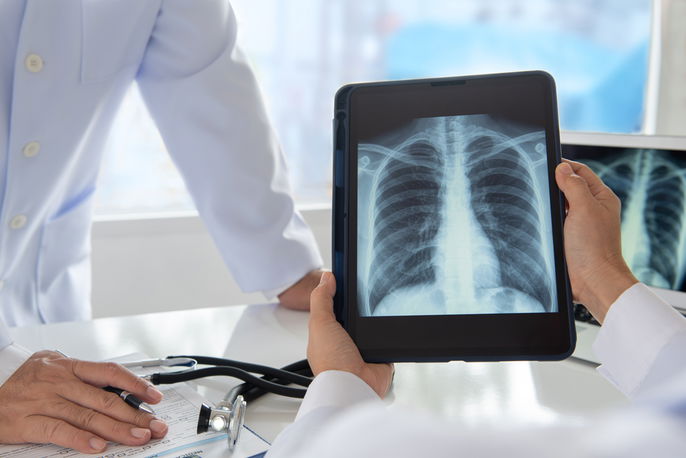
Main symptoms
The main symptoms of lung cancer are:
-
Dry and persistent cough
-
Difficulty breathing
-
Shortness of breath
-
Decreased appetite
-
Weight loss
-
Hoarseness
-
Back pain
-
Chest pain
-
Blood in sputum
-
Extreme fatigue
Symptoms of lung cancer usually appear only in more advanced stages of the disease. For this reason, it is important to consult a pulmonologist as soon as these signs are noticed.
Advanced stages of lung cancer
In most cases, lung cancer is diagnosed at more advanced stages. At this point, symptoms commonly include blood-streaked sputum, shortness of breath, difficulty swallowing, hoarseness, and recurrent lung infections.
In addition, lung cancer may lead to specific manifestations and complications, such as Pancoast tumor and metastasis, which cause more targeted symptoms:
1. Pancoast tumor
A Pancoast tumor is a type of lung cancer located at the top of the right or left lung. It may cause symptoms such as swelling and pain in the arm and shoulder, reduced muscle strength, increased skin temperature on the face, absence of sweating, and drooping of the eyelid.
2. Metastasis
Metastasis occurs when cancer cells spread to other parts of the body through the bloodstream or lymphatic system.
This spread can happen within a few months and may cause different symptoms depending on the affected organ.
In cases of lung metastasis, there may be chest pain not related to breathing or pleural effusion, which is the buildup of fluid in the pleura. Brain metastasis may cause headaches, nausea, vomiting, and even neurological deficits, while bone metastasis can lead to bone pain and recurrent fractures.
When the liver is affected, it is common to observe an enlarged liver, mild weight loss, and pain in the upper right side of the abdomen.
How a diagnosis is confirmed
The diagnosis of lung cancer is based on an evaluation of symptoms, personal and family medical history, and imaging test results.
Based on guidance from the Centers for Disease Control and Prevention (CDC) and the World Health Organization (WHO), imaging tests such as chest CT scans play a central role in identifying lung tumors and assessing disease stage.
In some cases, additional tests such as PET scans, magnetic resonance imaging, and lung tissue biopsy may also be requested.
These exams make it possible to confirm the diagnosis and determine the stage of the tumor. This information helps guide the choice of the most appropriate treatment.
Main causes
The main cause of lung cancer is cigarette smoking. The risk increases with the number of cigarettes smoked per day and the total number of years a person has smoked.
Lung cancer is also more common in people with the following risk factors:
-
Smoking cigarettes, cigars, or pipes
-
Exposure to secondhand smoke, also known as passive smoking
-
Frequent exposure to radon gas and other hazardous substances such as arsenic, asbestos, beryllium, cadmium, hydrocarbons, silica, mustard gas, and nickel
-
High levels of air pollution, especially when living in highly polluted areas
-
A history of radiation therapy to the chest for other cancers, such as lymphoma or breast cancer
-
Genetic predisposition, including a family history of lung cancer
For this reason, smokers or former smokers over the age of 50 are encouraged to seek information about lung cancer screening. In some cases, screening may be recommended by a pulmonologist.
Why cigarettes can cause cancer
Cigarette smoke contains many carcinogenic substances, such as tar and benzene. These substances damage the cells that line the inside of the lungs.
When this damage occurs occasionally, lung tissue may be able to repair itself. However, with constant exposure, as seen in smokers, the cells cannot recover properly, leading to abnormal cell growth and the development of cancer.
Smoking is also linked to several other health problems. These include emphysema, heart attack, and memory-related changes.
Treatment options
Treatment for lung cancer may include:
-
Surgery to remove the tumor, when it has not spread
-
Chemotherapy, which uses medications to destroy cancer cells and or shrink the tumor
-
Radiation therapy, which applies radiation directly to cancer cells
-
Immunotherapy, which aims to stimulate the immune system to fight cancer cells
-
Targeted therapy, which uses specific medications to block tumor growth and spread
The choice of treatment depends on factors such as the type of tumor, its severity, and the person’s overall health. Treatment should always be guided by an oncologist.
Is lung cancer curable?
Lung cancer can be curable in some cases. The chances are higher when the disease is diagnosed at an early stage in people who are in good overall health and when treatment is carried out correctly under medical supervision.