


Leg workouts with dumbbells are lower-body strength exercises that use one or two dumbbells to train the thighs, glutes, hips, calves and core. These exercises include squats, lunges, step-ups, deadlifts and calf raises, which work the quadriceps, hamstrings, gluteus maximus, gluteus medius, calves and trunk stabilizers.
Leg Workouts with Dumbbells can be done at home or in the gym, depending on the dumbbells available, the space and the person’s fitness level. Free-weight exercises can also help improve balance and coordination because the body has to control the weight throughout each movement.
Warm-up
A warm-up helps prepare the muscles, joints and heart for exercise. It should feel light to moderate and should not cause fatigue before the main workout.
1. Bodyweight squat
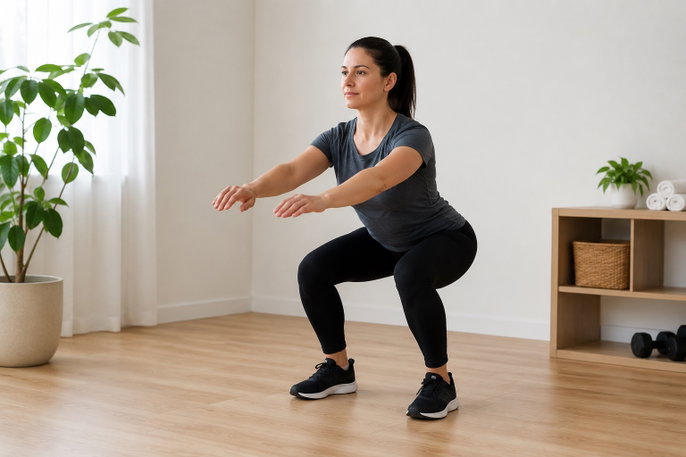
The bodyweight squat warms up the quadriceps, glutes, hamstrings and hips. It also helps prepare the knees and ankles for loaded dumbbell exercises.
How to perform: Stand with the feet about shoulder-width apart and keep the chest lifted. Bend the knees and push the hips back as if sitting in a chair, then lower the body as far as comfortable while keeping the feet flat on the floor. Push through the feet to return to standing.
Do 2 sets of 10 to 15 repetitions. This exercise can be done before each workout, for about 2 to 3 minutes in total.
2. Forward lunge without weight
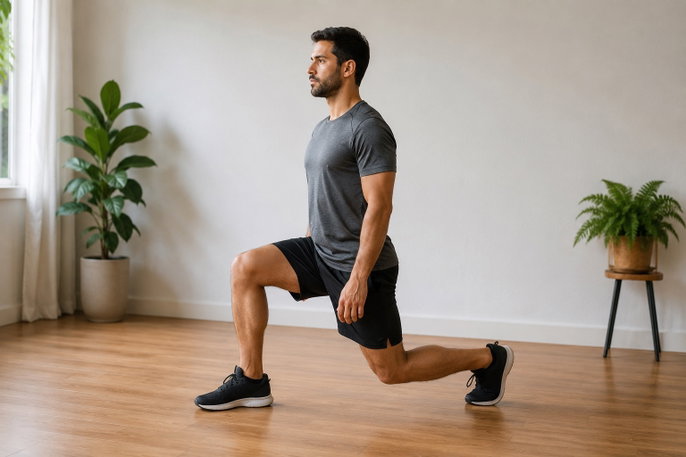
The forward lunge helps warm up the glutes, quadriceps and hamstrings. It also prepares the body for single-leg movements, which are common in dumbbell leg workouts.
How to perform: Stand upright with the feet hip-width apart. Step one foot forward and bend both knees until the back knee moves toward the floor, then push through the front foot to return to the starting position. Repeat on the other side.
Do 1 to 2 sets of 8 to 10 repetitions on each leg. This exercise can be done before dumbbell leg exercises and takes about 3 minutes.
3. Step-up without weight
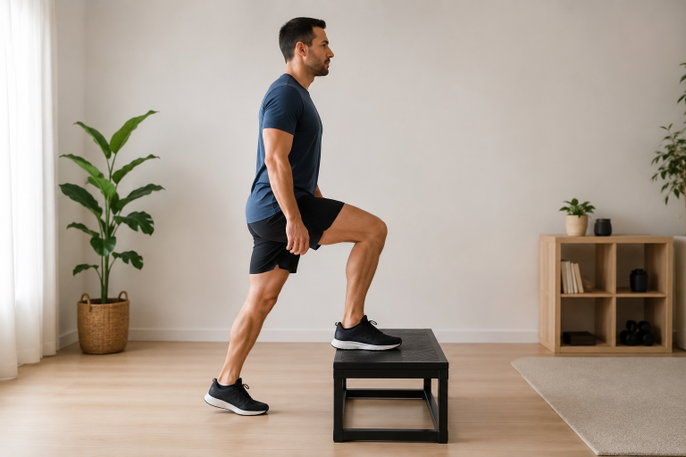
The step-up warms up the quadriceps, glutes and hip stabilizers. It also helps activate the muscles used for climbing stairs and other daily movements.
How to perform: Stand in front of a stable step or bench. Place one foot on the step, push through that foot to lift the body up, then lower back down with control. Repeat on the same side or alternate legs.
Do 1 to 2 sets of 8 to 10 repetitions on each leg. This exercise can be done for 2 to 3 minutes before starting the main workout.
Dumbbell leg exercises
Dumbbell leg exercises can be done at home or in the gym when there is enough space, stable footing and appropriate dumbbell weight. These exercises can help build lower-body strength, support muscle growth and improve functional movement when done with good form and enough resistance.
1. Goblet squat
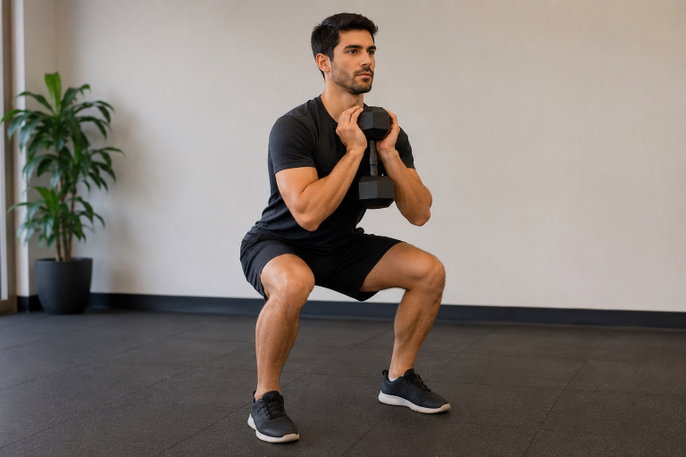
The goblet squat mainly works the quadriceps and glutes, while also activating the core and upper back to keep the body stable. Holding the dumbbell in front of the chest can make it easier to keep an upright posture.
How to perform: Stand with the feet shoulder-width apart and hold one dumbbell close to the chest with both hands. Bend the knees and push the hips back, lowering the body as far as comfortable while keeping the chest lifted. Push through the feet and squeeze the glutes to return to standing.
Do 2 to 4 sets of 8 to 12 repetitions. This exercise can be done 2 to 3 times per week, resting at least 48 hours before training the same muscles again.
2. Dumbbell reverse lunge
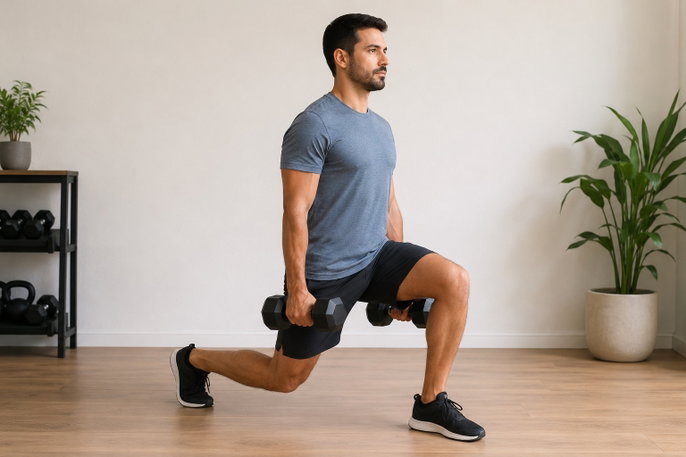
The dumbbell reverse lunge works the glutes, quadriceps and hamstrings. It may be easier to control than a forward lunge because the front foot stays planted, which can help with balance.
How to perform: Stand upright while holding one dumbbell in each hand at the sides. Step one foot backward and bend both knees until the back knee moves toward the floor, then push through the front foot to return to standing. Repeat on the other side.
Do 2 to 3 sets of 8 to 12 repetitions per leg. This exercise can be included 2 times per week, with each set lasting about 30 to 60 seconds.
3. Dumbbell Romanian deadlift
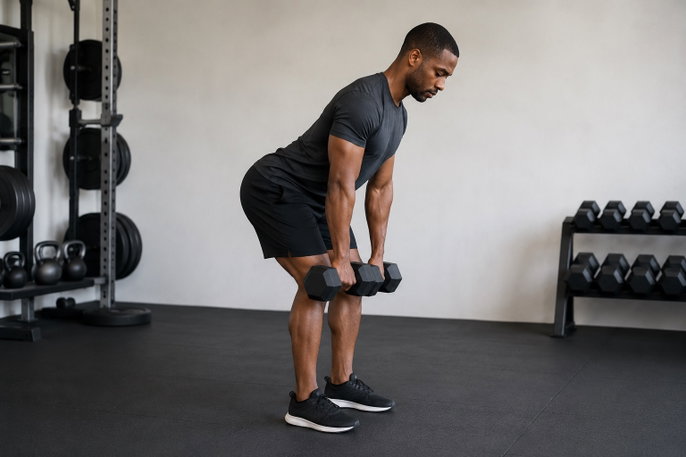
The dumbbell Romanian deadlift focuses on the hamstrings and glutes. It also trains the lower back and trunk muscles to keep the spine stable during the movement.
How to perform: Stand with the feet hip-width apart and hold one dumbbell in each hand in front of the thighs. Keep a slight bend in the knees and move the hips backward, lowering the dumbbells along the front of the legs until a stretch is felt in the back of the thighs. Push the hips forward and return to standing.
Do 2 to 4 sets of 8 to 12 repetitions. This exercise can be done 1 to 2 times per week, using slow and controlled repetitions.
4. Dumbbell step-up
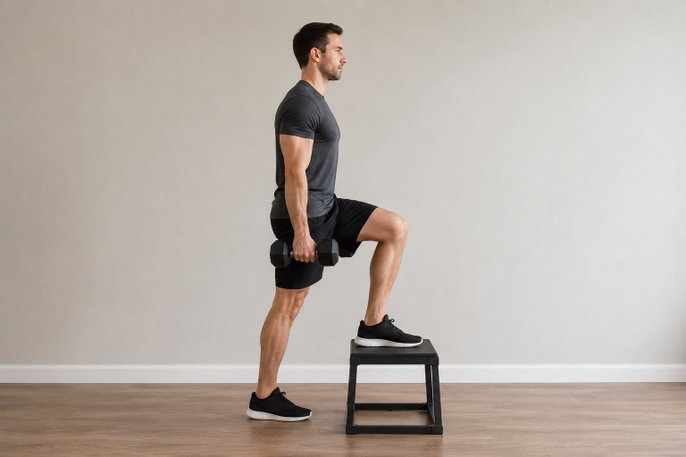
The dumbbell step-up works the quadriceps, glutes and hip stabilizers. It can also support functional strength because it is similar to climbing stairs.
How to perform: Stand in front of a stable step, bench or box while holding one dumbbell in each hand. Place one foot fully on the step, push through that foot to lift the body up, then lower back down with control. Repeat on the same leg or alternate sides.
Do 2 to 3 sets of 8 to 10 repetitions per leg. This exercise can be done 2 times per week, with each set lasting about 30 to 60 seconds.
5. Dumbbell calf raise
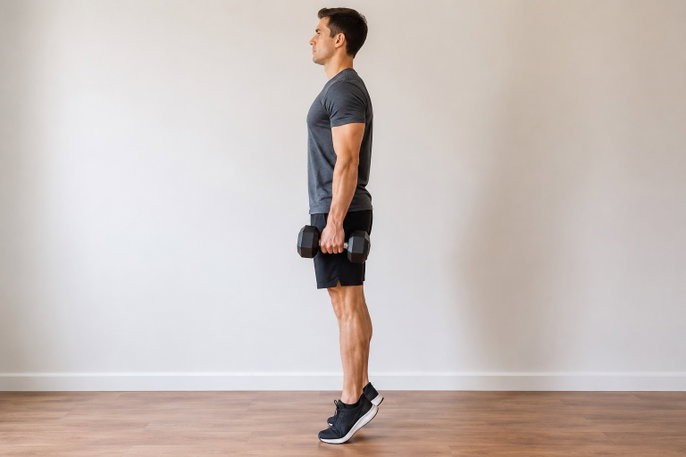
The dumbbell calf raise works the calf muscles, which help with walking, running and ankle stability. Strong calves also support lower-leg control during squats, lunges and step-ups.
How to perform: Stand upright while holding one dumbbell in each hand at the sides. Lift the heels off the floor and rise onto the balls of the feet, then lower the heels slowly back to the starting position. The movement should be controlled and should not be bounced.
Do 2 to 4 sets of 12 to 20 repetitions. This exercise can be done 2 to 3 times per week and usually takes less than 5 minutes.
6. Dumbbell split squat
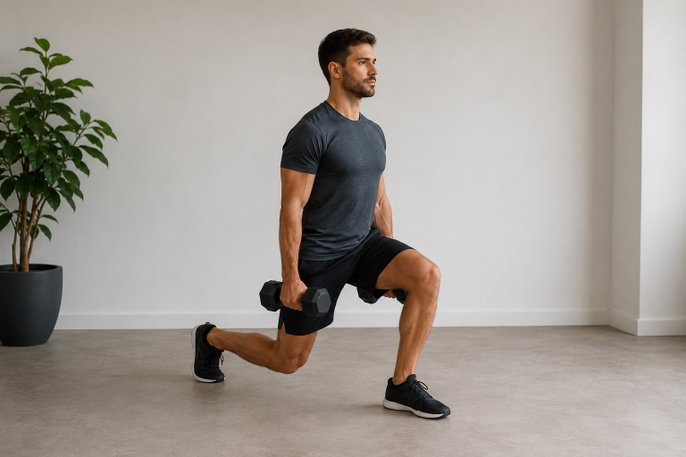
The dumbbell split squat works the quadriceps, glutes and hamstrings, while also challenging balance and hip stability. The position of the dumbbells can change how the muscles are loaded, with side-loaded dumbbells often feeling more balanced and a front-loaded dumbbell increasing trunk demand.
How to perform: Stand with one foot forward and one foot behind while holding a dumbbell in each hand. Bend both knees and lower the body until the back knee moves toward the floor, then push through the front foot to return to the starting position. Keep the movement slow and controlled.
Do 2 to 4 sets of 8 to 12 repetitions per leg. This exercise can be done 1 to 2 times per week, depending on the rest of the training plan.
7. Dumbbell walking lunge
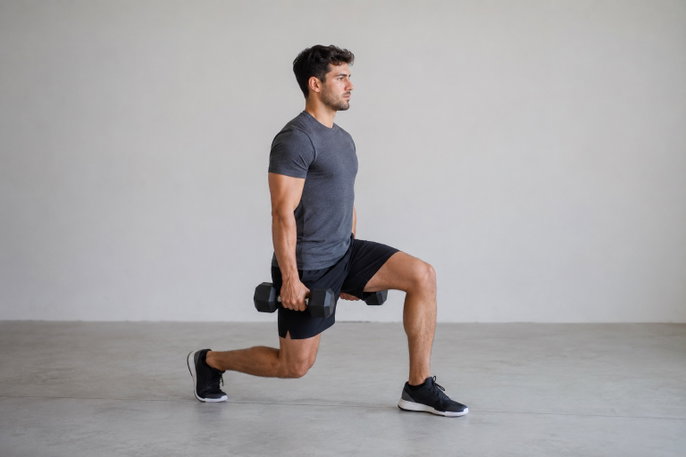
The dumbbell walking lunge works the glutes, quadriceps and hamstrings. Lunges can be especially useful for glute activation and for training each leg separately.
How to perform: Stand upright while holding one dumbbell in each hand. Step forward with one leg, bend both knees until the back knee moves toward the floor, then push through the front foot and bring the back leg forward into the next step. Continue alternating legs with control.
Do 2 to 3 sets of 8 to 12 steps per leg. This exercise can be done 1 to 2 times per week, with each set lasting about 45 to 90 seconds.
8. Dumbbell front-foot elevated split squat
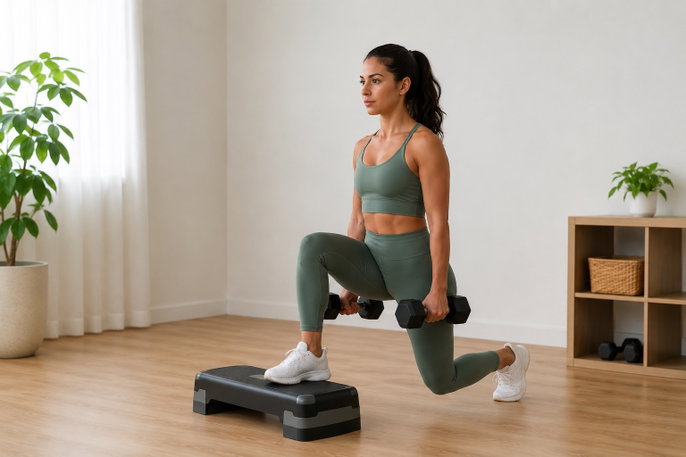
The dumbbell front-foot elevated split squat works the quadriceps and glutes through a larger range of motion. It can be more challenging than a regular split squat because the front leg has to control a deeper bend.
How to perform: Place the front foot on a low, stable platform and the back foot behind the body. Hold a dumbbell in each hand, bend both knees and lower with control until comfortable. Push through the front foot to return to the starting position.
Do 2 to 3 sets of 8 to 10 repetitions per leg. This exercise can be done 1 time per week at first, then increased as strength and balance improve.
9. Dumbbell lateral step-up
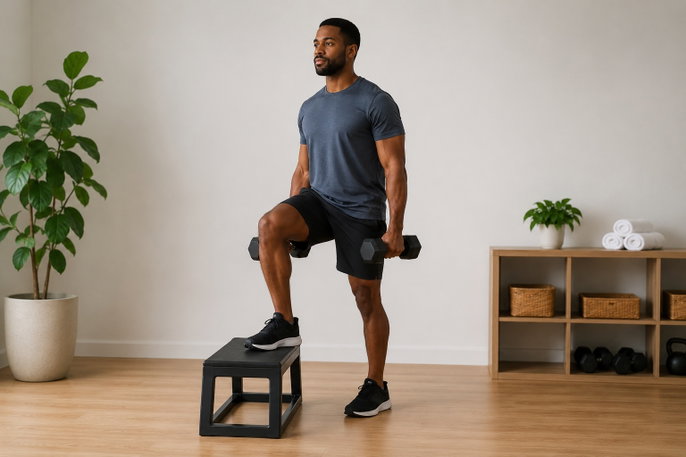
The dumbbell lateral step-up works the quadriceps, glutes and gluteus medius, which helps stabilize the hip. It can be useful for training side-to-side control and single-leg strength.
How to perform: Stand next to a stable step or bench while holding one dumbbell in each hand. Place the foot closest to the step on top of it, push through that foot to lift the body up, then lower back down slowly. Repeat on one side before switching legs.
Do 2 to 3 sets of 8 to 10 repetitions per leg. This exercise can be done 1 to 2 times per week, with each set lasting about 30 to 60 seconds.
10. Heavy dumbbell Romanian deadlift
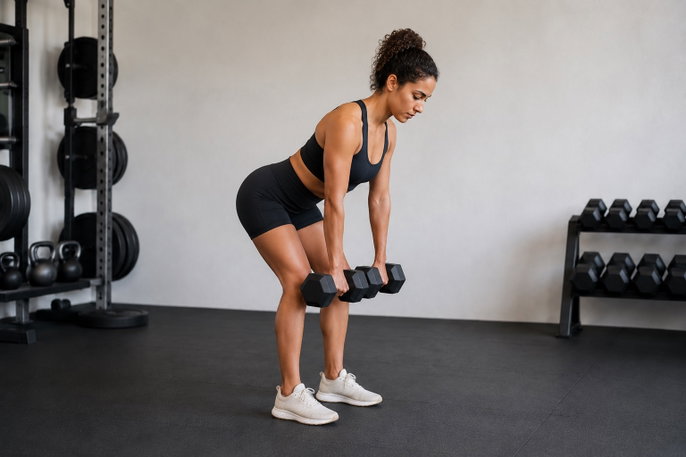
The heavy dumbbell Romanian deadlift trains the hamstrings, glutes and spinal stabilizers. Heavier dumbbells may provide more strength and muscle-building stimulus when the movement is done safely.
How to perform: Stand with the feet hip-width apart and hold a dumbbell in each hand. Keep the dumbbells close to the legs, move the hips backward and lower the weights until the hamstrings feel stretched. Drive the hips forward to return to standing without rounding the back.
Do 3 to 4 sets of 6 to 10 repetitions. This exercise can be done 1 to 2 times per week, with heavier weights used only when technique is stable.
Cool down
A cool down helps the body return to a resting state after training. It can include light movement and gentle stretching for the main muscles used during the workout.
1. Slow walking
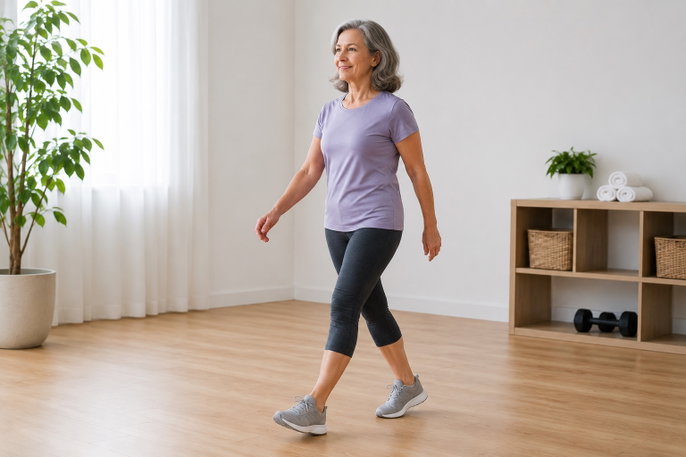
Slow walking helps lower the heart rate gradually after dumbbell leg exercises. It can also reduce the sudden feeling of fatigue that may happen after intense lower-body sets.
How to perform: Walk at an easy pace on the floor or treadmill. Keep the shoulders relaxed and breathe normally. Continue until breathing feels more settled.
Do this for 3 to 5 minutes after each workout. It can be done after dumbbell leg workouts at home or in the gym.
2. Standing quadriceps stretch
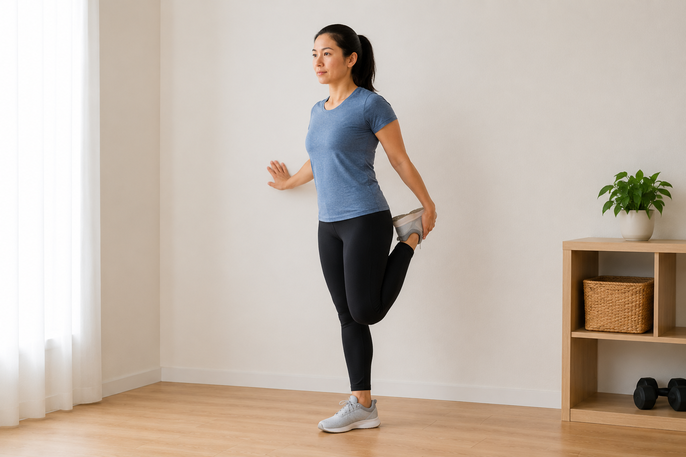
The standing quadriceps stretch targets the front of the thigh. This area works hard during squats, lunges and step-ups.
How to perform: Stand upright and hold a wall or stable surface if needed. Bend one knee and bring the heel toward the glutes, holding the ankle or foot without forcing the movement. Release slowly and repeat on the other side.
Hold for 20 to 30 seconds per leg. This stretch can be done after each workout.
3. Hamstring stretch
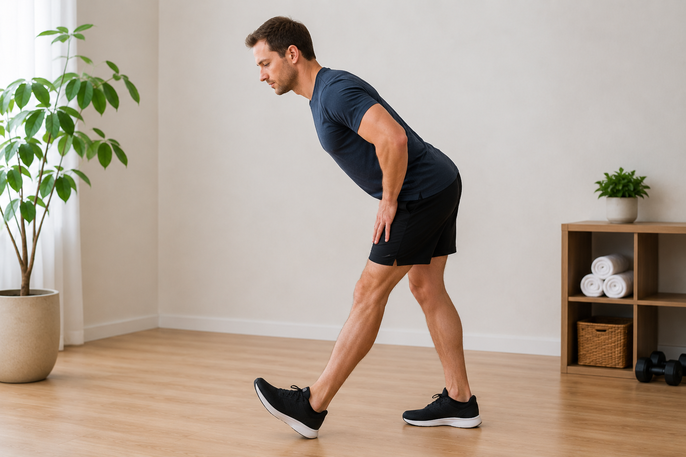
The hamstring stretch targets the back of the thigh. It is especially useful after Romanian deadlifts and other hip-hinge exercises.
How to perform: Place one heel on the floor slightly in front of the body. Keep the knee slightly bent and move the hips back until a gentle stretch is felt in the back of the thigh. Return to standing slowly and switch legs.
Hold for 20 to 30 seconds per leg. This stretch can be done after every dumbbell leg workout.
4. Glute stretch
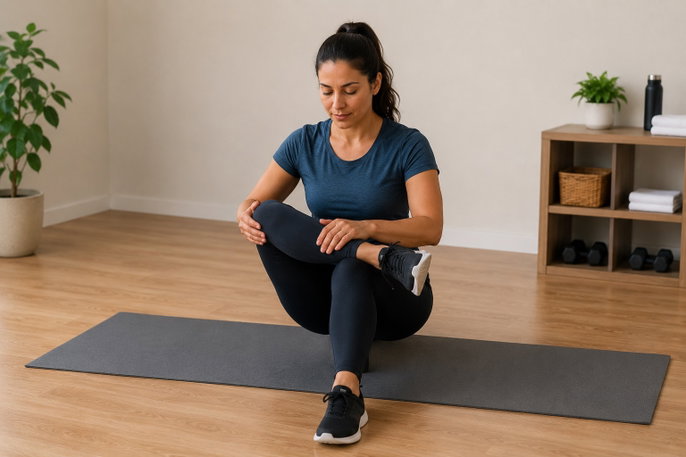
The glute stretch targets the muscles around the hips and buttocks. These muscles are strongly involved in lunges, squats and step-ups.
How to perform: Sit on the floor or on a bench and cross one ankle over the opposite thigh. Keep the back straight and lean forward slightly until a gentle stretch is felt in the glute. Return to the starting position and switch sides.
Hold for 20 to 30 seconds per side. This stretch can be done after each lower-body session.
Sample dumbbell leg workout plan
A sample plan can help organize Leg Workouts with Dumbbells in a simple way. The plan should allow rest between sessions and can be adjusted according to fitness level, available dumbbells and exercise technique.
This plan trains the quadriceps, glutes, hamstrings and calves with simple equipment. It can be done at home or in the gym with one or two dumbbells and a stable step, bench or box.
This workout can be done 1 to 2 times per week, depending on the person’s full exercise routine. At least 48 hours of rest before another hard leg workout can help the muscles recover.
Progress can be made by adding repetitions, increasing dumbbell weight or improving control during each movement. Any exercise that causes sharp pain, dizziness or loss of balance should be stopped, and guidance from a doctor or certified fitness professional may be needed for people with injuries, chronic disease or a higher risk of falls.