


The lat pulldown is a key exercise for strengthening and toning muscles in the back, particularly the latissimus dorsi, trapezius, and rhomboids. In addition to targeting the back, the lat pulldown also works the biceps and abdominal muscles.
This exercise can be performed using a cable machine, often referred to as a pulley machine, with either a straight bar or a triangle attachment and can be included in back workouts.
Since the lat pulldown can be challenging for beginners, it is recommended to perform this exercise under the supervision of a trained professional. A licensed personal trainer can ensure that movements are performed correctly, minimizing the risk of injury.

Muscles worked
Benefits of the lat pulldown include:
-
Strengthening and defining the latissimus dorsi, rhomboids, and trapezius muscles;
-
Toning and strengthening the deltoids (shoulder muscles);
-
Engaging the biceps brachii, the muscles at the front of the arms.
Additionally, the lat pulldown helps strengthen the abdominal muscles, as the core remains engaged throughout the exercise.
How to do
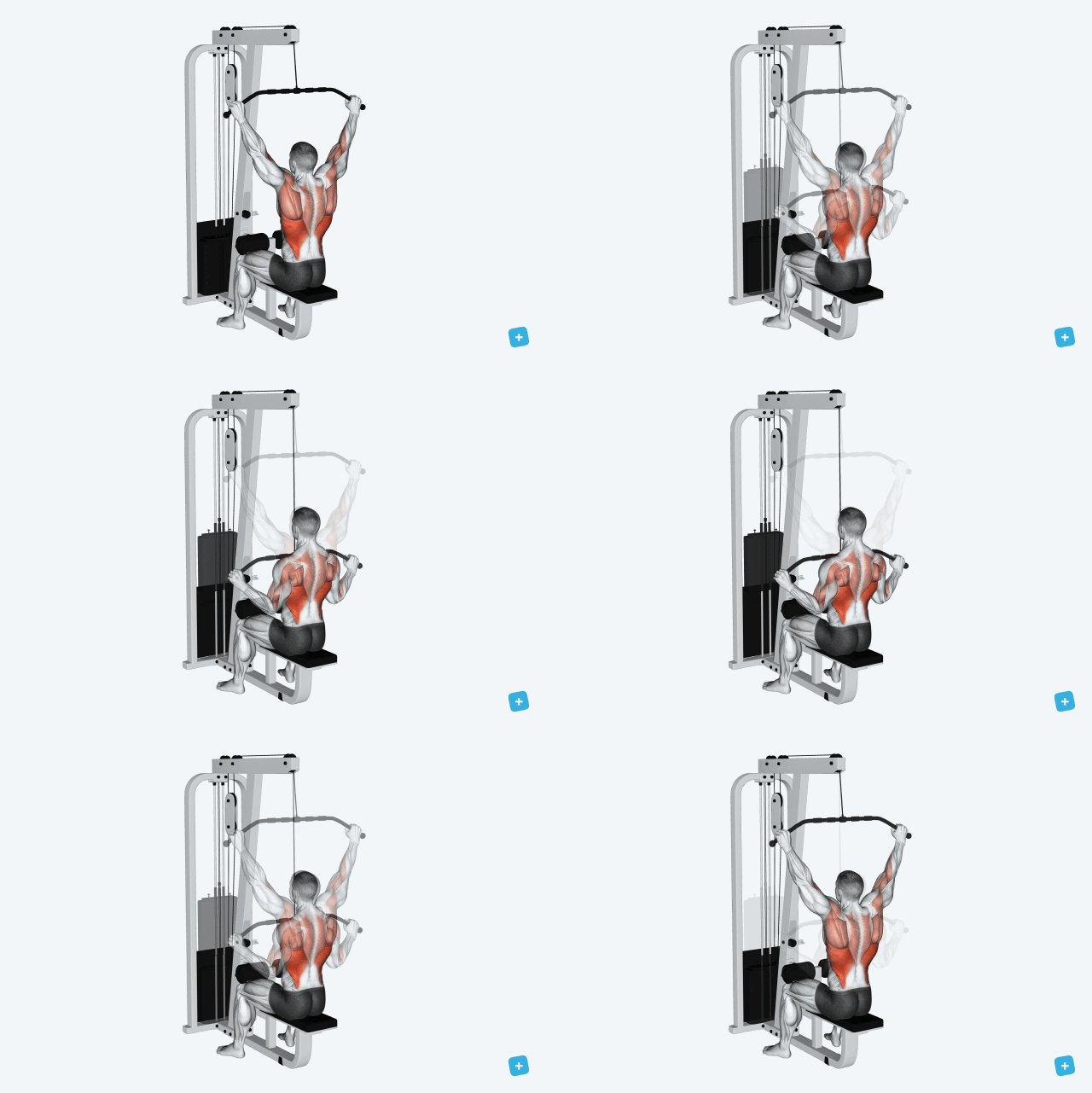
To perform the lat pulldown correctly:
-
Adjust the height of the bench and select the appropriate weight on the machine;
-
Sit on the bench, facing the pulley, securing your knees under the pads, and placing your feet flat on the floor;
-
Grasp the bar with your palms facing downward and your hands placed slightly wider than shoulder-width apart;
-
Extend your arms fully, but avoid locking your elbows or lifting off the bench;
-
Keep your core engaged, your back straight, shoulders down and back, and gaze forward throughout the exercise;
-
Exhale and slowly pull the bar toward your chest, aiming for just below the scapula, with elbows pointing downward. Focus on using the strength of your back muscles;
-
Inhale and control the bar as you return it to the starting position, ensuring that your elbows do not fully extend and your shoulders remain stable.
Perform 2 to 5 sets of 8 to 15 repetitions per set, taking 45 to 60 seconds of rest between each set. As always, it is important to follow the guidance of a fitness professional.
Lat pulldown variations
There are several variations of the lat pulldown that target different muscles depending on your goals.
1. Wide-grip lat pulldown
The wide-grip lat pulldown, also known as the pronated lat pulldown, is done using a cable machine with a straight bar. This variation primarily targets the latissimus dorsi, trapezius, and rhomboid muscles in the back, while also working the biceps.
In this version, your palms face downward, and your hands are spaced slightly wider than shoulder-width apart.
2. Supine lat pulldown
The supine lat pulldown, sometimes referred to as the close-grip or reverse lat pulldown, focuses on the latissimus dorsi and biceps muscles.
For this variation, you use a reverse grip, holding a straight bar with your palms facing your body, and your hands positioned shoulder-width apart.
3. Neutral-grip lat pulldown
The neutral-grip lat pulldown primarily targets the latissimus dorsi and trapezius muscles.
In this variation, you use a triangle attachment and grip the handles with your palms facing each other.
4. Articulated lat pulldown
The articulated lat pulldown is a variation similar to the traditional lat pulldown. It also targets the latissimus dorsi, trapezius, and rhomboid muscles.
However, this exercise is performed on a machine that allows for unilateral movement, which can help improve the execution of the movements and lead to better overall results.
Also recommended: Back Workouts: 12 Gym & Home Exercises (with 4 Free Workout Plans) tuasaude.com/en/back-workout