


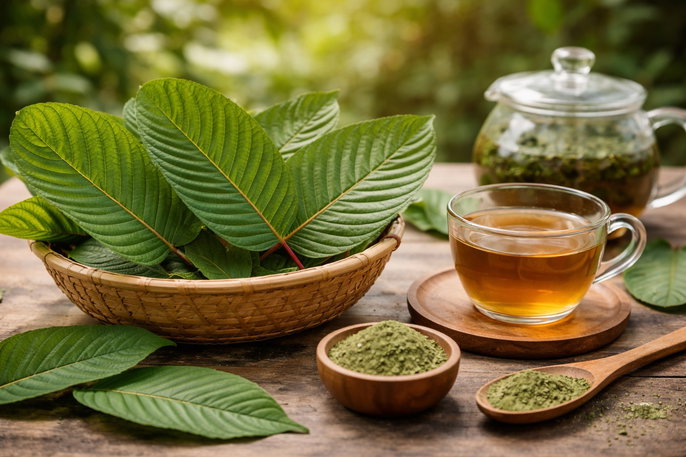
Kratom is a tropical plant that comes from Southeast Asia and has been used traditionally for its stimulant and pain-relieving effects. Its scientific name is Mitragyna speciosa, and it contains natural compounds that act on the body in different ways.
This plant has gained attention in recent years because of its possible health effects and its use in different forms such as teas, powders, and capsules. The compounds in kratom, especially alkaloids like mitragynine, are responsible for many of its effects in the body.
Kratom is not approved by the FDA as a medication or dietary supplement in the United States. Authorities have warned about risks such as contamination, variability in products, and lack of standardized dosing.
Health benefits
Kratom has been studied for several potential health effects, although more research is still needed to confirm these benefits:
1. Pain relief
Kratom contains alkaloids that act on receptors in the brain linked to pain perception. These compounds may help reduce different types of pain, which is why the plant has been used traditionally as a natural analgesic.
2. Support during opioid withdrawal
Some studies suggest that kratom may help reduce symptoms of opioid withdrawal. It may interact with similar receptors in the brain, which can help ease cravings and discomfort in some cases.
3. Possible metabolic effects
Recent research has suggested that kratom use may be linked to improvements in lipid levels, such as lower LDL and triglycerides and higher HDL. These findings indicate possible benefits for metabolic health, although more studies are needed.
4. Anti-inflammatory effects
Kratom may have anti-inflammatory properties due to its active compounds. These effects could help reduce inflammation in the body, although current evidence is still limited.
Types of this plant
Kratom can vary depending on its origin, age, and processing methods, which affect its chemical composition.
1. Red vein kratom
Red vein kratom is often associated with higher levels of certain alkaloids linked to relaxing and pain-relieving effects. It is usually made from more mature leaves.
2. Green vein kratom
Green vein kratom is considered to have a more balanced profile, with both stimulating and calming effects. Its alkaloid content is typically intermediate.
3. White vein kratom
White vein kratom is often described as more stimulating. It may have different proportions of alkaloids that can increase alertness.
How to use it
Kratom can be used in different forms, and the way it is prepared can influence how much of its active compounds are absorbed.
1. Tea
Kratom leaves or powder can be prepared as a tea by steeping in hot water. This method may extract lower amounts of active compounds compared to other forms, leading to milder effects.
2. Powder
Kratom is commonly consumed as a powder made from dried leaves. It can be mixed with liquids or taken directly, and this form may provide higher exposure to its active compounds.
3. Capsules
Capsules contain measured amounts of kratom powder, which can help standardize intake. The body absorbs the active compounds differently depending on the preparation, with variable bioavailability.
4. Extracts
Kratom extracts are more concentrated forms that contain higher levels of active compounds. These products may produce stronger effects and require caution due to increased potency.
Risks and side effects
Kratom use can lead to a range of side effects, which may vary depending on the dose and individual factors. Some of the most commonly reported effects include nausea, vomiting, and dizziness. These effects are usually mild but can be uncomfortable.
In some cases, kratom has been linked to more serious effects such as liver injury, seizures, and heart-related problems. These events are less common but have been reported in clinical reviews.
Dependence risk
Although considered lower than some substances, kratom may still lead to dependence in some users. Long-term or high-dose use increases this risk.
Contraindications for use
Kratom is not suitable for everyone, especially in certain health conditions or situations. Kratom should be avoided during pregnancy, as it may lead to withdrawal symptoms in newborns. Its safety during breastfeeding is also not established.
Kratom can interact with medications by affecting enzymes involved in drug metabolism. This may change how certain drugs work in the body and increase the risk of side effects.
People with liver or kidney problems should avoid kratom due to the risk of toxicity and organ stress. These organs are involved in processing its compounds