


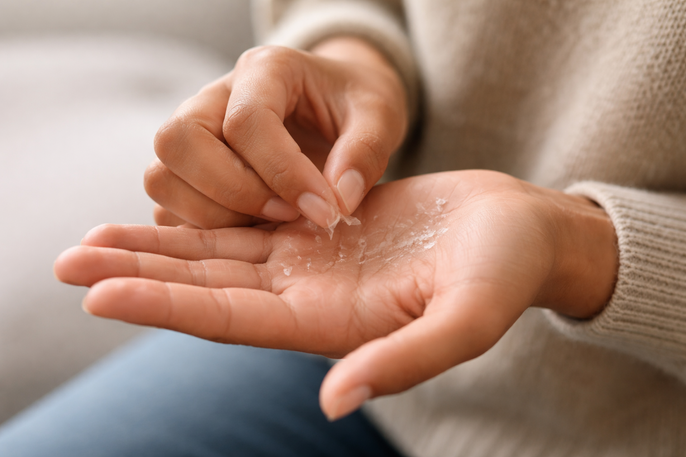
Keratolysis exfoliativa is a benign skin condition that causes superficial peeling of the palms of the hands and sometimes the soles of the feet. It usually appears as small, air-filled blisters that break easily, leaving areas of dry, peeling skin.
This condition is not contagious and does not spread from person to person. It often occurs in cycles, with periods of improvement followed by flare-ups, especially during warmer months or with increased sweating.
Although it can look concerning, keratolysis exfoliativa is generally harmless. Treatment focuses on relieving symptoms, protecting the skin, and reducing triggers such as irritation or excessive moisture.
Main symptoms
Keratolysis exfoliativa mainly affects the hands and may occasionally involve the feet. Symptoms tend to be mild but can be uncomfortable.
-
Superficial peeling of the skin on the palms
-
Small blisters that break and leave peeling areas
-
Collarette scaling around the edges of peeled skin
-
Dry, cracked, or tender skin
-
Little or no itching
Symptoms often improve on their own but may return, especially in hot or humid conditions.
Common causes
The exact cause of keratolysis exfoliativa is not fully understood. It is linked to changes in the outer layer of the skin, where cells separate earlier than normal.
1. Skin barrier changes
The condition involves premature separation of skin cells in the outer layer, leading to peeling without significant inflammation.
2. Environmental triggers
Several external factors can worsen or trigger symptoms:
-
Heat and warm weather
-
Excessive sweating (hyperhidrosis)
-
Frequent contact with water
-
Exposure to soaps, detergents, or chemicals
3. Mechanical irritation
Friction or repeated minor trauma to the hands may also contribute to flare-ups.
Confirming a diagnosis
Keratolysis exfoliativa is usually diagnosed based on the appearance of the skin and medical history. The pattern of peeling and the lack of inflammation help distinguish it from other conditions.
In unclear cases, additional tests such as fungal exams or skin biopsy may be used to rule out infections or other skin disorders like eczema or psoriasis.
Treatment options
Treatment focuses on improving skin hydration, reducing irritation, and supporting the skin barrier.
1. Moisturizers and keratolytic creams
Regular use of emollients is the main treatment. Products containing urea, lactic acid, ammonium lactate, or salicylic acid can help soften and remove peeling skin.
2. Avoiding irritants
Reducing exposure to harsh soaps, chemicals, and excessive water can help prevent worsening of symptoms.
3. Advanced treatments
In more severe or persistent cases, treatments such as oral medications like acitretin or phototherapy may be considered. Topical corticosteroids are generally not effective.
Prevention measures
Preventive measures focus on protecting the skin and reducing triggers:
-
Use gentle cleansers instead of harsh soaps
-
Apply moisturizers frequently to keep the skin hydrated
-
Wear protective gloves during wet work or when handling chemicals
-
Avoid very hot water when washing hands
-
Manage excessive sweating if present
These measures can help reduce flare-ups and improve overall skin comfort.
When to see a doctor
Medical evaluation may be needed if symptoms are severe, persistent, or unclear. It is also important to seek care if there is pain, signs of infection, or if the condition does not improve with basic skin care.