


Itchy hands are a symptom of conditions like dyshidrosis, atopic dermatitis, dry skin, or an allergic reaction.
Depending on the cause, itchy hands may be accompanied by other symptoms like swelling, dryness, blisters, wounds, itchy nose, and red spots on the skin.
A dermatologist or primary care provider should be consulted to confirm a diagnosis and prescribe the best treatment, which may include allergy medications like antihistamines, moisturizers, and phototherapy.
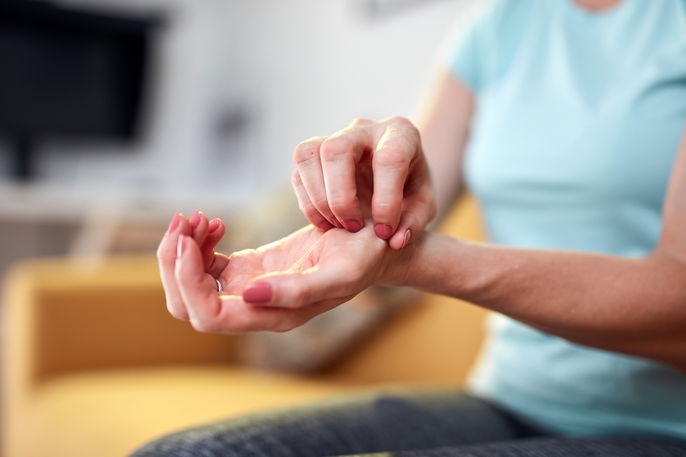
The main causes of itchy hands include:
1. Dyshidrosis
Dyshidrosis, or dyshidrotic eczema, is a skin condition that causes small blisters and intense itching of the hands, sides of the fingers, and soles of the feet.
What to do: Treatment of dyshidrosis generally involves applying cold compresses or soaking the hands in cold water to reduce discomfort and itching. Moisturizers prescribed by a doctor are also recommended to help treat dry skin.
Treatments like oral antihistamines and corticosteroids, corticosteroid creams, and phototherapy may also be recommended.
2. Atopic dermatitis
Atopic dermatitis, or atopic eczema, is chronic inflammation of the skin causing itching of the hands, cheeks, neck, and feet as well as dry patches and blisters that can lead to the formation of wounds.
What to do: Treatment of atopic dermatitis involves the use of corticosteroid creams or ointments prescribed by a dermatologist. Moisturizers and phototherapy may also be recommended.
3. Dry skin
Itchy hands, rough skin, and cracking are some of the symptoms associated with dry skin, a condition caused by temperature changes, poor water intake, or washing the hands with hot water.
What to do: Some tips for relieving dry skin include: avoiding using hot water to bathe or wash your hands, using moisturizers, and drinking enough water during the day.
4. Allergic reactions
An allergic reaction can cause symptoms like itching or swelling of the hands, sneezing, red spots on the skin, and itching of the nose, eyes, or throat.
These symptoms are caused by an exaggerated immune response in the body to allergens like mites, pollen, animal dander, or certain foods like milk, shrimp, or peanuts.
What to do: Allergy treatments should be prescribed by a healthcare provider and may include corticosteroids, antihistamines, and biologics to alleviate symptoms.
In the most severe cases, treatment may need to be done in the hospital with injections of adrenaline, antihistamines, or corticosteroids in addition to opening up the airways.
5. Cholangitis
Cholangitis is inflammation of the bile duct causing symptoms like itching of the hands and other parts of the body, swelling of the feet and ankles, yellowing of the skin and eyes, and pain in the right upper abdomen.
What to do: A gastroenterologist or hepatologist (liver specialist) may prescribe medications like ursodeoxycholic acid and cholestyramine to help the bile drain from the liver and relieve itching. A liver transplant may be needed in the most severe cases, particularly in cases of advanced liver damage.
6. Psoriasis
Psoriasis is an inflammatory skin disease causing symptoms like itching of the hands, arms, elbows, legs, and scalp. Psoriasis can also cause the appearance of dry, red patches on the skin, mild burning, and pain.
What to do: Treatment of psoriasis is managed by a dermatologist and includes the use of corticosteroid creams, phototherapy, and a proper diet.