


- Sudden trouble speaking, facial drooping, or weakness on one side of the body can be signs of an ischemic stroke.
- Difficulty walking, fainting, vision changes, or vomiting may also happen and need urgent medical attention.
- Symptoms that improve within minutes can still be a warning sign of a transient ischemic attack and should not be ignored.
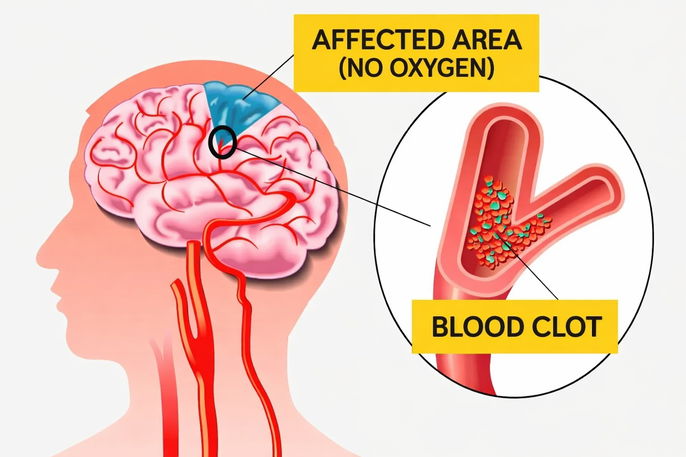
An ischemic stroke happens when a blood vessel in the brain becomes blocked by a clot. This prevents oxygen from reaching brain cells and can cause symptoms such as trouble speaking, a drooping mouth, weakness on one side of the body, and vision changes.
It is more common in older adults and in people with cardiovascular risk factors such as high blood pressure, high cholesterol, or diabetes. Even so, it can happen at any age.
Because brain cells begin to die within minutes after blood flow is interrupted, stroke is always a medical emergency. Fast treatment in the hospital is essential to reduce the risk of serious complications such as paralysis, brain injury, or death.
Common symptoms
The most common symptoms of ischemic stroke include:
-
Trouble speaking or smiling.
-
A drooping mouth and an uneven face.
-
Weakness on one side of the body.
-
Difficulty raising the arms.
-
Trouble walking.
Other symptoms may also occur, such as tingling, vision changes, fainting, headache, and vomiting, depending on the area of the brain affected.
According to the American Heart Association (AHA), stroke symptoms can include sudden weakness on one side of the body, trouble speaking, facial drooping, and difficulty walking due to interrupted blood flow to the brain.
What is a transient ischemic attack?
A transient ischemic attack, or TIA, happens when stroke-like symptoms are caused by a very small clot that is carried along by the bloodstream and stops blocking the vessel.
In these cases, symptoms usually improve within a few minutes, and hospital tests may not show any visible changes in the brain.
Online symptom test
To check the likelihood of having a stroke, please select the symptoms you are experiencing:
This test is only a guidance tool. It is not meant to provide a diagnosis and does not replace an evaluation by a healthcare professional.
Confirming a diagnosis
Whenever stroke is suspected, it is very important to go to the hospital right away to confirm the diagnosis.
Also recommended: What to Do if Someone Is Having a Stroke tuasaude.com/en/what-to-do-if-someone-is-having-a-strokeAccording to the CDC, imaging tests such as computed tomography (CT) scans or magnetic resonance imaging (MRI) are commonly used to confirm stroke and determine whether it is ischemic or hemorrhagic.
Doctors usually use imaging tests such as a CT scan or MRI to identify the blockage causing the stroke and begin the most appropriate treatment.
Main causes
An ischemic stroke occurs when a blood vessel in the brain becomes blocked, so blood cannot reach brain cells with oxygen and nutrients. This blockage can happen in two main ways.
-
Blockage from a clot: this is more common in older adults or in people with heart conditions, especially atrial fibrillation.
-
Narrowing of the blood vessel: this usually happens in people with uncontrolled high blood pressure or atherosclerosis, because the vessels become less flexible and narrower over time, which reduces or blocks blood flow.
Other factors can also increase the risk of blood clots and ischemic stroke, such as a family history of stroke, smoking, being overweight or obese, having a sedentary lifestyle, or using birth control pills.
Treatment options
Treatment for ischemic stroke is done in the hospital and usually begins with thrombolytic medicine given through a vein. These medicines help break up the clot that is blocking the blood vessel.
If the clot is very large and cannot be removed with thrombolytic medicine alone, a mechanical thrombectomy may be needed. In this procedure, a doctor inserts a thin, flexible tube called a catheter into an artery in the groin or neck and guides it to the blocked blood vessel in the brain to remove the clot.
In cases where the stroke is related to narrowing of the vessel rather than a clot, the doctor may also use a catheter to place a stent in the affected area. A stent is a small metal mesh tube that helps keep the vessel open so blood can flow through it.
After treatment, the person should stay under observation in the hospital for a few days. During this time, the doctor will assess any aftereffects and may recommend medicines, physical therapy, and speech therapy.
Can an ischemic stroke be reversed?
Ischemic stroke can have a good outcome when the person gets to the hospital as soon as the first symptoms appear and receives prompt treatment to dissolve the clot. Early care improves the chances of controlling symptoms and reducing long-term complications.
Ischemic vs hemorrhagic stroke
Unlike ischemic stroke, hemorrhagic stroke is less common and happens when a blood vessel in the brain ruptures. This keeps blood from circulating normally and is more likely in people with uncontrolled high blood pressure, those taking anticoagulants, or those with a brain aneurysm.