


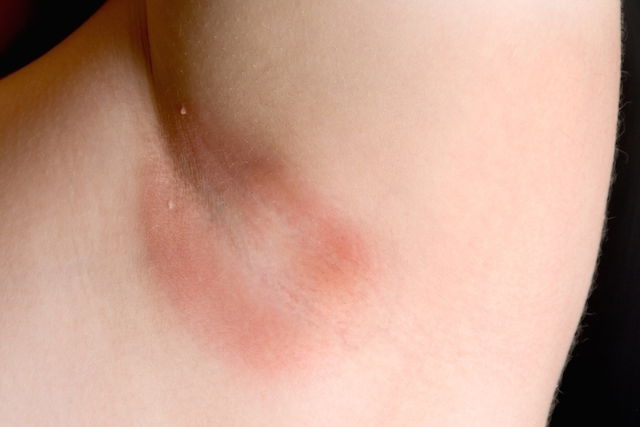
Intertrigo is a type of skin inflammation caused by friction and moisture buildup, leading to itching, redness, and skin sores. These conditions create an ideal environment for microorganisms such as fungi and bacteria to multiply.
Also known as chafing, intertrigo usually appears in skin folds and in areas where skin rubs together, such as the armpits, groin, abdomen, inner thighs, and between the fingers and toes. It is more common in people with overweight or diabetes.
If intertrigo is suspected, it’s important to see a dermatologist to confirm the diagnosis and start appropriate treatment. Management may include antiperspirant powders or creams, as well as antifungal, antibiotic, or corticosteroid medications.
Common symptoms
The main symptoms of intertrigo include:
-
Itching;
-
Burning sensation
-
Tingling or pain in the affected area;
-
Redness and peeling;
-
Sores or crusting on the skin;
-
Moisture and clear drainage.
Intertrigo typically develops in areas where skin rubs together, such as the armpits, under the breasts, abdomen, groin, between the fingers and toes, and along the inner thighs.
The first symptom is often itching in the affected area. If intertrigo is not treated, other symptoms like redness, sores, and peeling may appear. In some cases, bacteria and fungi can multiply in the irritated skin, worsening inflammation and leading to blisters or pus.
Candidal intertrigo
Candidal intertrigo occurs when the fungus Candida albicans grows in the area affected by intertrigo. When this happens, itching tends to become more intense, and small red patches with well-defined borders may appear around the irritated skin.
Treatment for candidal intertrigo generally involves antifungal medications, especially topical creams such as nystatin or ketoconazole.
Confirming a diagnosis
A dermatologist or primary care provider can diagnose intertrigo by assessing the symptoms and examining the affected skin.
In some cases, a doctor may take a skin scraping for laboratory analysis to check for fungal or bacterial infection.
Possible causes
Intertrigo is caused by friction between skin surfaces, most commonly in areas with folds such as the armpits and abdomen. These areas also tend to retain moisture, which increases friction and irritation.
The condition is more frequent in hot, humid weather and in people who are bedridden, wear diapers, have urinary incontinence, sweat excessively, or have conditions like diabetes or obesity.
Wearing tight clothing or closed shoes made of synthetic materials can also contribute to the development of intertrigo.
Treatment options
Treatment for intertrigo typically includes the use of:
-
Corticosteroid creams, such as hydrocortisone or dexamethasone, for 5 to 7 days to reduce inflammation, redness, and itching;
-
Antifungal creams, such as ketoconazole, nystatin, or miconazole, for 2 to 3 weeks in cases of fungal infection. In severe or extensive infections, oral antifungals like fluconazole may be prescribed for about 7 days under medical guidance;
-
Antibiotic ointments, such as mupirocin or bacitracin, if a bacterial infection is suspected;
-
Antiperspirants, available as deodorants, powders, or creams, to help reduce moisture buildup.
It’s also important to avoid hot and humid environments and reduce sweating as much as possible. Regular showers and proper drying of the skin, especially on hot days or after physical activity, can help prevent irritation.
Wearing loose-fitting cotton clothing allows the skin to breathe, and open-toed shoes or sandals can help prevent moisture between the toes.