


- In vitro fertilization (IVF) involves fertilizing an egg with sperm in a lab before transferring the embryo to the uterus.
- IVF may be recommended for low ovarian reserve, poor semen quality, blocked fallopian tubes, or risk of passing on genetic conditions.
- Possible IVF risks include multiple pregnancy, miscarriage, and, rarely, ovarian hyperstimulation syndrome.
In vitro fertilization is an assisted reproduction technique that involves fertilizing an egg with sperm in a laboratory. It may be recommended for people with poor semen quality, low ovarian reserve, or a risk of passing genetic conditions to the baby.
This procedure is usually done in stages and can take 4 to 6 weeks. It involves using hormonal medications to stimulate the ovaries, fertilizing the eggs in a lab, and transferring the embryo into the uterus.
In vitro fertilization (IVF) is one of the most commonly used assisted reproduction techniques today and is offered in fertility clinics and specialized reproductive centers after a thorough medical evaluation. A fertility specialist, also called a reproductive endocrinologist, will determine whether IVF is an appropriate option for you.
When IVF is recommended
In vitro fertilization may be recommended in cases of:
-
Pelvic inflammatory disease, which can block the fallopian tubes
-
Gynecological conditions, such as endometriosis or uterine fibroids
-
Poor semen quality, such as a low sperm count
-
Women who are no longer able to produce eggs, using donor eggs or embryos
-
Treatments that may affect ovarian reserve, using eggs frozen before treatment begins
-
Women who want to become pregnant after age 35, as fertility usually declines with age
-
Risk of passing on genetic conditions, such as when there is a family history
However, especially when infertility is suspected, the doctor usually recommends fertility testing for both partners to identify the cause of difficulty getting pregnant and determine whether in vitro fertilization is the best option.
How to prepare
Before in vitro fertilization, women commonly have blood tests, such as FSH and/or estradiol levels, to assess ovarian reserve. Imaging tests may also be done to check for changes in the uterus that could interfere with embryo implantation.
For men, a semen analysis is usually recommended to check whether the sperm are normal and assess whether other assisted reproduction techniques may be needed.
Doctors also usually recommend that both partners be tested for some sexually transmitted infections (STIs), such as HIV, hepatitis B, and syphilis, as these infections may affect the success of in vitro fertilization.
IVF process
In vitro fertilization is performed in an assisted reproduction clinic in several stages:
1. Ovarian stimulation
The first stage of in vitro fertilization is ovarian stimulation, in which the ovaries are stimulated with hormonal medications to produce eggs.
2. Egg retrieval
Egg retrieval is done when the eggs are mature.
This procedure is performed through transvaginal ultrasound-guided aspiration, and the collected eggs are then sent to the laboratory.
3. Sperm collection and preparation
After egg retrieval, sperm is collected from the partner or a sperm donor.
If the partner has had an irreversible vasectomy, sperm may be collected through testicular aspiration.
The sperm is prepared in the laboratory by selecting the most active and healthy sperm to fertilize the egg.
4. Fertilization
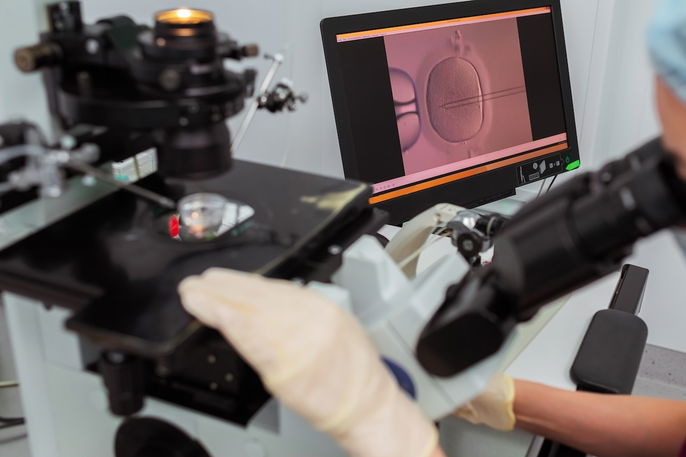
Fertilization is done in the laboratory by placing the eggs and sperm together in a dish to allow fertilization to occur.
If the chances of fertilization are low, a sperm cell may be injected directly into the egg. This technique is called intracytoplasmic sperm injection.
5. Embryo culture
After fertilization, the embryo is cultured and monitored in the laboratory for a few days.
During this time, embryologists select the best embryos for implantation.
6. Embryo transfer
The embryo is transferred into the woman’s uterus using a catheter by a gynecologist at the assisted reproduction clinic.
7. Pregnancy test
To check whether in vitro fertilization was successful, a pregnancy test is usually done to measure beta-hCG levels in the blood about 10 to 14 days after the embryos are transferred to the uterus.
Potential risks
One of the most common risks of in vitro fertilization is multiple pregnancy (twins, triplets, etc.), which can happen when more than one embryo is transferred to the uterus. According to the American Society for Reproductive Medicine, guidelines aim to reduce multiple pregnancies by limiting the number of embryos transferred.
There is also a risk of miscarriage. For this reason, the pregnancy should always be monitored by an obstetrician and a fertility specialist.
In addition, although rare, the medications used for in vitro fertilization can cause ovarian hyperstimulation syndrome in some people. This may lead to symptoms such as abdominal pain, fluid buildup in the body, and shortness of breath.