


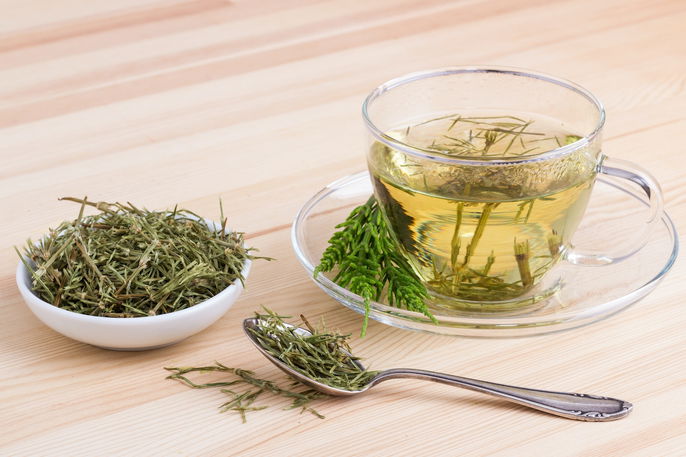
Horsetail tea is made from the dried stems of the Equisetum arvense plant, traditionally used in herbal medicine for its diuretic and anti-inflammatory properties. Its high content of silica and antioxidants has drawn attention for potential benefits related to bone health and urinary tract support.
Although horsetail tea has a long history of use in folk remedies, scientific research is still limited, and many health claims are based on small studies or lab tests. Some components, like silica and certain antioxidants, have shown biological activity in animals and humans, but further research is needed to confirm their effects.
Horsetail contains active compounds such as flavonoids, saponins, and phenolic acids. While it may support certain functions like fluid balance and wound healing, it also contains substances that may pose risks if used long term or in high doses. This article outlines the known benefits, proper use, and safety considerations associated with horsetail tea.
Health benefits
Horsetail tea benefits include:
1. Supports fluid elimination
Horsetail tea has mild diuretic effects, which may help eliminate excess fluid from the body. A small clinical trial involving healthy men found that 900 mg of horsetail extract had diuretic activity comparable to 25 mg of hydrochlorothiazide over a 4-day period. However, this was a short-term study, and its findings cannot be generalized to long-term or therapeutic use.
2. May support bone health
Horsetail contains a high amount of silica, a mineral involved in bone formation. Some laboratory and animal studies suggest that silica in horsetail may help reduce bone breakdown and promote bone growth. A small clinical trial in postmenopausal women reported modest improvements in bone density, but more research is needed to confirm this benefit.
3. May have antioxidant and anti-inflammatory effects
The plant contains flavonoids and phenolic acids that exhibit antioxidant and anti-inflammatory properties in laboratory studies. These compounds may help reduce oxidative stress and protect cells from damage, although there is limited evidence of these effects in humans.
4. May help in minor urinary tract issues
Due to its diuretic action, horsetail has traditionally been used to manage minor urinary complaints. European health authorities recognize horsetail for short-term use in mild urinary tract conditions, though it is not considered a substitute for medical treatment in infections.
5. Potential antimicrobial properties (limited evidence)
In vitro studies show that horsetail extract may inhibit the growth of some gram-positive bacteria, such as Staphylococcus aureus and Streptococcus species. However, its effectiveness against fungi like Candida and gram-negative bacteria like E. coli is inconsistent. These results have not been confirmed in clinical settings.
How to make horsetail tea
To prepare horsetail tea:
-
Add 1 tablespoon (about 2 to 3 grams) of dried horsetail stems to 1 cup of boiling water.
-
Cover and steep for 5 to 10 minutes.
-
Strain and drink once cooled.
This tea can be consumed up to 2 times per day for short periods, not exceeding one week without medical supervision.
Ways to use horsetail tea
Horsetail tea is traditionally used in the following situations:
-
To reduce mild fluid retention (e.g., swollen legs or ankles)
-
As a complementary remedy in urinary tract wellness
-
To support hair and nail strength due to its silica content
-
Occasionally applied externally to help cleanse minor wounds, although direct evidence for topical use is limited
You are advised to speak to your health care provider before using horsetail tea for medicinal purposes.
Side effects
Although horsetail tea is generally well-tolerated when used short-term and in moderation, it may cause:
-
Stomach discomfort
-
Headache
-
Increased urination
-
Electrolyte imbalance with prolonged use
Long-term consumption is not recommended due to the risk of thiamine (vitamin B1) deficiency, as horsetail contains thiaminase, an enzyme that breaks down this essential vitamin.
In rare cases, allergic reactions such as rash or itching may occur.
Contraindications
Horsetail tea should be avoided in the following cases:
-
Pregnancy and breastfeeding: Not recommended due to a lack of safety data and the potential effects of thiaminase on vitamin B1 levels. A case report suggested possible developmental concerns following prenatal exposure.
-
Children: Not recommended for use in children under 12 due to lack of safety data.
-
Kidney disease: Horsetail's diuretic effects may worsen electrolyte imbalances and potentially lead to dangerous changes in potassium levels.
-
Thiamine deficiency or alcohol use disorder: Horsetail can reduce vitamin B1 levels and may worsen deficiency, particularly in people with poor nutritional status.
-
Allergy to nicotine or tobacco: Horsetail naturally contains small amounts of nicotine.
-
Lithium therapy: Horsetail may interact with lithium, increasing the risk of lithium toxicity.
-
Surgery: Discontinue use at least 2 weeks before any planned surgery due to potential effects on blood pressure and electrolyte balance.
Additionally, the FDA classifies horsetail as an herb of undefined safety, and its supplements are not evaluated for safety or efficacy in the same way as prescription medications.