


Head lice are small insects that attach to the scalp and hair, feeding on blood and causing itching and discomfort. Understanding how to remove lice from hair permanently involves combining proven medical treatments with practical cleaning strategies.
Effective options include medicated shampoos, prescription lotions, home remedies, and fine-tooth combing. These methods target both adult lice and their eggs, reducing the risk of reinfestation.
Most cases can be managed at home with consistent treatment and prevention steps, but severe or resistant infestations may require medical attention. Doctors may recommend alternative medications or further evaluation if lice persist, as untreated cases can lead to ongoing scalp irritation and secondary skin infections.
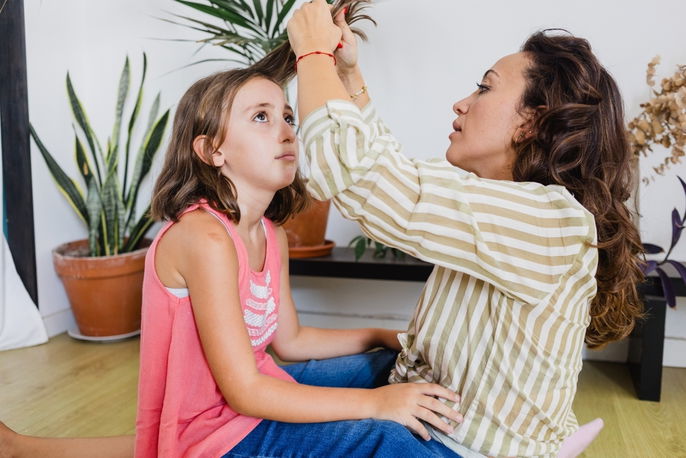
Quick start: Medicated treatments
When considering how to remove lice from hair permanently, medicated treatments help ensure better results and reduce the risk of recurrence. These options can be used alone or together with combing, and some may require a second application based on product instructions.
1. Over-the-counter options
Medications you can purchase at the pharmacy without a prescription include:
- Permethrin 1% cream rinse: Apply to washed, towel-dried hair and rinse after the label-directed time. Check for live lice and repeat in 7 to 9 days if needed.
- Pyrethrins with piperonyl butoxide: Apply to dry hair and rinse after the instructed time. A second application after 7 to 9 days is often recommended.
Speak to the pharmacist about where to find them and how to use specific products.
2. Prescription options
Medications that require a prescription to purchase include:
- Ivermectin 0.5% lotion: Single-application option for individuals 6 months and older.
- Spinosad 0.9% suspension: Ovicidal treatment for individuals 4 years and older; nit combing may be optional.
- Malathion 0.5% lotion: Ovicidal, may be preferred where resistance is suspected; use with care and keep away from heat sources.
- Benzyl alcohol 5% lotion: Kills live lice but not nits, so a second application is usually needed.
Use products exactly as labeled for age and safety, and combine with careful nit removal to improve outcomes. If live lice are seen after following directions, speak with a healthcare provider about switching to a different class of treatment.
The "wet combing" method: A step-by-step guide
Wet combing is the most effective way to remove both live lice and nits (eggs) without using harsh chemicals. It works by "stunning" the lice with conditioner, making them unable to move or scuttle away, while the lubrication allows the comb to slide through the hair easily.
Preparation Checklist
You will need the following items to perform wet combing:
Step-by-step instructions
-
Wash and Condition: Wash the hair with regular shampoo first. Apply a generous amount of white conditioner from the scalp to the ends. Do not rinse it out.
-
Detangle: Use a regular wide-toothed comb to remove any tangles so the nit comb won't snag.
-
Section the Hair: Divide the hair into small, manageable sections (about 1–2 inches wide).
-
The Scalp Swipe: Place the teeth of the nit comb firmly against the scalp. This is crucial because lice stay close to the skin for warmth.
-
Comb to the Ends: Draw the comb steadily from the scalp to the ends of the hair.
-
Wipe and Inspect: After every single stroke, wipe the comb onto a white paper towel. Look for moving insects (lice) or tiny brownish ovals (nits).
-
Repeat: Comb each section at least 4 or 5 times before moving to the next area.
-
Final Rinse: Once the whole head is finished, rinse out the conditioner.
-
The "Dry Check": Check the hair again once it is dry, as nits are often easier to see on dry hair (they look like tiny grains of sand glued to the hair shaft)
The 17-day rule
Wet combing is not a one-time fix. To be successful, you must repeat this process on days 1, 5, 9 and 13. This timeline ensures that any live hatching from missed eggs are removed before they are old enough to lay new eggs. If you find full-grown lice on day 17, repeat the cycle-
Home remedies
Natural methods can support treatment, especially alongside combing, but results are variable and formulations are not standardized. For safety, essential oils should be used with caution in children and avoided near the eyes, and any skin irritation should be a reason to stop.
1. Wash your hair with vinegar
The first step is to wash your hair with a mixture of vinegar and warm water. Vinegar contains properties that kill and get rid of nits and lice. This mixture should be applied directly to the whole scalp.
Ingredients
- 1 cup of vinegar or apple cider vinegar
- 1 cup of warm water
Preparation method
Mix 1 cup of vinegar with 1 cup of warm water. Next, distribute this mixture onto the scalp and cover your hair with a hair cap. Let this sit for approximately 30 minutes. Then, wash your hair normally with your usual shampoo.
Evidence for vinegar is mixed. It may help loosen nits for combing, but it is less reliable than approved medicated treatments.
2. Use an essential oil mixture
The second step is to apply a mixture of essential oils directly on your scalp and hair, put a hair cap on and leave the mixture to work for 20 minutes.
Ingredients
- 50 mL of coconut oil;
- 2 to 3 drops of essential tea-tree oil;
- 2 to 3 drops of ylang ylang essential oil;
- 50 mL of apple cider vinegar.
Preparation method
Mix all the ingredients together and apply directly on hair. Leave it in for 20 minutes and then wash it out with your usual shampoo.
Studies on essential oils show variable results. If used, they should complement, not replace, proven treatments and careful combing.
Home cleaning & prevention steps
Simple cleaning steps lower the chance of getting lice again and support long-term control. Focus on items that had direct head contact in the 48 hours before treatment.
1. Wash your clothes in hot water
Lice can be transmitted through brushes, combs, hats, pillow-cases or bed sheets. Therefore, it is very important to wash these objects frequently, to avoid a new infestation or transmission of the parasite to another person.
All objects that have been in contact with affected scalps (such as bed sheets, blankets, clothes, soft toys, hair bands and ties, hats, caps, carpets, pillow cases and sofa covers) need to be washed in hot water at a temperature over 140°F or 60°C in order to kill the lice.
Dry items on high heat for 20 to 40 minutes when possible. Items that cannot be washed can be sealed in a plastic bag for up to two weeks or placed in a hot dryer if safe for the fabric.
2. Disinfect personal items
Soak combs and brushes in hot water of about 130°F (54°C) for 5 to 10 minutes. Avoid sharing hats, headphones, hair accessories and towels.
3. Reduce spread and reinfestation
Teach children to avoid head-to-head contact during play and sports. Tie long hair in braids or buns in group settings. Check close contacts and treat confirmed cases at the same time.
4. Repeat all steps after 9 days
Lice have a life cycle of 9 days and, therefore, nits that were not removed in the first treatment can end up developing into lice within this time frame. Therefore, nine days after the first treatment we recommend you repeat all the steps. This will ensure that all lice are eliminated.
After repeating treatment and combing, recheck the scalp and continue routine inspections for several days to confirm there are no live lice.