


Herpangina is a viral infection that mainly affects babies and children between the ages of 3 and 10. It causes symptoms such as sudden fever, mouth sores, and sore throat, and can last for up to 12 days.
This condition is caused by viruses like Coxsackie, enteroviruses, or the herpes simplex virus. These viruses are transmitted through the fecal-oral route or by inhaling saliva droplets released when an infected person coughs or sneezes.
Treatment for herpangina should be guided by a pediatrician and typically involves rest, increased fluid intake, and the use of pain relievers to reduce discomfort and fever.

Symptoms of herpangina
The most common symptoms of herpangina include:
-
High fever, sometimes over 105.8°F (41°C), with sudden onset
-
Sore throat or mouth pain
-
Blisters in the mouth, on the roof of the mouth, and at the back of the throat
-
White ulcers inside the mouth with a red ring around them
-
Canker sores on the roof of the mouth, tongue, throat, uvula, and tonsils
-
Headache
-
General discomfort or malaise
Some children may also show signs of irritability, trouble eating, loss of appetite, swollen lymph nodes in the neck, neck stiffness, confusion, trouble breathing, or febrile seizures.
Symptoms usually appear 3 to 5 days after exposure to the virus. The highest risk of spreading the infection is within the first 1 to 2 weeks.
See the image below to understand what herpangina in the mouth can look like:
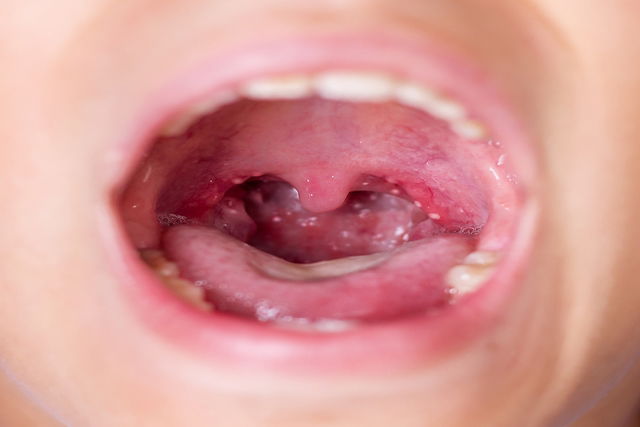
Although rare, some children may develop complications affecting the nervous system, heart, or lungs. For this reason, it’s important to see a pediatrician if herpangina is suspected so that appropriate treatment can begin.
Also recommended: 10 Signs of Dehydration in Babies & Children tuasaude.com/en/signs-of-dehydration-in-babiesHow long does herpangina last?
Herpangina symptoms can last up to 12 days. There is no specific treatment, so care is focused on symptom relief and helping the body recover.
How herpangina is diagnosed
Herpangina is diagnosed clinically by a pediatrician based on the child’s symptoms, when they started, and a physical examination of the mouth lesions.
In some cases, the doctor may order blood tests to check for Coxsackie virus antibodies or a PCR test using samples from mouth sores, blister fluid, stool, or cerebrospinal fluid obtained by lumbar puncture.
These tests help identify the specific virus and rule out other conditions with similar symptoms, such as herpetic eczema, toxic shock syndrome, or Kawasaki disease.
Common causes
Herpangina is most commonly caused by viruses such as Coxsackie A16 and B or enterovirus 71.
Less commonly, it can also be caused by echoviruses, adenoviruses, herpes simplex virus (HSV), or parechoviruses.
Is herpangina contagious?
Yes, herpangina is highly contagious, especially during the first two weeks of infection. It can be spread easily from one person to another, even before symptoms appear.
How herpangina spreads
The viruses that cause herpangina can spread through:
-
Inhaling saliva droplets or nasal secretions released when an infected person coughs, sneezes, or talks
-
Contact with feces containing the virus, such as during diaper changes
-
Sharing objects like plates, cups, or utensils
-
Direct contact with fluid from the blisters
Because of its ease of transmission, babies and children who attend daycare or preschool are more likely to become infected due to close contact with others.
How herpangina is treated
Treatment for herpangina should always be guided by a pediatrician and focuses on supportive care, as there are no medications that directly target the viruses responsible for this infection.
1. Use of medications
Medications like acetaminophen (Tylenol) or ibuprofen (Advil) may be recommended by the pediatrician to relieve symptoms such as sore throat and fever. Learn more about ways to soothe a baby’s sore throat.
In children with febrile seizures, treatment may need to be done in the hospital using intravenous medications such as midazolam.
Also recommended: Baby Fever: What It Is, Common Causes & How to Treat tuasaude.com/en/baby-fever2. Rest
Resting in a well-ventilated room is essential to help the immune system fight off the infection and reduce the risk of spreading the virus to others.
It’s also important for the child to stay home from school or daycare while fever and mouth sores are present.
3. Increasing fluid intake
Encouraging the child to drink more fluids such as water, breast milk, or formula helps prevent dehydration, especially when high fever is present. Learn how to recognize signs of dehydration.
For babies under 6 months who haven’t started solid foods, breastfeeding should be offered more frequently and on demand.
4. Soft or liquid foods
Mouth sores can make chewing and swallowing painful, so soft or liquid foods that are low in salt are recommended. Options include non-citrus juices, soups, and purees.
Plain yogurt is also a good choice to keep the child nourished and hydrated. Cold foods are often better tolerated by children with mouth pain.
Possible complications
Herpangina is usually a mild illness that resolves within a few days. However, in rare cases, children may develop complications such as myocarditis, flaccid paralysis, encephalitis, or viral meningitis. Learn how viral meningitis is treated.
If complications occur, the child should be taken to the hospital immediately for appropriate care.
How to prevent transmission
Frequent handwashing—especially after changing diapers or clothes—is a simple and effective way to reduce the risk of spreading herpangina to other children.
Using hand sanitizer alone is not enough and should not replace proper handwashing with soap and water.