


Herniated disc exercises focus on alleviating symptoms and preventing the need for surgery using techniques like TENS, heat therapy, massage, dry needling, stretching, and strengthening exercises.
These exercises are important in the treatment of herniated cervical and lumbar discs, helping to reduce pain, weakness, and numbness, improving range of motion, and decreasing the need for medication.
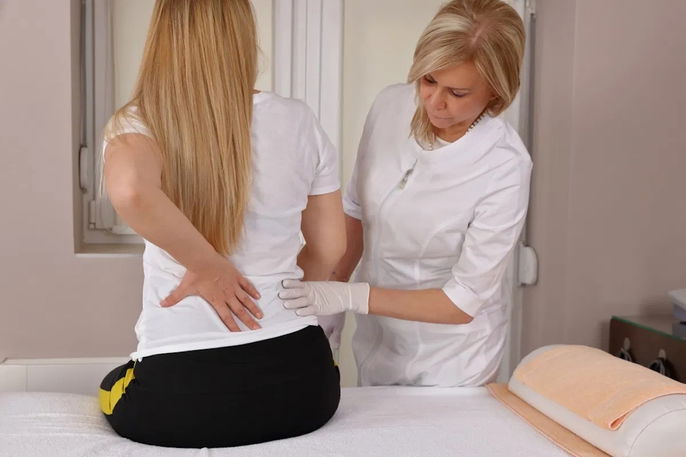
Herniated disc exercises should be prescribed by a physical therapist after a thorough evaluation to determine which exercises are most appropriate for each individual.
Sample exercises
In many cases, pain from a herniated disc is related to muscle weakness and lack of mobility.
The goal of herniated disc exercises is to strengthen the back muscles, improve stability, and reduce pressure on the intervertebral (spinal) discs.
Exercises should be basic at first, tailored to the specific condition and focused on the affected areas. After symptoms improve, other full-body exercises may be recommended.
Herniated disc exercises should not cause excessive pain and should always be prescribed and supervised by a physical therapist to avoid complications.
Hydrotherapy and Pilates can also be beneficial to people with pain from a herniated disc. These techniques improve mobility, strength, and stability without putting too much strain on the spine.
Herniated lumbar disc
Exercises that can be done at home for a herniated lumbar disc include:
- Glute bridges: lie on your back with your knees bent and feet flat on the floor. Squeeze your glutes and lift your hips;
- Abdominal crunches: lie on your back on a workout mat with your knees bent and feet flat on the floor. Bring your chin to your chest and slowly lift your head off the floor;
- Trunk rotations: lie on your back with your knees bent and your feet flat on the floor. Drop your knees to one side and then the other, trying to touch your knees to the floor without lifting your shoulders;
- Cat-cow: start in a quadruped position (hands and knees) on a mat. Breathe in as you arch your spine, looking up toward the ceiling, then exhale as you round your back and bring your chin to your chest;
- Superman: lie on your stomach with your forehead on the mat and your arms and legs extended. Try to lift your arms, legs, and head off the mat at the same time.
These exercises help strengthen and increase mobility of the lower back, which is important in the treatment of a herniated lumbar disc.
Herniated cervical disc
Exercises that can be done at home for a herniated cervical disc include:
- Neck flexion and extension exercises, bending the head forward and backward;
- Lateral neck movements, bringing the ear to the shoulder;
- Neck rotation, turning to look toward one shoulder then the other;
- Lying on your back with a pillow under your head, pressing your head into the pillow and then relaxing;
- Lying on your side with your head supported on a pillow, lifting your head slightly off the ground and lowering it slowly back down.
It is important to remember that these exercises should be done gently and without straining the neck. Stop doing these exercises and consult a physical therapist if you experience any pain.
Other techniques
Some physical therapy techniques for treating a herniated disc include:
1. TENS
TENS, or transcutaneous electrical nerve stimulation, is the application of low-voltage electrical currents to the surface of the skin.
TENS is performed by placing two electrodes on the skin's surface and connecting them directly to the TENS device.
This technique stimulates the nerve fibers, blocking the transmission of pain signals and releasing endorphins to help treat muscle pain and neuropathy associated with a herniated disc.
TENS should only be used in cases of pain. Treatments typically last about 20 minutes; however, this may vary based on a physical therapist's recommendation.
2. Neuromuscular electrical stimulation
Neuromuscular electrical stimulation (NMES) is a physical therapy technique that uses electrical impulses to generate muscle contractions.
This technique is used to strengthen the back and abdominal muscles, which play a vital role in rehabilitation of a herniated disc.
3. Ultrasound
Ultrasound is a technique that uses high-frequency sound waves to generate a thermal effect, helping to improve tissue healing.
Ultrasound therapy is done by applying a conductive gel and typically lasts about 5 to 10 minutes. During treatment, the person should not experience any pain or discomfort.
While scientific evidence is limited regarding its effectiveness for treating a herniated disc, ultrasound can be used to help manage pain and reduce inflammation.
4. Heat
Heat therapy is fundamental to treatment of a herniated disc, helping to reduce pain and tension by promoting relaxation of the muscles.
Relaxing the muscles allows the physical therapist to apply manual techniques, which can be painful, and perform rehabilitation exercises.
Heat therapy can be done using paraffin wax, moist heat packs, and infrared light, which should be applied for 5 to 20 minutes depending on the indication.
5. Massage
Massage is often included in treatment for a herniated disc as it allows the physical therapist to assess the muscles and reduce tension.
Massage has the potential to cause pain, however, that can last for 24 hours after treatment. Massage therapy focuses on both the painful areas and more distance muscles.
This type of massage should always be performed by a physical therapist, as pain from a herniated disc can radiate to different areas and cause nerve and sensory changes.
6. Dry needling
Dry needling is a technique that involves inserting thin needles in the most painful part of the muscle.
In the case of a herniated disc, it is common for the muscles of the back and glutes to tense up. This is particularly common with a herniated lumbar disc.
During a session, the physical therapist locates the most painful area and inserts the needle, which may cause the muscle to contract. This contraction helps release muscle tension and improve blood circulation to reduce pain.
7. Stretching
Stretching is essential in the case of a herniated disc to increase flexibility, reduce tension, and reorganize the muscle fibers. Stretching also improves posture and prevents discomfort during daily activities.
One technique used to improve nerve mobility is neurodynamics, which consists of specific stretches that promote gliding and flexibility of the nerve within the muscle.
These stretches generate tension in the nerve that may worsen symptoms of pain, numbness, and weakness.
8. Cervical or lumbar traction
Traction is a treatment method that allows for temporary decompression of the spinal discs, helping reduce symptoms of a herniated disc.
This technique can be applied to the cervical or lumbar regions and in some cases may not require any specialized equipment.
For lumbar decompression, a physical therapist may have the individual lie face down over a ball and then perform manual techniques for spinal decompression.
Traction is typically maintained for about 20 to 30 seconds and can be repeated 5 to 10 times depending on the needs of the individual.
9. Manipulation techniques
Manipulation techniques are used to decrease pressure on the spine, with the goal of aligning the structures of the body to promote greater ease of movement.
This technique is especially important for people who have trouble carrying out specific movements and report feeling "stuck".
Each session should be individualized and will last about 1 hour. Certain exercises should also be done at home, as recommended by a physical therapist.
Benefits of physical therapy
Physical therapy for a herniated disc has several benefits, including:
- Alleviating back pain and pain that radiates to the arms and legs;
- Increasing range of motion;
- Increasing muscle strength;
- Avoiding spinal surgery;
- Reducing symptoms like numbness, burning, and weakness;
- Decreasing the use of pain medication.
A herniated disc happens when the disc in between the vertebrae is damaged, which can cause compression of the nerve root.
This condition may be asymptomatic; however, when a herniated disc does cause symptoms, they are typically related to the severity of the hernia and muscle weakness.
Care instructions
People with a herniated cervical or lumbar disc should follow certain precautions to help alleviate pain, such as:
- Avoiding remaining in the same position (seated or lying down) for more than an hour;
- Sleeping on your side with a pillow between your knees;
- Choosing a firm mattress;
- Bending at the knees and trying to avoid hinging forward at the hips when bending over to mix something up;
- Following an anti-inflammatory diet that prioritizes foods like ginger, turmeric, almonds, and sunflower seeds, for example;
- Performing light activities to prevent spinal stiffness, such as walking, cycling, and stretching.
It is also important to identify which movements cause pain in daily life and discuss this with a physical therapist. This way, the physical therapist can perform an assessment to see if these movements are being performed correctly.