


Hair types can be classified by how natural oil is distributed along the strands: normal, dry, oily, or combination. Knowing your hair type helps you pick products that match your needs and keep your hair looking shiny and feeling soft.
The shape and structure of hair can vary from person to person and are influenced by the hair’s unique chemical and molecular makeup.
The number of chemical bonds in a hair strand, known as disulfide bonds, helps determine how curly the hair is. Generally, the more disulfide bonds there are, the curlier the hair tends to be.
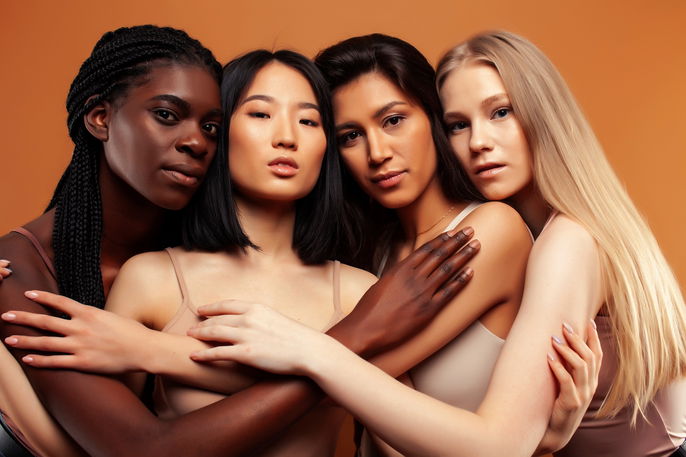
Main types
The main hair types are:
1. Straight
Based on strand characteristics, straight hair can be:
-
Fine straight or 1A: hair strands that are very straight, with little to no volume, and that lie very flat. This type often doesn’t hold styling well, not even a bobby pin, and it may also tend to get oily;
-
Medium straight or 1B: straight strands with some volume, making it easier to style the ends and use bobby pins;
-
Coarse straight or 1C: straight strands that are thicker and more voluminous. It can puff up easily and can be harder to style.
Care tips: To help prevent dryness, straight hair usually benefits from moisturizing every two weeks. If you use a blow dryer or flat iron, the American Academy of Dermatology advises limiting heat exposure and using lower heat settings because excessive heat can damage hair.
2. Wavy hair
Wavy hair forms S-shaped waves. It can look straighter when blow-dried and can look curlier when scrunched, forming loose curls. The main types of wavy hair are:
-
2A - Fine wavy: strands with a very soft S-shape that are easy to style and almost straight. Usually there isn’t much volume;
-
2B - Medium wavy: strands that form a more defined S-shape. They tend to have frizz and aren’t always easy to style;
-
2C - Coarse wavy: strands that are wavy and more voluminous, starting to form loose curls. They also don’t lie flat at the roots and can be difficult to style.
Care tips: To help define waves, use leave-in styling creams or curl activators, and consider layered haircuts to add movement. This hair type typically needs deep conditioning every two weeks with masks or moisturizing creams, and avoiding blow dryers and flat irons can help waves look more defined and shiny.
3. Curly hair
Curly hair types are:
-
3A - Loose curls: natural curls that are wider and more even, well-shaped and round, and usually finer;
-
3B - Tight curls: curls that are narrower and well-formed, tighter than loose curls, and thicker, with a tendency to puff up;
-
3C - Very tight curls: very tight, narrow curls that cluster together, but still follow a defined pattern.
To shape the hair and define curls, a leave-in product can be used daily, and you generally only need to rinse out the previous day’s product with water. Another option is a split-end repair serum, which can add shine and softness and should be applied once the hair is dry.
Care tips: Ideally, curly hair is washed only twice a week using anti-frizz shampoos or shampoos for normal hair, and the strands should be moisturized at each wash with a treatment conditioner or a moisturizing mask.
Also recommended: DIY Hair Masks: 10 Homemade Recipes with Natural Ingredients tuasaude.com/en/diy-hair-maskAfter washing, apply a leave-in product (a no-rinse styling cream) and let the hair air-dry, because blow dryers and flat irons can dry out curls.
4. Coily hair
Coily hair types are:
-
4A - Soft coils: small, defined, very tight coils that look like springs;
-
4B - Dry coils: very tight coils with a zigzag pattern, with less definition than soft coils;
-
4C - No defined pattern: very tight coils with a zigzag pattern, but without clear definition.
Care tips: Deep conditioning can be done using warm water and heat caps, but the final rinse is best done with cool water, because this can help reduce frizz.
Also, use a leave-in styling cream and let the coils air-dry, removing excess water by gently scrunching the hair with a paper towel. If you do need to use a blow dryer, a helpful tip is to apply a small amount of gel to the ends over the leave-in cream and use a diffuser to help define coils.