


The gluteus medius is one of three muscles in the gluteal region, along with the gluteus maximus and gluteus minimus. It sits on the outside of the hip and plays a key role in keeping the pelvis and hip stable.
Because of this stabilizing role, strengthening the gluteus medius can help lower the chance of knee or lower back pain. It can also support better balance and coordination during activities like running, jumping, and quick changes in direction.
Exercises like hip thrusts, hip abductor machine work, and lateral band walks can strengthen the gluteus medius. It’s best to perform these under the guidance of a qualified fitness professional, who can tailor the program to each individual’s assessment and goals.
Why strengthen the gluteus medius?
Strengthening the gluteus medius is important for:
-
Maintaining hip and pelvic stability, especially during walking, running, and single-leg exercises;
-
Preventing postural misalignment, such as the thigh drifting inward during movement;
-
Avoiding musculoskeletal pain, such as knee pain, lower back pain, or sharp hip pain;
-
Reducing the risk of injury, such as gluteus medius tendinopathy and hip bursitis;
-
Improving balance and motor coordination, especially during activities like jumping, running, and changing direction;
-
Addressing muscle compensation patterns that can contribute to problems in other areas, such as the knee, lower back, and ankle.
In addition, strengthening the gluteus medius can improve performance in physical activities such as running, squats, and jumps. The gluteus medius also contributes to hip abduction, which is moving the leg away from the body’s midline out to the side.
According to the Centers for Disease Control and Prevention (CDC), including muscle-strengthening and balance-focused activities as part of regular physical activity supports better balance and functional movement, especially as people age.
Gluteus medius tendinopathy
Gluteus medius tendinopathy is an inflammation of the tendon that connects the gluteus medius muscle to the hip. It often causes pain when walking, climbing stairs, lying on one side, or standing for long periods. This condition is common among runners, people with sedentary lifestyles, and those who perform repetitive movements.
Recovery can be slow in some cases. Still, a combination of physical therapy, targeted strengthening, habit changes, and sometimes medication can help reduce pain and allow a return to normal activities.
Recovery from hip-related soft-tissue inflammation can sometimes be slow. According to the American Academy of Orthopaedic Surgeons (AAOS), conservative treatment often includes modifying activities, physical therapy to enhance hip strength and flexibility, and anti-inflammatory medications when needed to reduce pain and support a return to normal activities.
Dead butt syndrome
Dead butt syndrome refers to weakness or reduced activation of the gluteus medius. It is often linked to long periods of sitting or not properly engaging the glute muscles during exercise.
This can lead to hip or buttock pain and discomfort with running, walking, or climbing stairs. It may also affect hip alignment.
Treatment involves glute-strengthening exercises and routine changes aimed at reducing sedentary time.
Gluteus medius exercises
Some exercises that can be done to strengthen the gluteus medius include:
1. Lateral band walk
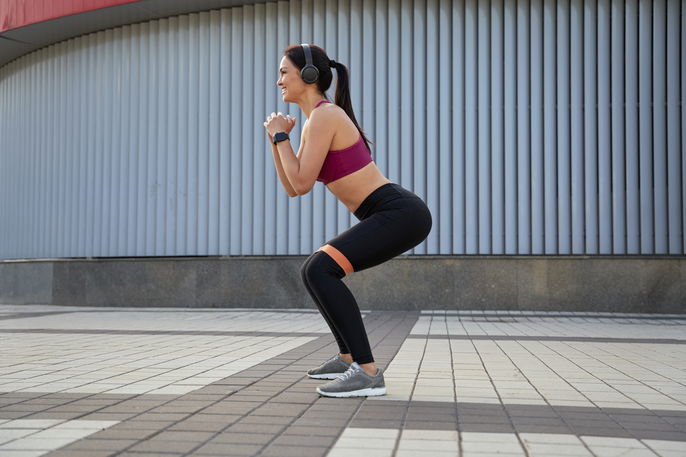
The lateral band walk strongly activates the gluteus medius as you step the feet out to the side. The band also creates constant resistance, which makes the gluteus medius work continuously to support stability and control.
How to do it: Start standing with your feet about shoulder-width apart and place a resistance band above the knees or around the ankles. Slightly bend the knees and hinge the torso slightly forward.
Step sideways in short steps in one direction while keeping tension on the band the entire time. Return to the starting point by stepping to the other side. Repeat 10 to 15 times on each side for 2 to 3 sets.
2. Hip abductor machine
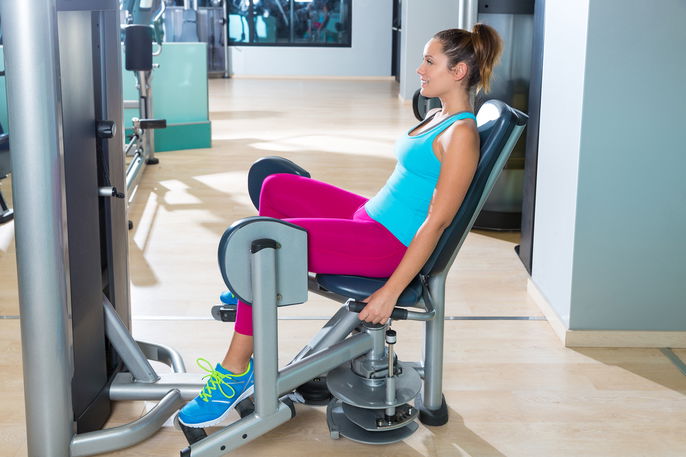
The hip abductor machine targets the gluteus medius by minimizing assistance from other muscles, helping to build strength and endurance in this area.
How to do it: Sit on the machine and position the pads on the outside of the thighs, with the legs close together. Then press the legs outward to the sides.
Return to the starting position while keeping the muscles engaged, and avoid letting the weight stack rest fully at the bottom. Perform 8 to 12 repetitions for 3 to 4 sets.
3. Clamshell
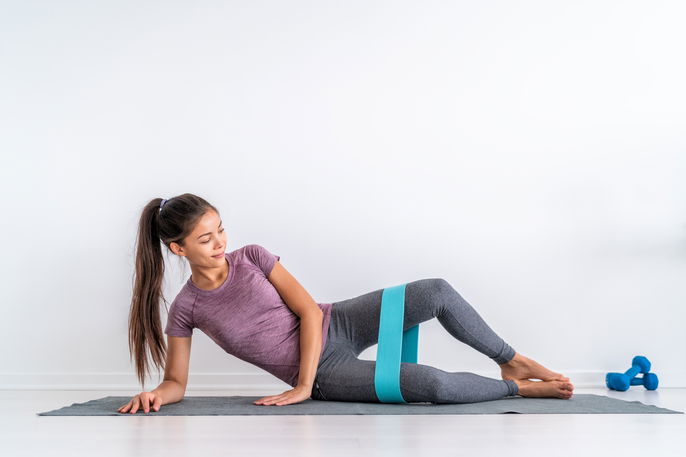
The clamshell exercise effectively targets the gluteus medius more directly. It can be performed with or without a resistance band, allowing you to adjust the intensity to match your current fitness level.
How to do it: Lie on your side with your head supported by your arm. Keep the knees bent and the spine aligned. Lift the top knee while keeping the feet together, and avoid rotating the torso.
Hold and squeeze the glute for one second at the top, then return to the starting position. Repeat 12 to 15 times for 3 sets on each side.
4. Single-leg deadlift
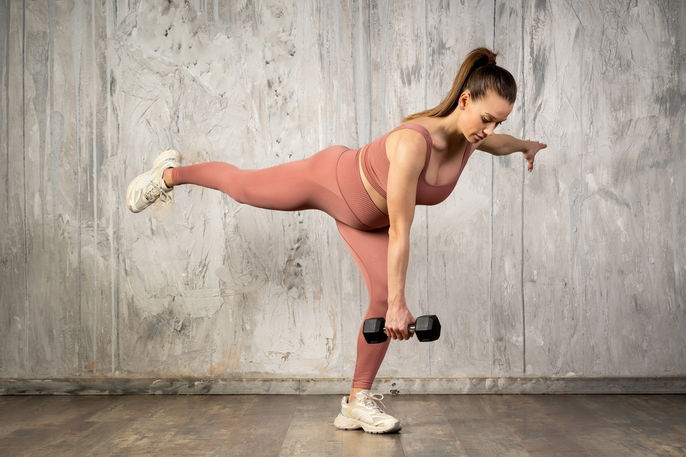
The single-leg deadlift requires control because you are balancing on one leg. This increases activation of the gluteus medius to help stabilize the pelvis throughout the movement.
How to do it: Begin in a standing position holding a dumbbell in one hand in front of your body. Hinge forward at the hips as you lower the weight toward the floor, while lifting the opposite leg behind you.
Return to the starting position by bringing the lifted leg back to the floor. Repeat 10 to 12 times on each side for 3 sets.
5. Barbell hip thrust
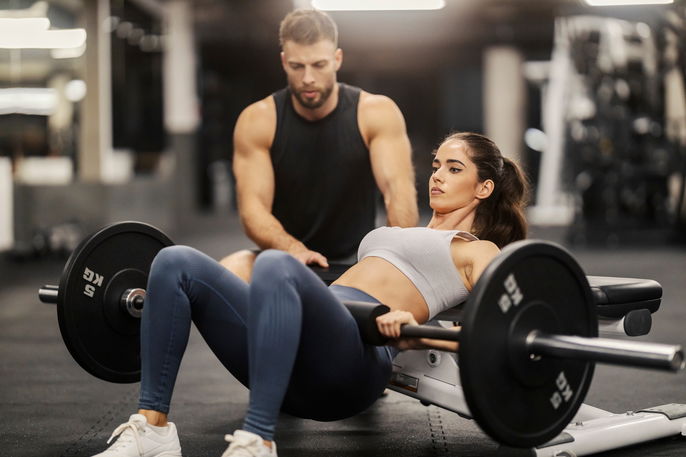
The barbell hip thrust strengthens the gluteus medius by requiring side-to-side hip stability during the movement. It also engages the broader gluteal muscle group.
How to do it: Sit on the floor with a barbell positioned across the hips. Bend the knees with feet flat on the floor about hip-width apart, and rest the upper back on a bench while holding the bar with both hands.
Drive through the feet to lift the hips, squeezing the glutes and keeping the knees aligned. Hold the top position for a few seconds, then lower slowly back to the starting position. Repeat 8 to 12 times for 3 to 4 sets.