


Glute exercises allow you to work the gluteus medius, maximus, and minimus, as well as the calves, thighs, and front and back of the legs. These exercises can be done with or without weights, at home or in the gym.
Glute exercises help improve muscle strength, combat cellulite, and lift and firm the backside. The glutes are also part of your core, which is a group of muscles responsible for providing stability to the body, improving posture, and stabilizing the hips.
It is important to be aware of any physical conditions or limitations you may have in order to prevent injury, which could include back injury and tendinitis. Working with an exercise physiologist or certified personal trainer can help you avoid injury. Before starting any new workout, make sure you are cleared by your doctor to exercise.
Workout schedule
Glute exercises can be done 1 to 3 times a week in 2 to 5 sets of 10 to 20 reps each, depending on the exercise. The ideal is to choose 4 to 6 exercises per session.
It is important to warm up prior to exercising. This will improve muscle performance, get your blood flowing, and help prevent injury.
A good way to warm up is by performing standing knee lifts, lifting one leg at a time, bent at a 90 degree angle, up to the level of your hips, and alternating legs as if you were marching in place. Do this for 5 minutes. Another option to climb up and down the stairs for 5 minutes.
Exercises for home
Glute exercises that can be done at home include:
1. Glute bridge
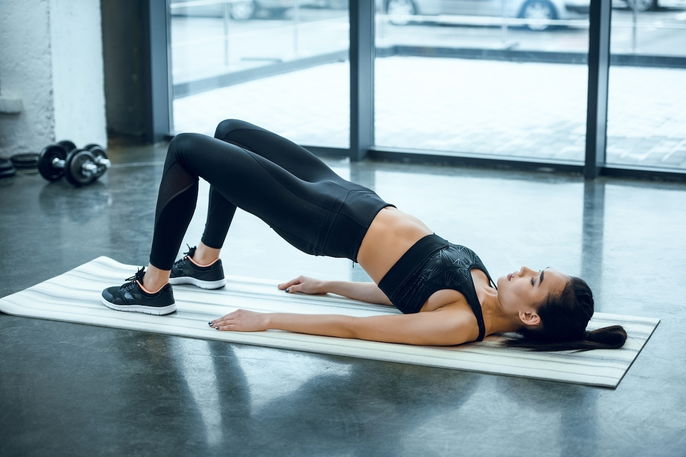
Glute bridges are a great exercise to start with, as they help stabilize the core while working the glutes, back, and abs. They can also be included as part of a warm up.
Instructions: lie on your back with your arms by your sides. Bend your knees and place your feet on the ground with your heels in line with your knees. Contract your abs and glute muscles as you lift your hips off the mat until you form a straight line from your knees to your shoulders. Hold this position for 5 to 10 seconds then lower your hips back to the ground with control. Do 2 to 3 sets of 8 to 10 reps each.
Option to add weights: glute bridges do not require weights, however you can try placing your feet on a Pilates ball to challenge your balance and make the exercise harder.
2. Glute bridge march
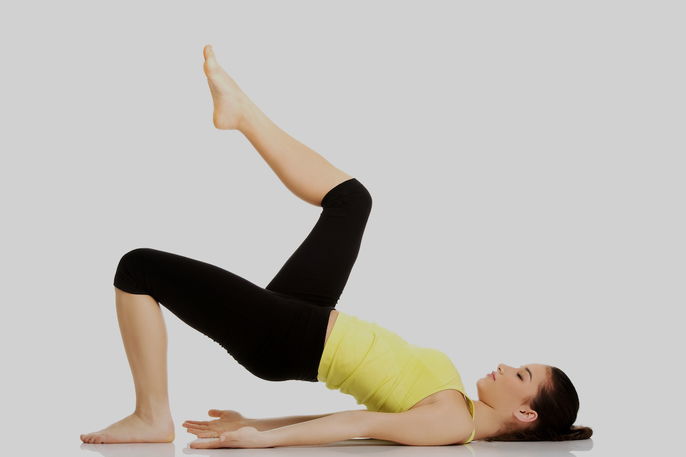
An elevated single leg glute bridge helps to strengthen the glutes, abdomen, and lower back in addition to stabilizing the hips.
Instructions: lie on your back with your arms at your sides. Bend your knees and place your feet on the ground with your heels in line with your knees. Contract your abs and glute muscles as you lift your hips off the ground until you form a straight line from your knees to your shoulders. Hold this position and raise one leg at time, avoiding lowering your hips between reps. Perform 2 to 3 sets of 15 to 20 reps each.
Option to add weights: use ankle weights to intensify this exercise.
3. Donkey kicks
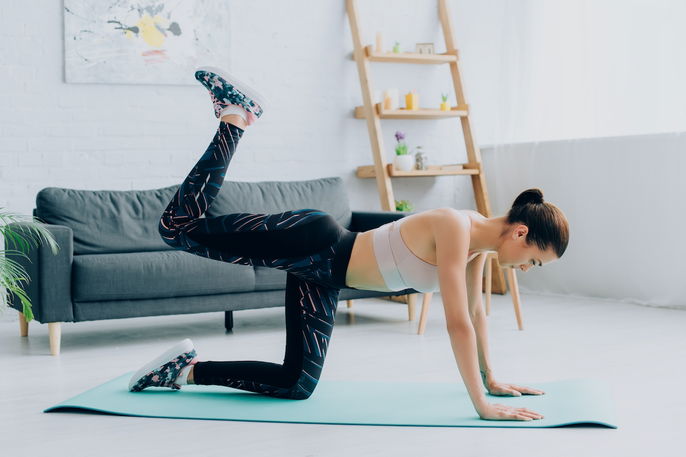
Donkey kicks are a great option to work the glutes as they require both strength and endurance. They also help strengthen the abs and the legs.
Instructions: start on all fours, with your knees hip width apart and arms straight and in line with your shoulders. Keeping the knee bent, lift one foot toward the ceiling. Keep your back straight and avoid arching. Return your leg to the original position. Repeat this move 15 to 20 times on each side for a total of 4 to 5 sets. To make this exercise harder, perform shorter movements by lowering the leg only slightly between reps instead of bringing your knee back to the floor.
Option to add weights: ankle weights can be added to intensify this exercise.
4. Fire hydrant
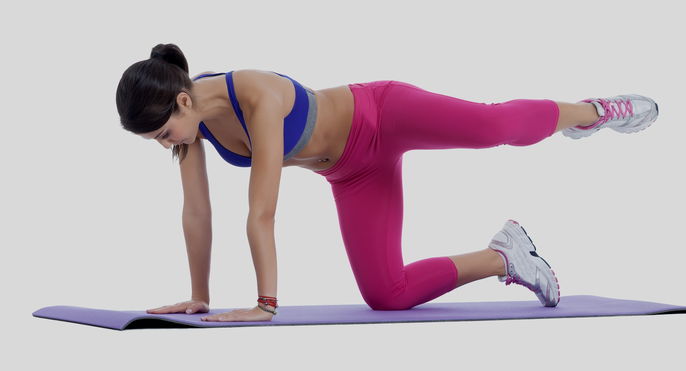
Fire hydrant exercises help build strength and resistance in the glute muscles in addition to strengthening the legs and abs.
Instructions: start on all fours, keeping your back straight and your abs engaged. Keeping the knee bent at 90 degree angle, lift one leg out to the side until you reach the level of your hip, being careful to avoid curving the spine. Repeat this movement 15 to 20 times on each side for a total of 4 to 5 sets.
Option to add weights: ankle weights can be added to itensify this workout.
5. Traditional squats
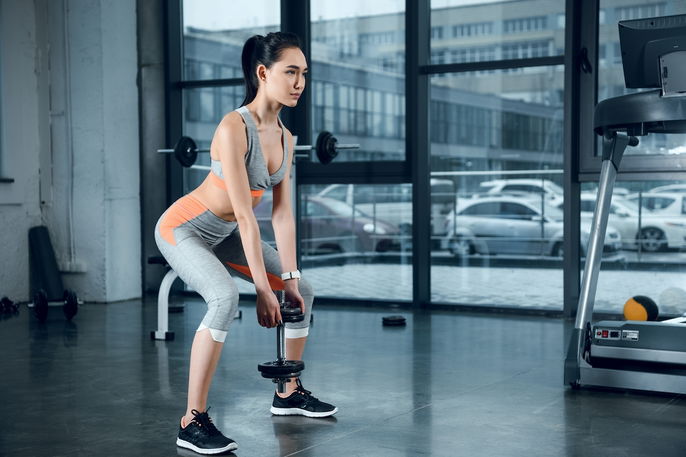
Squats are a full body exercise that works the glutes, thighs, calves, back of the legs, and the abs.
Instructions: stand with your feet shoulder width apart with your back straight and your abs pulled in. Bend your knees and drop slowly toward the floor, hinging your torso slightly forward and pushing your hips back, as if you were sitting down in an invisible chair. Lower your body until your knees form a 90 degree angle and avoid letting your knees go over toes. Return to the starting position. Do 3 sets of 20 reps each with 1 minute of rest in between sets.
Option to add weights: use a dumbbell or kettle ball, or, if you do not have weights at home, a 1 kg (2 lb) bag of rice. Hold the weight with two hands and keep your arms aligned with your body while performing the squat movement.
6. Bulgarian split squat
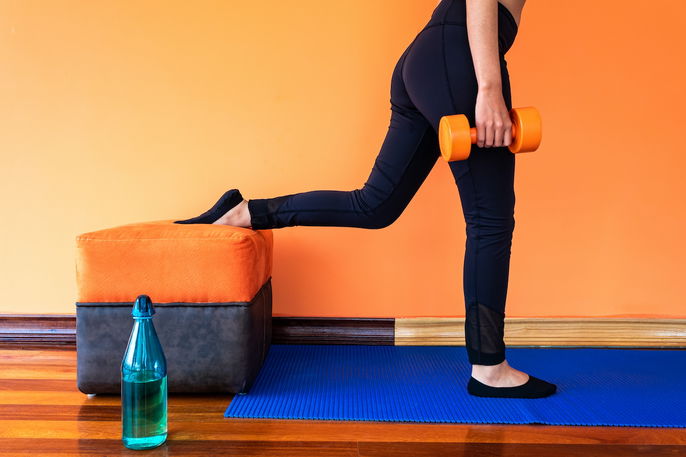
The Bulgarian split squat is one of the most efficient moves to work your glutes and thighs, improving strength and flexibility and helping elongate the muscles.
This exercise has the advantage of putting less strain on the lower back, working one leg at a time.
Instructions: stand facing forward with a bench or chair placed behind you. Place one foot behind you on the bench, keeping the other foot on the ground. Flex the knee of your standing leg and lower to the ground to form a 90 degree angle. Return to the starting position. It is important to keep your back straight and your feet and hips aligned. Do 3 sets of 10 reps per leg, resting for 1 minute in between sets.
Option to add weights: hold one dumbbell in each hand while performing these squats. You can also use plastic water bottles filled with water or sand or a 1 kg (2 lb) bag of rice in each hand.
7. Lateral squat
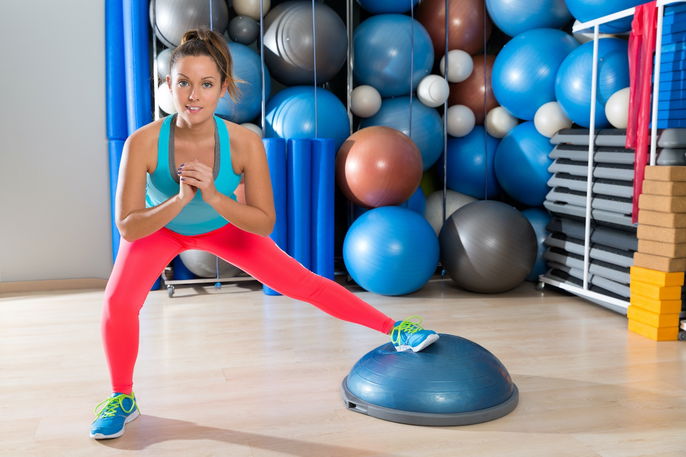
Lateral squats are another great option for strengthening the glutes and thighs.
Instructions: stand with your feet hip distance apart. Lower to one side by bending one knee and pushing your hips back. Allow the other leg to extend while keeping the foot on the floor. Push back up to standing. It is important to keep your knees pointed to the front in the direction of your toes. Repeat this move 15 to 20 times on each leg for a total of 2 to 3 sets.
Option to add weights: use a dumbbell or a 1 kg (2 lb) bag of rice. Hold the weight with two hands with your arms in front of you and aligned with your body as you perform the squat. Another good option is to use a BOSU ball (half balance ball) to increase the intensity and challenge your balance.
8. Lunges
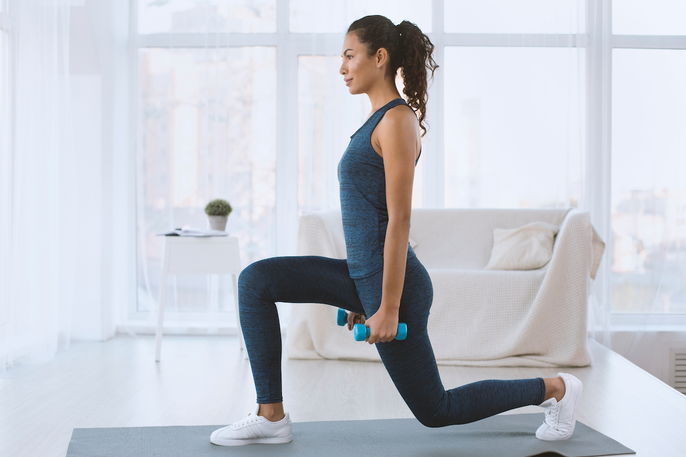
Lunges are an exercise that strengthens the glutes along with the hips, thighs, and calves.
Instructions: stand with your feet hip distance apart and take a big step forward with one of your legs. With your back straight, slowly bend the knees until your front leg is parallel with the floor and your back knee almost touches the ground. In this move, the back foot should remain flexed with the toes on the ground providing support. Avoid letting your front knee go over the toes. Return to the starting position while keeping the weight in the heel of the front foot. Repeat this move 15 to 20 times on each side for a total of 2 to 3 sets.
Option to add weights: hold a dumbbell in each hand with your arms straight and in line with your sides. You can also use plastic water bottles filled with water or sand or a 1 kg (2 lb) bag of rice in each hand.
9. Lateral lunge
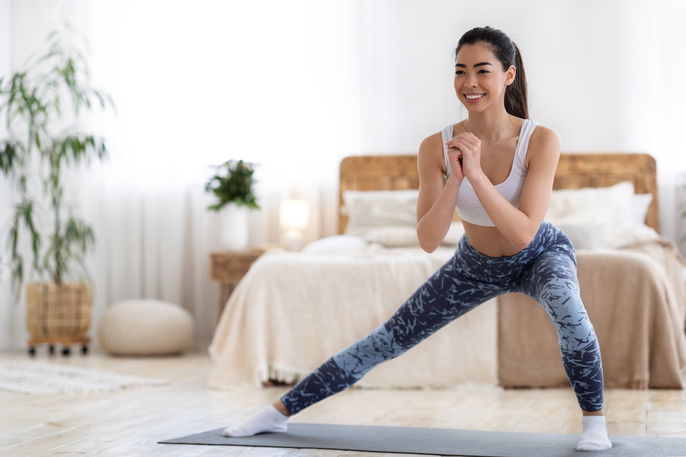
Lateral lunges are a great way to strengthen the glutes that also work the inner thighs and hips.
Instructions: stand with feet hip distance apart. Take a big step to the side with your right foot then bend the right knee while pushing the hips back and lowering toward the floor. Keep your back straight and your torso hinged slightly forward. Your right knee should not go over your toes. Push off your right foot and return to stand. Do this move 10 to 12 times for a total of 3 to 4 sets. Repeat on the left side.
Option to add weights: this exercise can be done using a dumbbell or kettle bell, holding the weight with both hands in front of your body with your elbows flexed.
10. Superman
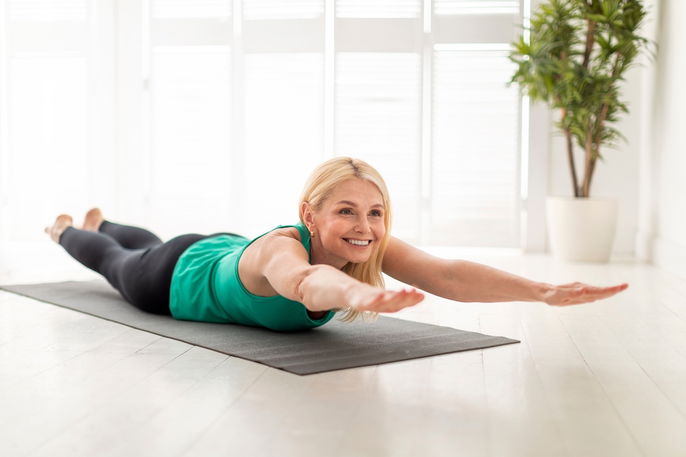
The superman exercise mimics the flying position of Superman and strengthens the glutes as well as the lower back, abs, hips, back of the thighs, and shoulders, improving both posture and flexibility. Weights are not needed for this exercise.
Instructions: lie flat on your stomach with your legs stretched out behind you and your arms extended in front of you with palms facing the floor. Contract your abs and glutes as you lift your legs and arms off the floor, as if you were flying. Make sure to keep your head aligned with your spine by keeping your gaze toward the floor. Hover your legs and arms no more than 20 cm (8 in) off the floor. Hold this position for 2 to 5 seconds and return to the starting position. Repeat this movement for 1 minute.
Exercises for the gym
Glute exercises that can be done at the gym include:
1. Leg press

The leg press works the gluteus maximus and increases its muscle mass. This exercise also helps to increase strength of the quads, hamstrings, adductors, and calves.
Instructions: load the weights and make sure they are securely in place to avoid accidents. Take a seat on the machine with your back flat against the seat and your head supported. Place your feet flat on the platform, hip distance apart. Your knees should be aligned with your feet to form a 90 degree angle with your thighs. Place your hands on the side handles and release the safety levers.
Push the platform away from you, extending your legs in a slow and controlled motion. Avoid straightening the legs completely (or "locking" the legs). Return to the starting position. You can repeat this movement until you reach muscle failure, or your muscles are too fatigued to complete another rep with good form. Rest for 10 to 15 seconds between sets.
2. Smith machine squats
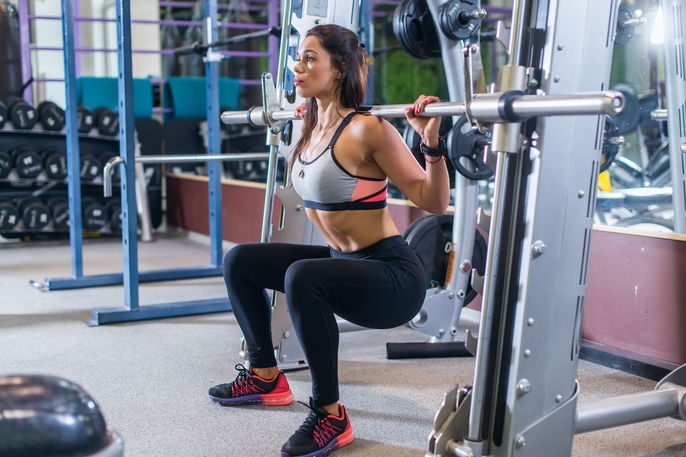
The Smith machine squat is a type of squat using the Smith machine. It helps increase muscle mass and strength in the lower body, primarily in the glutes and leg muscles.
Instructions: load the weights on the Smith machine and make sure the safety hooks are in place to avoid accidents. Position yourself under the bar, facing outward with your feet hip distance apart and pointing forward. Take a small step forward with both feet, position your hands on the bar just wider than your shoulders, and release the bar lock. Lower into a squat by bending your knees until your thighs are parallel to the floor. Rise back up to standing while avoiding locking your knees at the top to prevent injury.
Complete the recommended number of reps and sets as advised by a certified personal trainer or exercise physiologist.
3. Cable kickbacks
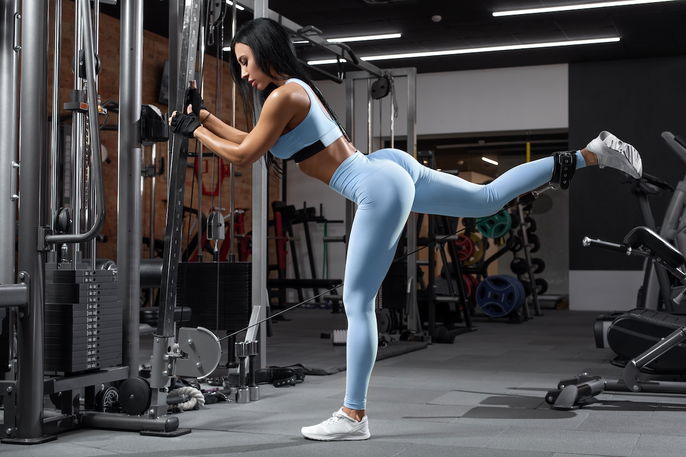
Cable kickbacks are an exercise that isolates the gluteus maximus, medius, and minimus and works to increase strength and resistance in addition to building muscle mass. This exercise also helps to strengthen the abs and legs.
Instructions: adjust the weight on the machine. Stand facing the machine, then loop the ankle strap around your ankle. Position your opposite leg a bit further back and extend your arms out in front of you, placing your hands on machine for support. Your back should be straight with your neck in line with your spine. Engage your ab muscles and hinge your torso slightly forward.
Take a deep breath in while slowly lifting the leg in the ankle strap behind you. Exhale while you lower the leg until the foot almost touches the floor. Do 2 to 3 sets of 6 to 15 reps each, or as recommended by a certified personal trainer or exercise physiologist.
4. Barbell hip thrust
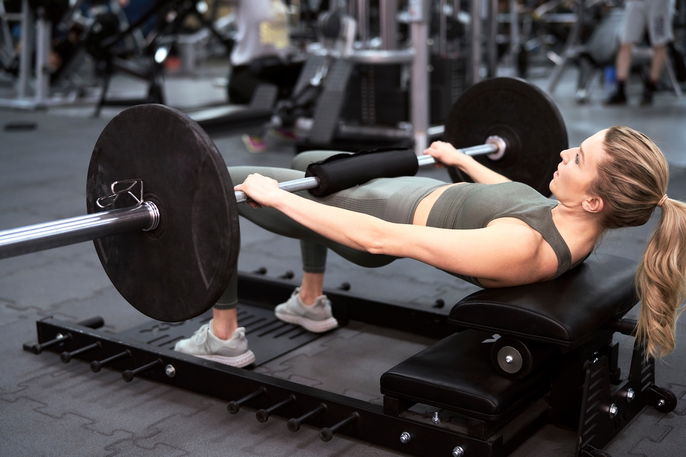
The barbell hip thrust is done with the goal of strengthening and building the glute muscles. It also strengthens the hips and front of the thighs and helps stabilize the pelvis, lower back, and knees.
Instructions: load the weights on the bar and make sure the safety hooks are in place to avoid accidents. Sit on the floor with your back to the bench, and rest your shoulder blades against the bench. Place your feet shoulder width apart, bend your knees, and keep your feet flat on the ground. Grasp the bar with both hands, one on each side of your body, and position the bar over your hips.
Lift your hips, pressing your heels into the ground, until your knees form a 90 degree angle with your thighs. Your shoulders should be supported by the bench, with your abs engaged and back straight to avoid injury. Lower your hips back to the starting position, but without touching your glutes to the floor.
Perform the recommended number of sets as indicated by a personal trainer or exercise physiologist.
5. Hip abductors
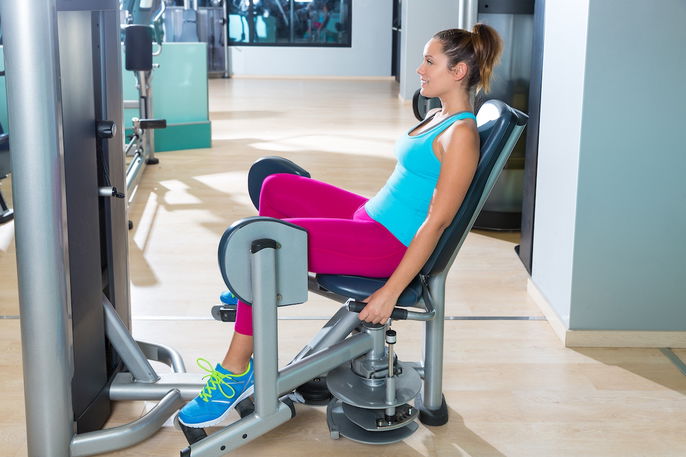
The hip abductor chair primarily targets your external thighs, in addition to the gluteus minimum and medius.
Instructions: adjust the weight on the abductor chair. Have a seat on the machine, with your back supported by the backrest and your feet on the foot rests. Place your hands on the side rails. Breathe in while you press against the pads, moving your legs apart as far as you can. Return to the starting position. Perform the recommended number of sets as indicated by a personal trainer or exercise physiologist.
Also recommended: Leg Workout: 15 Easy Exercises (Home & Gym) with 2 Free Plans tuasaude.com/en/leg-workoutCool down stretches
Stretching is important after a glute workout to help relax and tone the muscles and prevent injury.
Stretching the glutes should involve the gluteus maximus, medius, and minimus. These stretches do not require weights.
1. Knees to chest
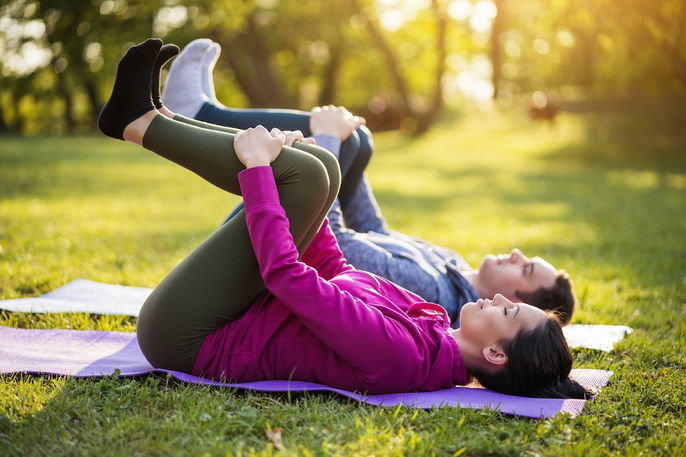
Hugging your knees to your chest allows the glute muscles to elongate, as well as the muscles of the hips, legs, and lower back.
Instructions: lie on your back and bring your knees to your chest, wrapping your arms around your shins or the back of the legs and holding this position for about 20 to 30 seconds. Repeat this stretch 3 times. Another option is to bring one knee at a time to your chest while keeping the opposite leg stretched out in front of you, if possible.
2. Seated spinal twist
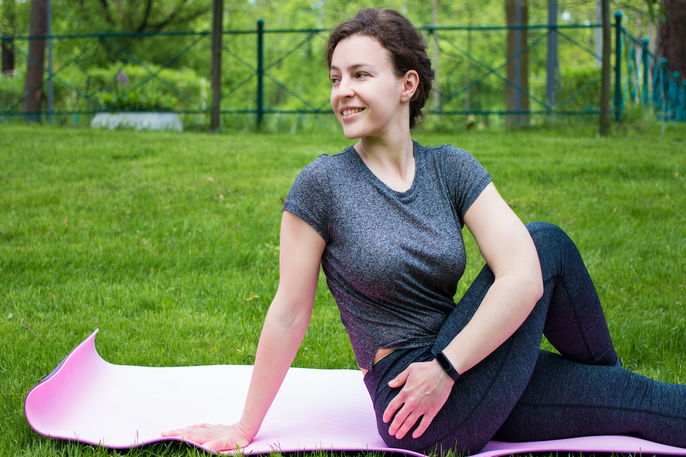
This stretch allows the gluteus maximus to elongate and helps to improve hip flexibility.
Instructions: have a seat on the floor with your legs straight out in front of you and your back hinged slightly backward, supporting yourself on your hands. Cross your left foot over your right leg and place it on the outside of your thigh, sliding your heel up toward your glutes. Twist your torso gently to the left, placing your right elbow on the outside of your left knee and your right hand on your left hip while keeping your left hand on the ground to support yourself. Hold this position for 30 to 60 seconds and repeat with the opposite leg.