


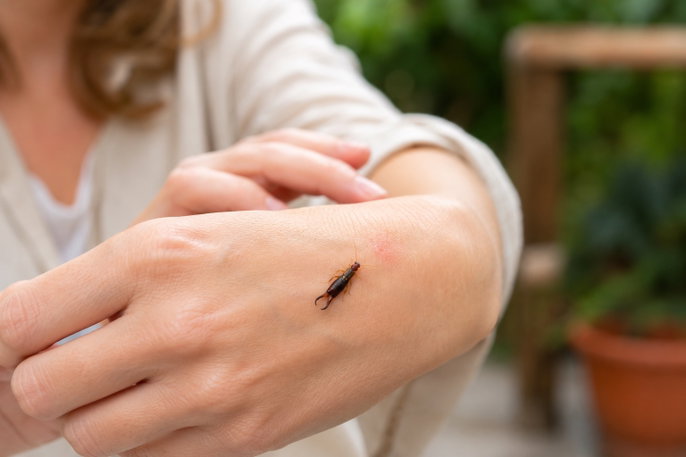
An earwig bite is usually not a true bite, as earwigs are not known to feed on human skin or blood. In most cases, what people call an earwig bite is actually a small pinch from the insect’s pincers.
Earwigs are generally harmless to people, but they may pinch if they are picked up, trapped against the skin, or feel threatened. A pinch may cause mild pain, redness, or a small mark, but it usually does not cause serious injury.
Treatment usually involves basic skin care, such as washing the area with soap and water and keeping it clean. Medical care may be needed if there are signs of infection, a strong allergic reaction, or if an earwig or another insect gets into the ear.
Can earwigs bite or pinch?
Earwigs can pinch, but they do not usually bite people. They have small pincers, also called forceps, at the end of their body, which they mainly use for defense, mating, and interactions with other earwigs.
Most earwig pinches happen when the insect is handled or pressed against the skin. Earwigs are not aggressive toward people and usually try to hide or escape instead of attacking.
Earwig pincers are usually not strong enough to break the skin. When they do, the injury is usually small and should be treated like a minor scratch.
Main symptoms
An earwig bite or pinch may cause:
-
Mild pain or a stinging feeling
-
Redness
-
A small swollen spot
-
Tenderness in the area
-
A tiny scratch or puncture if the skin breaks
-
Mild itching or irritation
These symptoms are usually mild and short-lived. Earwigs are not venomous and are not considered important disease carriers for humans.
If an earwig gets into the ear, symptoms can be different. A reported case described ear pain and tinnitus, which is a ringing or buzzing sound in the ear. The ear canal and eardrum were normal after the insect was removed.
What an earwig bite looks like
An earwig bite usually does not have a very specific appearance. It may look like a small red mark, a tiny scratch, or mild swelling where the skin was pinched.
If the pincers press into the skin, there may be two small marks close together. However, this is not always present, and the mark can look similar to other minor insect bites or skin irritation.
A true earwig injury is usually small. Large swelling, spreading redness, pus, or increasing pain is not typical and may suggest infection or another cause.
Earwig bite vs. other bug bites
An earwig bite is usually different from mosquito, flea, bed bug, or spider bites because it is more likely to come from a pinch than from feeding. Earwigs do not bite to suck blood, and they are not known to inject venom into the skin.
Mosquito bites often cause raised, itchy bumps. Flea and bed bug bites may appear in groups or lines and are often very itchy. Spider bites may cause more pain, swelling, or skin changes depending on the species, although many suspected spider bites are caused by other skin problems.
An earwig pinch is usually linked to direct contact with the insect, such as picking it up, finding it in clothing, or accidentally pressing it against the skin. Without seeing the insect, it may not be possible to know for sure that a mark came from an earwig.
What to do after an earwig bite
After a suspected earwig bite or pinch, the area should be washed with soap and water. This helps remove dirt and lowers the risk of infection if the skin was scratched or broken.
A cold compress can be applied for mild pain or swelling. The skin should be kept clean and should not be scratched, as scratching can irritate the area and increase the chance of infection.
If an earwig or any insect gets into the ear, it should not be pushed deeper with cotton swabs or other objects. Medical care is recommended so the insect can be removed safely and the ear canal and eardrum can be checked.
Treatment options
Most earwig bites do not need special treatment. Basic first aid is usually enough, especially when the skin is not broken.
Treatment may include:
-
Washing the area with soap and water
-
Applying a cold compress for discomfort
-
Keeping the area clean and dry
-
Using an over-the-counter pain reliever if needed
-
Using an antibiotic ointment if the skin is broken, when appropriate
If the area becomes infected, a healthcare provider may recommend other treatment. Signs of infection include warmth, worsening redness, swelling, pus, or pain that gets worse instead of better.
When to see a doctor
A doctor should be consulted if symptoms are severe, do not improve, or get worse over time. Medical care is also recommended if there are signs of infection, such as spreading redness, pus, warmth, or increasing pain.
Emergency care may be needed if there are signs of a serious allergic reaction, such as trouble breathing, swelling of the lips or face, dizziness, or widespread hives. These reactions are not expected with earwigs but can occur after different insect exposures.
A doctor should also be seen if an earwig or another insect enters the ear. Removal by a healthcare professional can help prevent injury to the ear canal or eardrum.
How to prevent earwig bites
The best way to prevent an earwig bite is to avoid handling earwigs directly. If an earwig needs to be moved, it can be swept into a container or removed with gloves.
Earwigs are attracted to damp, dark places. Reducing moisture around the home can help lower the chance of contact with them.
Prevention steps include:
-
Removing leaf litter, plant debris, and piles of wood near the home
-
Keeping mulch away from the foundation when possible
-
Fixing moisture problems around doors, windows, and basements
-
Sealing cracks and gaps where earwigs may enter
-
Reducing outdoor lighting near doors when possible
-
Shaking out garden gloves, towels, clothing, or shoes left outside
-
Keeping screens, doors, and weather stripping in good condition
Earwigs are mostly nuisance insects and are usually not dangerous. Simple home prevention and avoiding direct handling are usually enough to reduce the risk of a pinch.
