


Creatinine clearance is a test used to evaluate kidney function by estimating the glomerular filtration rate (GFR). It measures how effectively the kidneys remove creatinine from the blood, either through a blood-based formula or a 24-hour urine collection.
Creatinine clearance formulas may vary by laboratory, and the method used is usually listed in the final lab report along with reference values. The CKD-EPI equation is currently the preferred formula, although the Cockcroft-Gault equation may also be used.
Changes in creatinine clearance can help identify kidney injury, chronic kidney disease, or early diabetic kidney changes. The test may be ordered when blood creatinine levels are abnormal or when protein is detected in the urine, and it can also be used to monitor disease progression and treatment response.
Creatinine clearance calculator
To calculate your creatinine clearance, enter your blood creatinine level below:
The most widely recommended equation for estimating creatinine clearance (kidney filtration) is the CKD-EPI equation, which uses blood creatinine, age, and sex. Another option is the Cockcroft-Gault equation, calculated as:
Creatinine clearance = [(140 - age in years) x weight (kg)] / [72 x plasma creatinine (mg/dL)].
If the calculation is for a female patient, multiply the result by 0.85.
Formulas may vary by laboratory, and the lab report typically lists the reference range and the method used. Currently, CKD-EPI is the preferred equation.
Reference values
Reference values for creatinine clearance can vary depending on the equation used by the laboratory and may include:
-
Greater than 90 mL/min/1.73 m², when calculated using the CKD-EPI equation;
-
70 to 130 mL/min/1.73 m², in children when calculated using the Cockcroft-Gault equation;
-
85 to 125 mL/min/1.73 m², in women when calculated using the Cockcroft-Gault equation;
-
75 to 115 mL/min/1.73 m², in men when calculated using the Cockcroft-Gault equation.
Because of this variation, it is important to check your lab report to see which equation was used and to interpret the result correctly.
What it measures
The creatinine clearance test measures how well the kidneys are filtering waste from the blood. It can also be used to monitor the progression of kidney disease and assess how well treatment is working.
When it's recommended
Creatinine clearance should be calculated whenever a doctor reviews a lab creatinine result. This is especially important if certain signs or symptoms are present, such as:
-
Swelling in the body;
-
Foamy urine or blood in the urine;
-
Decreased urine production;
-
Constant pain in the lower back.
This test may be performed as part of routine care or if changes in blood creatinine levels or increased protein in the urine are detected.
How the test is done
Usually, no special preparation is needed for a 24-hour urine creatinine clearance test. Be sure to follow the collection instructions given by your healthcare provider or the laboratory.
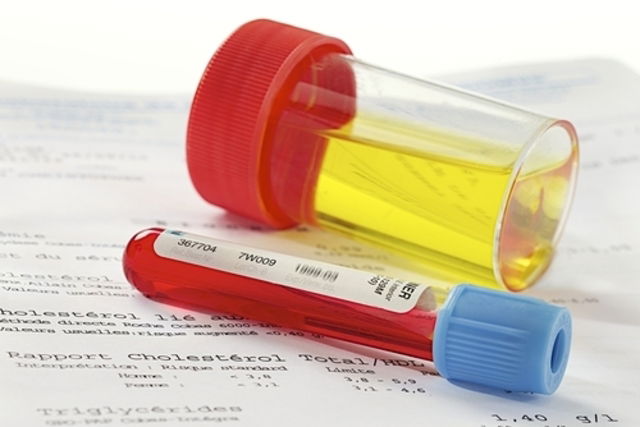
It’s generally recommended to discard the first urine of the day because it tends to be more concentrated. After that, begin the collection exactly as instructed. For a 24-hour urine test, collect all urine produced over the next 24 hours, with the final sample taken at the same time you began the collection the previous day.
A blood test to measure creatinine is also needed along with the urine collection. This is because the creatinine clearance calculation may take the blood creatinine level into account.
Low creatinine clearance
Low creatinine clearance often indicates kidney problems, such as chronic kidney disease.
Because of this, a healthcare provider should interpret the result in combination with other test findings and take into account the person’s age, medical history, and lifestyle habits.
High creatinine clearance
A high creatinine clearance result can occur during pregnancy, after exercise, or in the early stages of diabetes-related kidney changes that cause glomerular hyperfiltration. In these situations, a healthcare provider should interpret the result in combination with other test findings.
Cystatin C is another blood substance used to estimate kidney function (cystatin C clearance). Unlike creatinine, its levels are less influenced by factors such as diet, body weight, and certain medications.
More recently, an equation that combines creatinine and cystatin C has been introduced, called the CKD-EPI creatinine-cystatin C equation. According to the National Institute of Diabetes and Digestive and Kidney Diseases (NIDDK), estimating GFR using both creatinine and cystatin C is preferred because it is more accurate than using creatinine alone.