


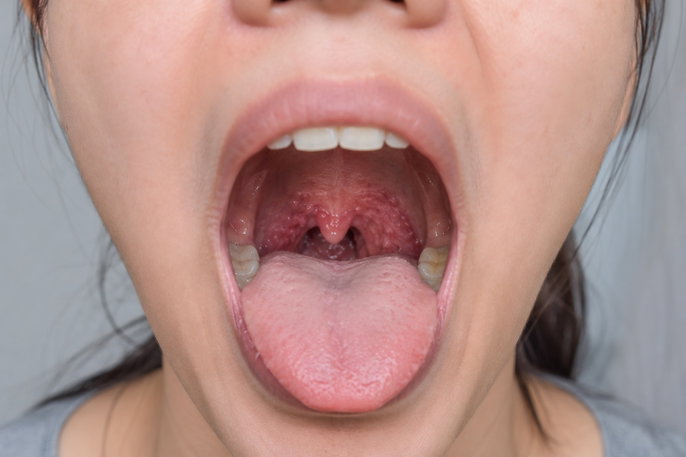
Cobblestone throat is a term used to describe small, raised bumps on the back of the throat. These bumps usually happen when lymph tissue in the throat becomes swollen because of long-term irritation or inflammation.
Cobblestone throat is often linked to postnasal drip, allergies, sinus problems, viral throat infections, acid reflux, dry air or irritants such as smoke. It can cause symptoms like sore throat, throat clearing, cough, hoarseness or the feeling that something is stuck in the throat.
Treatment depends on the underlying cause. A doctor may recommend allergy treatment, nasal sprays, reflux care, infection testing or other measures to reduce irritation in the throat.
Main symptoms
Cobblestone throat mostly looks like small, round bumps on the back wall of the throat, but it may also present with other throat and nose symptoms, such as:
-
Sore throat;
-
Bumps or a “cobblestone” appearance at the back of the throat;
-
Throat clearing;
-
Dry cough or chronic cough;
-
Postnasal drip;
-
Feeling of mucus in the throat;
-
Feeling that something is stuck in the throat;
-
Hoarseness;
-
Runny or blocked nose;
-
Sneezing or itchy nose, especially with allergies;
-
Bad breath, in some cases;
-
Heartburn or acid taste in the mouth, when reflux is involved.
Symptoms may come and go depending on the cause. For example, allergy-related symptoms may worsen during certain seasons, while reflux-related symptoms may be more noticeable after meals or when lying down.
Common causes
Cobblestone throat is usually caused by repeated irritation in the back of the throat, which can be the result of conditions like:
-
Postnasal drip
-
Upper airway cough syndrome
-
Viral throat infections
-
Sinus infections or chronic rhinosinusitis
-
Acid reflux or laryngopharyngeal reflux
-
Dry air, smoke and other irritants
Avoiding triggers can help reduce irritation and prevent symptoms from coming back.
Is cobblestone throat contagious?
Cobblestone throat itself is not contagious. It is a physical sign of irritation or inflammation in the throat.
However, some causes of cobblestone throat can be contagious. Viral respiratory infections, strep throat, mono and some sexually transmitted infections that affect the throat can spread from person to person.
Confirming a diagnosis
Diagnosis is usually made by a doctor through a health history and physical exam. The doctor may look at the back of the throat to check for raised bumps, redness, mucus drainage, swollen tonsils or other signs of inflammation.
The doctor may also ask about symptoms such as cough, throat clearing, nasal congestion, sneezing, heartburn, hoarseness, fever or recent illness. These details help identify whether the most likely cause is allergy, postnasal drip, reflux, infection or another condition.
Further tests may be recommended in some cases. These can include a throat swab for strep, allergy testing, evaluation for sinus disease or referral to an ear, nose and throat specialist if symptoms are persistent, severe or unclear.
Treatment options
Treatment for cobblestone throat depends on the cause. The main goal is to reduce the irritation that is making the lymph tissue in the throat swell.
1. Allergy treatment
When allergies are the cause, treatment may include avoiding known allergens and using allergy medicines. Antihistamines and nasal corticosteroid sprays may be recommended to reduce sneezing, nasal congestion and postnasal drip.
Saline nasal sprays or rinses may also help clear mucus from the nose. Treating nasal allergy symptoms often helps reduce throat irritation.
2. Treatment for postnasal drip
Postnasal drip treatment depends on whether it is caused by allergies, sinus inflammation or non-allergic rhinitis. Nasal sprays, antihistamines, saline rinses or other medicines may be used depending on the suspected cause.
Drinking enough fluids and using a humidifier may help thin mucus. Reducing mucus drainage can help ease cough, throat clearing and the bumpy throat appearance.
3. Care for viral infections
Most viral throat infections improve with supportive care. Rest, fluids, warm drinks and pain relievers may help relieve discomfort.
Antibiotics are not used for viral infections. A doctor may recommend testing if symptoms suggest strep throat or another infection that needs specific treatment.
4. Reflux treatment
When acid reflux is involved, treatment may include changes in eating habits and reflux medicine. Avoiding large meals, not lying down soon after eating and limiting foods that trigger reflux may help.
A doctor may recommend medications that reduce stomach acid. Treating reflux can help reduce throat irritation, hoarseness and chronic throat clearing.
5. Avoiding irritants
Avoiding smoke, vaping, pollution and strong chemical smells can help prevent further throat irritation. Using a humidifier may also help when the air is dry.
These steps are especially helpful when symptoms are triggered by environmental factors. They may also support other treatments, such as allergy or reflux care.
When to see a doctor
Medical evaluation is recommended if cobblestone throat lasts for more than a few weeks, keeps coming back or is associated with worsening symptoms. A doctor should also be consulted if there is high fever, trouble swallowing, trouble breathing, severe throat pain, blood in saliva, unexplained weight loss, a neck lump or symptoms that do not improve with basic care.
A doctor can check for infections that need treatment and rule out other causes of throat changes. This is especially important when symptoms are persistent or one-sided.