


A chemical burn occurs when the skin or eyes come into direct contact with an irritant, such as an acid or a base. Immediate treatment involves removing the substance and rinsing the affected area with cool water for at least 10 minutes to stop the tissue damage.
Common causes of a chemical burn include household cleaners, battery acid, and industrial chemicals like gasoline or paint thinners. Recognizing the symptoms is vital, as redness and intense pain may develop immediately or appear several hours after the initial exposure.
Proper first aid includes covering the site loosely with gauze and using over-the-counter pain relievers like acetaminophen for discomfort. Seeking emergency medical care is necessary if the chemical burn is deep, covers a large area, or affects sensitive regions like the face or hands.
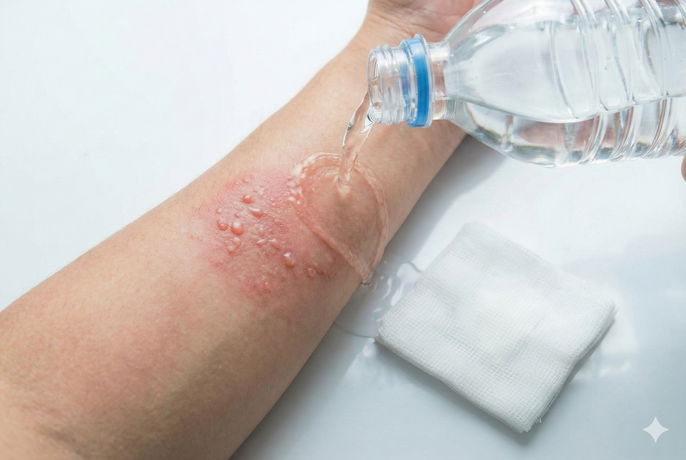
What it looks like
A chemical burn can look different depending on the substance involved and how deep the damage goes. In many cases, the skin immediately turns bright red and may appear irritated or swollen as the body reacts to the chemical.
More severe chemical burns can cause the following visible signs:
-
Blisters or fluid filled sacs that form on the surface of the skin.
-
Areas of skin that look blackened or charred, which often indicates deep tissue damage.
-
Patches of skin that appear unusually white or pale and feel numb to the touch.
-
Peeling or sloughing of the skin where the chemical made direct contact.
-
Changes in vision or severe redness if the chemical has entered the eyes.
It is important to remember that some chemical burns do not show their full extent right away. The skin may look relatively normal at first but can develop deep pain or more significant discoloration several hours after the contact occurred.
First aid for chemical burns
The moment you come into contact with a corrosive chemical substance, the following steps are advised:
-
Remove the chemical substance causing the burn while wearing gloves and using a clean cloth.
-
Take off all clothing or accessories that have been contaminated by the chemical.
-
Hold the affected area under cool running water for at least 10 minutes; in some situations, taking a cool shower may be more efficient.
-
Apply a clean gauze or bandage without wrapping it too tightly. Alternatively, you can loosely cover the area with plastic wrap, ensuring it does not apply pressure.
-
If the burn continues to cause persistent pain, you may use over-the-counter pain relievers like acetaminophen or naproxen to help manage the discomfort.
It is also vital to visit an emergency room so a healthcare provider can assess the severity of the burn and determine if specialized healing ointments or soothing treatments are required.
When to see a doctor
In many instances, minor chemical burns can be managed at home without specific medical intervention. However, you should seek emergency medical care if:
-
You experience systemic symptoms such as fainting, fever, or difficulty breathing.
-
The level of pain and discomfort increases over time rather than subsiding.
-
The burn appears to go deeper than the first layer of skin.
-
The affected area is larger than the palm of your hand.
-
The burn involves the eyes, hands, feet, or genital area.
Hospital-based treatment may involve the administration of IV fluids and, in more severe cases, surgical intervention or plastic surgery may be necessary to reconstruct the damaged skin.
Care after the burn
Following a chemical burn, it is recommended to avoid sun exposure and stay away from intense heat sources, such as ovens or the interior of a hot car.
Additionally, you should apply moisturizer to the area daily. This helps maintain skin hydration and supports the natural healing process.