


- Cerebral hemorrhage is a medical emergency stroke caused by bleeding in or around the brain, often after head trauma.
- Symptoms can include a sudden severe headache, numbness or tingling, vomiting, balance problems, vision changes, seizures, or loss of consciousness.
- Call 911 or go to the emergency room immediately if cerebral hemorrhage is suspected, since rapid treatment can lower the risk of long-term complications.
Cerebral hemorrhage is a type of stroke that happens when a blood vessel in or around the brain ruptures and bleeds, most often an artery. Because the bleeding can quickly raise pressure in the skull, it is considered a medical emergency.
This condition is often triggered by a hard blow to the head. It can cause severe symptoms such as deep loss of consciousness, nausea, vomiting, a slower heart rate, and problems with balance.
If you suspect a cerebral hemorrhage (also called an intracranial hemorrhage), call 911 or get to the nearest hospital right away. Fast diagnosis and treatment can help reduce the risk of long-term complications, such as difficulty walking, speaking, or eating.
Main symptoms
The main symptoms of cerebral hemorrhage include:
-
Severe, sudden headache that can last for days;
-
Numbness or tingling in part of the body;
-
Vomiting;
-
Loss of balance;
-
Hand tremors;
-
Decreased heart rate;
-
Generalized weakness;
-
Vision changes, such as seeing everything very dark, reduced visual field, or blindness;
In more severe cases, sudden epileptic seizures or a deep and prolonged loss of consciousness may occur during which the person is unable to respond to stimuli.
Confirming a diagnosis
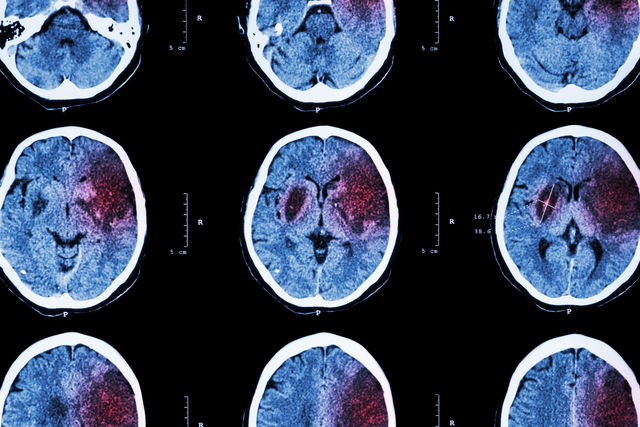
The diagnosis of cerebral hemorrhage is made using imaging tests, such as magnetic resonance imaging (MRI), computed tomography (CT), and angiography, with or without contrast. These tests help identify bleeding and evaluate possible brain injury.
A doctor may also request a lumbar puncture (spinal tap), in which a sample of cerebrospinal fluid is collected. The sample is analyzed in a lab to check for blood.
The most appropriate specialist to confirm a cerebral hemorrhage and recommend the best treatment is a neurologist. However, because this is a medical emergency, anyone with suspected intracranial bleeding should go to the emergency room immediately.
Different types
Cerebral hemorrhage can be classified by where the bleeding occurs:
1. Intraparenchymal or intracerebral hemorrhage
Intraparenchymal hemorrhage is more likely to occur in older adults and happens when bleeding occurs within the brain tissue.
It is the most severe type, but also the most common. It may be related to tumors, clotting disorders, or abnormal blood vessels.
2. Intraventricular hemorrhage
Intraventricular hemorrhage occurs in the brain’s ventricles, which are cavities where cerebrospinal fluid is produced.
This type of hemorrhage most often occurs in premature newborns, usually within the first 48 hours after birth. It can also occur after complications at birth, such as respiratory distress syndrome.
3. Subarachnoid hemorrhage
Subarachnoid hemorrhage usually happens due to a ruptured brain aneurysm, but it can also occur after a blow to the head. It is bleeding into the space between two layers of the meninges: the arachnoid mater and the pia mater.
The dura mater, arachnoid mater, and pia mater make up the meninges, which are membranes that cover and protect the central nervous system.
Subarachnoid hemorrhage generally occurs in people between 20 and 40 years of age.
4. Subdural hemorrhage
Subdural hemorrhage occurs in the space between the dura mater and the arachnoid mater. It is most commonly caused by trauma.
5. Epidural hemorrhage
Epidural hemorrhage occurs between the dura mater and the skull. It is more common in children and teens, usually as a result of a skull fracture.
Main causes
The main cause of cerebral hemorrhage is head trauma from a strong blow to the head.
However, other less common conditions can increase the risk of bleeding, such as:
-
Uncontrolled high blood pressure, which is identified by the American Heart Association as a major risk factor for stroke;
-
Excessive, long-term alcohol use;
-
Drug use, such as cocaine or amphetamines;
-
Cerebral amyloid angiopathy, which involves changes affecting small blood vessels in the brain;
-
Blood disorders, such as thrombocythemia and hemophilia, which can interfere with normal clotting;
-
Use of anticoagulant medications, which reduce blood clotting and may increase bleeding risk;
-
Brain tumors.
Another common cause of cerebral hemorrhage is a cerebral aneurysm, which is a widening (dilation) of a blood vessel in the brain.
This dilation can make the vessel wall thin and fragile, increasing the chance it may rupture and cause bleeding.
Treatment options
Treatment for cerebral hemorrhage must begin as quickly as possible in the hospital. It is often done with surgery to remove blood that is building up inside the skull, which helps lower pressure and reduce the risk of permanent brain injury.
In addition to surgery, a doctor may prescribe medications to control blood pressure, prevent seizures, and treat possible infections.
In more severe cases, blood transfusions may also be recommended.
To improve quality of life after an intracranial hemorrhage and help prevent complications, it is important to work with a physical therapist or an occupational therapist.
Potential complications
After an intracranial hemorrhage, some people may have lasting complications, such as difficulty speaking, swallowing, walking, or doing day-to-day tasks, and some may become paralyzed.
As soon as the first symptoms of cerebral hemorrhage appear, medical care should be sought immediately so treatment can begin. The severity of complications depends on the amount and location of bleeding.
The best way to reduce the risk of cerebral hemorrhage and its complications is to stay physically active and maintain a healthy, balanced diet that is low in fat and salt.