


- Bumps on the skin are often caused by mild conditions like keratosis pilaris, acne, ingrown hairs, or skin allergies, but they can also be linked to shingles, gluten intolerance, or atopic dermatitis. The location, appearance, and associated symptoms help identify the cause.
- Treatment depends on the underlying condition and may include moisturizing creams with urea or salicylic acid, acne products, topical antibiotics, antihistamines, antivirals, or anti-inflammatory medications.
- Medical care is recommended if bumps on the skin are painful, spreading, persistent, infected, or accompanied by fever, intense itching, blisters, or digestive symptoms.
Bumps on the skin can affect both adults and children and are usually caused by mild conditions such as keratosis pilaris, acne, folliculitis, or allergic reactions. In some cases, bumps on the skin may also be linked to infections like shingles or chronic conditions such as atopic dermatitis.
Certain patterns of skin bumps, especially when accompanied by severe itching or digestive issues, may indicate a gluten intolerance. The appearance, location, and related symptoms can help determine the underlying cause.
Treatment for bumps on the skin depends on the cause and may include moisturizing creams, acne products, topical antibiotics, antihistamines, antivirals, or anti-inflammatory medications. A medical evaluation is important when bumps are painful, spreading, persistent, or accompanied by other symptoms.
What causes bumps on the skin?
The most common causes of bumps on the skin are:
1. Keratosis pilaris
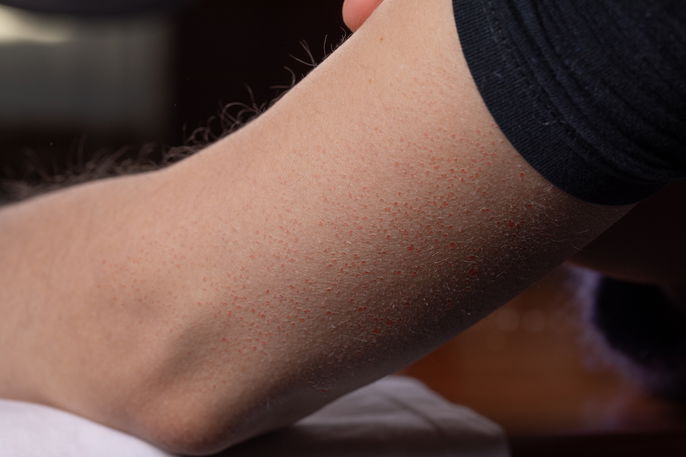
Small bumps that develop on the sides or backs of the arms, or on the buttocks, are often caused by an overproduction of keratin in the skin, a condition known as keratosis pilaris. This is a genetic trait and has no permanent cure. However, if left untreated, the bumps can become irritated or inflamed from contact with dirty hands, which may lead to darkened areas of skin.
How to treat: These bumps often become more noticeable in the summer due to increased sweating and tighter clothing. To help prevent irritation, choose lightweight clothing that allows the skin to breathe.
Avoid exfoliating, as it can aggravate the bumps. Instead, use moisturizing creams containing urea, glycolic acid, or salicylic acid to help remove dead skin cells and keep the skin hydrated.
2. Acne or pimples
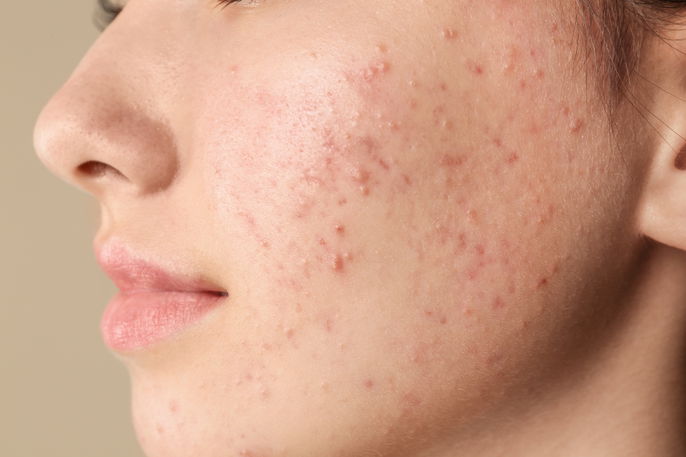
Acne, which appears as red bumps or pimples, most often affects adolescents and young adults. It tends to worsen during the summer and may cause itching, particularly when accompanied by excessive sweating.
How to treat: Use skincare products formulated to treat acne. Look for options that help control sebum production and reduce oiliness to prevent pimples from becoming larger or more inflamed. Avoid squeezing pimples, as this can cause irritation and lead to scars that are difficult to treat.
Also recommended: How to Get Rid of Pimples: Helpful Tips & When to See a Dermatologist tuasaude.com/en/how-to-get-rid-of-pimples3. Ingrown hairs
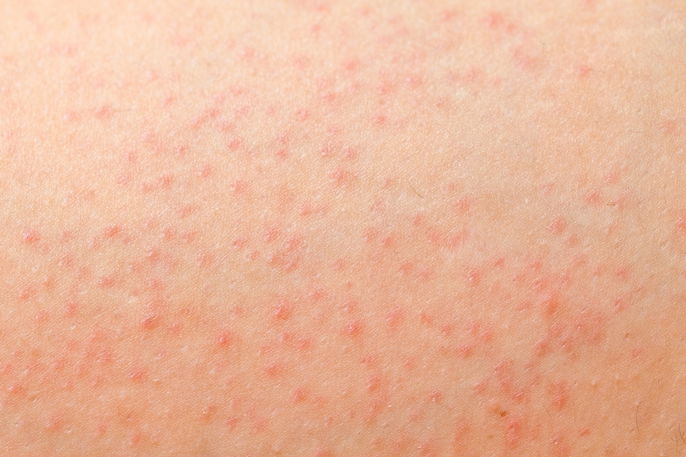
Ingrown hairs, also known as folliculitis, are another common cause of small bumps or lumps on the arms, legs, groin, and armpits. They often develop after shaving but can also occur when tight clothing causes repeated friction against the skin.
How to treat: Exfoliate the skin regularly, especially before hair removal, to help prevent ingrown hairs. Wearing loose-fitting clothing can also reduce irritation and lower the risk of developing them.
If an ingrown hair appears infected, a healthcare provider may prescribe a topical antibiotic to apply for 7 to 10 days.
4. Skin allergy
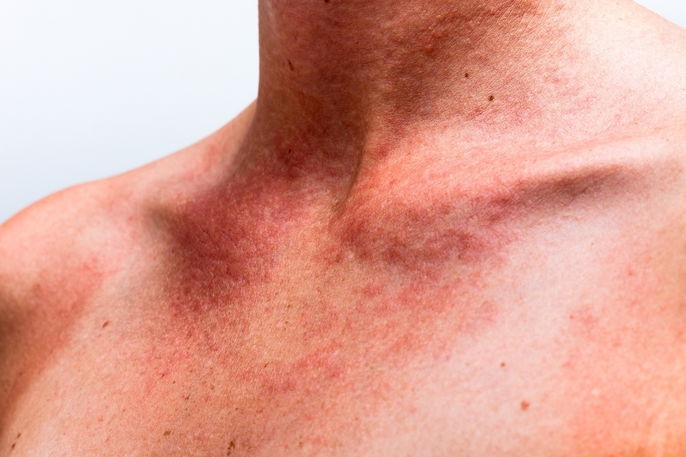
A skin allergy can cause intense itching, often leading to small bumps, scabs, or open sores from scratching. This reaction may be triggered by food allergens, animal dander, certain fabrics, cosmetics, or insect contact.
How to treat: A doctor may recommend an antihistamine such as hydroxyzine or cetirizine to relieve symptoms. Rinse the affected area with water to remove any remaining irritant and soothe the skin. In more severe cases, go to the emergency room, as injectable medication may be necessary.
5. Shingles
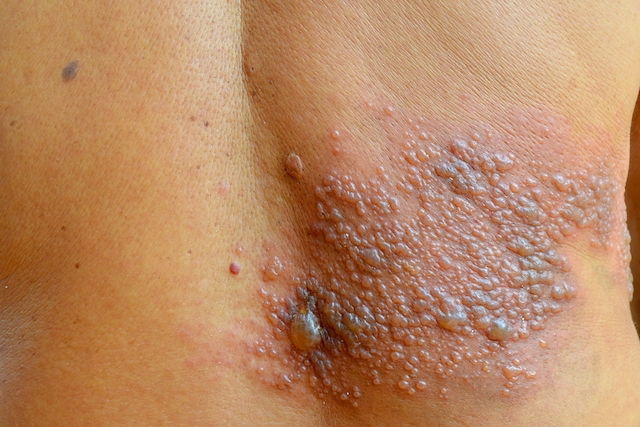
Shingles, also known as herpes zoster, is caused by the same virus that leads to chickenpox. According to the CDC, shingles occurs when the varicella-zoster virus reactivates years after a person has had chickenpox.
The condition is characterized by red bumps that typically appear on the chest, back, or abdomen. These bumps then develop into blisters that can be both itchy and painful.
How to treat: If you suspect you have shingles, see a healthcare provider to confirm the diagnosis. Treatment focuses on reducing the activity of the virus, usually with antiviral medication.
6. Gluten intolerance
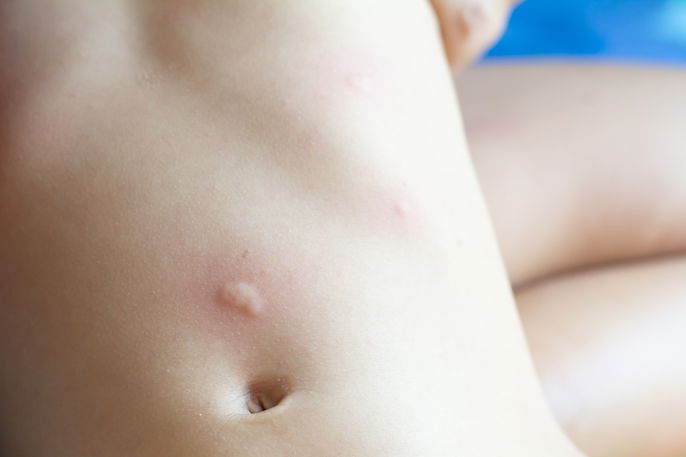
Gluten intolerance typically causes gastrointestinal symptoms, but it can also lead to skin reactions. After consuming gluten, some people develop small, itchy bumps that may burn and later peel.
Also recommended: 18 Most Common Gluten Intolerance Symptoms (w/ Online Quiz) tuasaude.com/en/gluten-intolernace-symptomsHow to treat: A healthcare provider may recommend using ointments or creams to help relieve skin symptoms. However, adopting certain lifestyle habits is important to prevent future flare-ups. You should avoid foods that contain gluten, such as wheat, rye, and barley.
7. Atopic dermatitis
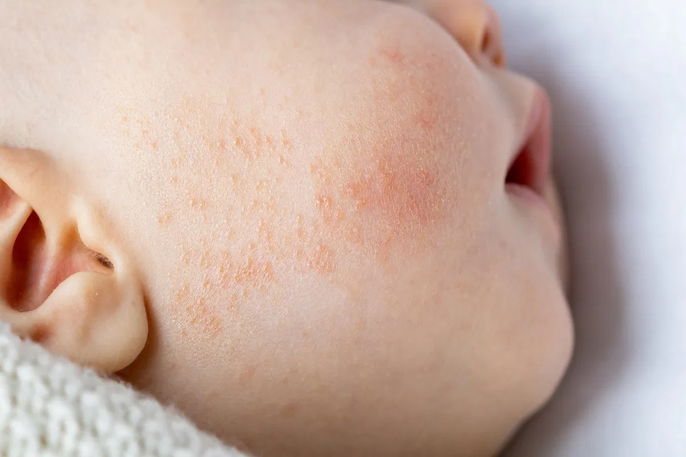
Atopic dermatitis is a chronic skin condition that causes inflammation, leading to dryness, itching, redness, and bumps. According to the American Academy of Dermatology (AAD), atopic dermatitis commonly appears in the folds of the arms and knees in adults and often affects the cheeks and areas around the ears in babies.
How to treat: Treatment depends on the severity of symptoms. The dermatologist may prescribe topical corticosteroid or immunosuppressive ointments, such as betamethasone or tacrolimus, as well as oral corticosteroids, antihistamines, or injections.