


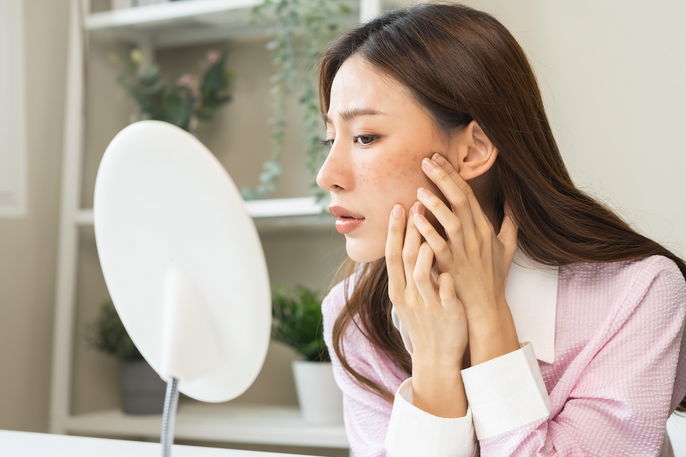
A brown spot on the skin can be caused by melasma, hormonal changes during pregnancy, sun exposure, acanthosis nigricans, scarring after skin injuries, or even skin cancer.
Depending on the cause, a brown spot on the skin may also be accompanied by symptoms such as itching, flaking, or dryness. In some cases, the spot can grow in size or develop a rough texture over time.
Treatment for brown spots should always be managed by a dermatologist and depends on the underlying cause. Options may include skin-lightening creams, chemical peels, dermabrasion, or surgical removal.
Main causes
The main causes of a brown spot on the skin include:
1. Melasma
Melasma is a skin pigmentation disorder that causes brown or grayish-brown patches (hyperpigmentation), mainly on the cheeks, chin, forehead, nose, or upper lip.
This condition is more common in women and is linked to factors such as genetics, hormonal changes, sun exposure, or medications that make the skin more sensitive to sunlight.
What to do: Treatment should be guided by a dermatologist and may involve skin-lightening creams, chemical peels, or dermabrasion. It is also essential to use sunscreen with at least SPF 30 every day, as recommended by a doctor according to your skin type.
Also recommended: Melasma Treatment: 4 Options to Lighten Dark Spots tuasaude.com/en/melasma-treatment2. Sun exposure
Sun exposure without sunscreen can damage the skin and cause light brown, yellowish, or dark brown spots, often referred to as age spots or solar lentigines.
These spots are flat, dry, and have well-defined borders. They often appear in multiples and are most common after age 40, especially on the hands and face.
What to do: Treatment is not usually necessary, but it’s important to use sunscreen with at least SPF 30 daily, even on cloudy days. If the spots are bothersome for cosmetic reasons, a dermatologist may recommend lightening creams, laser therapy, cryotherapy, or chemical peels.
3. Pregnancy
Hormonal changes during pregnancy, especially increased estrogen levels, can stimulate melanin production, the pigment that gives color to the skin, and cause brown spots.
These spots, known as chloasma or pregnancy melasma, are usually light or dark brown and mainly affect the face.
What to do: During pregnancy, it’s important to avoid taking any medications without first talking to your OBGYN or midwife, as some may affect fetal development. Daily sunscreen use is recommended.
A dermatologist or OBGYN may suggest topical treatments such as vitamin C or azelaic acid creams, which are considered safe during pregnancy.
4. Acanthosis nigricans
Acanthosis nigricans causes brown, thick, velvety patches on the skin that may itch and gradually form larger plaques.
This condition is commonly associated with insulin resistance, uncontrolled diabetes, autoimmune diseases, or obesity. The most affected areas are skin folds, such as the neck, armpits, or groin.
What to do: Treatment depends on the cause. People with insulin resistance, diabetes, or obesity should see an endocrinologist. A dermatologist may prescribe retinoid creams, alexandrite laser treatments, dermabrasion, or chemical peels to help lighten the affected skin.
5. Skin injuries
Skin injuries caused by acne, wounds, burns, or chickenpox can leave brown spots after healing.
What to do: These spots usually fade naturally within 4 to 12 months. However, dermatologists may recommend treatments to speed up fading, such as creams with salicylic acid, glycolic acid, or retinoids, as well as chemical peels or laser therapy.
Also recommended: How to Get Rid of Acne Scars: 7 Treatment Options tuasaude.com/en/how-to-get-rid-of-acne-scars6. Fungal infection (tinea versicolor)
Tinea versicolor is a fungal infection caused by Malassezia species that leads to brown, itchy, and flaky patches on the skin. The spots can also appear white or pink.
This condition is more common on the trunk, neck, or arms.
What to do: Treatment should be prescribed by a dermatologist or primary care provider and usually involves antifungal medications in the form of creams, lotions, or oral tablets, depending on the severity of the infection.
7. Lime burn
A lime burn, also called phytophotodermatitis, can lead to itchy brown spots after the initial inflammation from the burn heals.
This happens because limes contain compounds called furocoumarins (such as psoralen), which are absorbed by the skin and react with UV rays from sunlight, triggering an allergic reaction that can cause second-degree burns.
What to do: Once the inflammation has subsided, a dermatologist may recommend lightening creams or pulsed light therapy to help fade the resulting brown spots.
8. Actinic keratosis
Actinic keratosis is a precancerous skin lesion that appears as a rough, raised brown spot, but it may also be yellowish, gray, pink, red, or skin-colored.
These spots may be accompanied by pain, itching, burning, or bleeding. Actinic keratosis develops due to UV damage from frequent sun exposure without proper protection.
What to do: Treatment should always be managed by a dermatologist to prevent the lesion from progressing to skin cancer. Common treatment options include cryotherapy, curettage, or surgical removal.
9. Skin cancer
Skin cancer, especially melanoma, can cause brown spots on the skin that are painless and may have different colors, such as red, blue, black, or white.
Other signs of melanoma include irregular borders, itching or bleeding, and changes in the size, color, or shape of the spot over time.
Also recommended: What Melanoma Looks Like (with Pictures): 5 Signs tuasaude.com/en/what-melanoma-looks-likeWhat to do: Treatment for melanoma should be managed by an oncologist and usually involves surgical removal of the tumor. Depending on the stage, radiotherapy, chemotherapy, or immunotherapy may also be recommended.
When to see a doctor
You should consult a dermatologist if a brown spot on your skin shows any of the following characteristics:
-
A sore or spot that doesn’t heal within 4 weeks;
-
Increase in size over time;
-
Itching, flaking, or bleeding;
-
Formation of crusts or ulcers;
-
Asymmetric borders or multiple colors.
Your healthcare provider will evaluate the spot through a physical exam and may also perform a Wood’s lamp examination or a skin biopsy to identify the cause and recommend the best treatment.