


Blurry vision is a relatively common symptom in people who already have a vision problem, like myopia or hypermetropia. In these cases, it is generally advised to correct vision with prescription lenses as guided by an ophthalmologist.
If blurry vision appears suddenly, however, it may be a sign of another health condition, like conjunctivitis, cataracts or diabetes.
If you experience blurry vision suddenly that does not improve within a few minutes, or if it is accompanied by other symptoms like burning in the eyes or tearing, you should seek medical attention.
Causes of blurry vision
Blurry vision can be caused by a variety of conditions, ranging from common refractive errors to serious systemic or neurological issues. Below are the most frequent causes, their symptoms and treatment options.
1. Myopia or hypermetropia
Myopia or hypermetropia are two of the most common vision problems. Myopia is characterized by the inability to see clearly at a distance, while hypermetropia is the inability to see clearly up close.
These vision issues can cause blurry vision if left uncorrected and may lead to other symptoms like constant headache, easy fatigue and the need to squint frequently. Astigmatism, another refractive error, can also cause blurry vision at all distances due to an irregular curvature of the cornea or lens.
What to do: You should consult an ophthalmologist to complete vision testing to ensure what the underlying vision problem is. From there, treatment can start with glasses, contact lenses or even surgery such as LASIK, which reshapes the cornea and has high success rates in appropriate candidates.
2. Presbyopia
Presbyopia is another frequent vision problem that is particularly seen in people over the age of 40. It is characterized by the difficulty to focus on objects or texts up-close. Normally, people with this vision issue need to hold books or magazines far away so that their eyes can focus clearly on the letters. This condition affects all adults by age 50 and tends to be more severe in women.
What to do: Presbyopia can be confirmed by an ophthalmologist and is usually corrected with prescription reading glasses or bifocal lenses.
3. Conjunctivitis
Another common condition that can cause blurry vision is conjunctivitis. This is an easily-transmitted eye infection that can be caused by a virus, bacteria or fungus. Other symptoms of conjunctivitis, also known as "pink-eye," include red eyes, itchiness, the sensation of sand in the eyes and crusting discharge. Blurry vision in these cases is generally related to corneal inflammation or discharge interfering with clear vision.
What to do: It is important to identify the type of infection present to determine the need for an antibiotic ointment or eyedrops, like tobramycin or ciprofloxacin. Viral conjunctivitis usually resolves on its own, but bacterial forms often require topical treatment.
Read more about pink eye treatment that you doctor may prescribe.
4. Uncontrolled diabetes
Blurry vision may be a complication of poorly-managed diabetes. It is referred to retinopathy, which is a breakdown of the retina, blood vessels and nerves around the eye. This occurs when diabetes and blood sugar levels are not well-controlled. Diabetic retinopathy progresses through multiple stages and can lead to permanent vision loss if untreated.
What to do: If you have been diagnosed with diabetes, it is essential that you maintain a healthy diet without processed foods and sugar. You should take all medication as directed by your doctor. In some cases, treatment may include laser photocoagulation or injections with anti-VEGF agents.
If you do not have diabetes, but suspect that you might (due to symptoms like frequent urination or excessive thirst), you should consult your doctor.
5. High blood pressure
Although it is less likely, high blood pressure can also cause blurry vision. High blood pressure can lead to a block in the blood vessels in the eyes, which can affect vision. Although it may not cause pain, many people may notice blurry vision when waking up, especially in just one eye. Severe cases may result in hypertensive retinopathy or even swelling of the optic nerve.
What to do: If you suspect you have blurry vision due to high blood pressure, you should proceed immediately to the hospital or see a doctor urgently. Many times, this condition can be treated with aspirin or another blood-thinner, but long-term management requires controlling your blood pressure.
6. Cataracts or glaucoma
Cataracts or glaucoma are vision problems that are related to age and emerge over time. These conditions are particularly seen in adults over the age of 50. Cataracts may be easier to identify, as they are associated with a white film over the eye and gradual clouding of vision.
Glaucoma, however, is associated with other symptoms, like intense eye pain, peripheral vision loss, and optic nerve damage due to high intraocular pressure.
What to do: If you suspect you may have a vision condition, you should see an ophthalmologist to confirm a diagnosis and start treatment as necessary. Treatment may include the use of specific eye-drops, surgery, or in the case of cataracts, lens replacement surgery which has very high success rates.
7. Computer vision syndrome
Prolonged use of screens can lead to digital eye strain, or computer vision syndrome. This condition causes symptoms like blurry vision, dry eyes, eye fatigue, and headaches. It results from reduced blinking and accommodative stress during screen use. People with uncorrected refractive errors are more susceptible.
What to do: Treatment includes lifestyle adjustments such as the 20-20-20 rule (every 20 minutes, look at something 20 feet away for 20 seconds), using artificial tears, proper screen positioning, and adequate lighting.
8. Age-related macular degeneration
Blurry vision, especially in the central field of view, can also be a symptom of age-related macular degeneration (AMD). This condition is a leading cause of severe vision loss in people over 50 and may cause visual distortion and difficulty reading or recognizing faces.
What to do: There is no cure for AMD, but progression can be slowed with antioxidant supplements, healthy diet (such as the Mediterranean diet), and in some cases, anti-VEGF injections.
How blurry vision is diagnosed
Diagnosing blurry vision involves a comprehensive eye examination and specific tests that help determine the underlying cause.
A detailed medical history is usually followed by visual acuity testing using standardized charts like the Snellen or logMAR chart. A pinhole test may be used to differentiate between refractive errors and other causes.
Other common tests include:
-
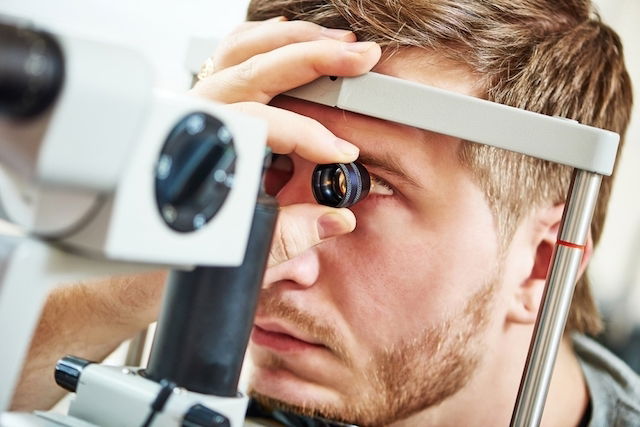
Slit-lamp examination, to inspect the front parts of the eye
-
Optical coherence tomography (OCT), to view detailed images of the retina and optic nerve
-
Visual field testing, to detect glaucoma or neurological issues
-
Tonometry, to measure intraocular pressure and diagnose glaucoma
These diagnostic tools help ophthalmologists identify whether blurry vision stems from a refractive error, a retinal disorder, or a more serious condition.
Treatment for blurry vision
Treatment for blurry vision depends on the underlying cause and can include medical, surgical, and lifestyle strategies.
-
Corrective lenses: Glasses or contact lenses are the first-line treatment for refractive errors
-
Medications: Antibiotics for bacterial conjunctivitis, anti-inflammatory drugs, or anti-VEGF injections for diabetic retinopathy and macular degeneration
-
Surgery: LASIK for myopia, cataract removal and intraocular lens implantation, or glaucoma surgery when needed
-
Artificial tears: Helpful for dry eyes, especially when used consistently throughout the day
-
Lifestyle adjustments: Include screen-time breaks, dietary changes (like increasing omega-3 and leafy greens), smoking cessation, and using UV-protective sunglasses
You are encouraged to speak to your healthcare provided about the best treatment approach for you.