


The blue dragon (Glaucus atlanticus) is a small sea slug that floats on the ocean’s surface. Despite its striking colors, it can cause a painful sting when it touches the skin. This happens because it stores the stinging cells from the jellyfish it eats, such as the Portuguese man o’ war.
The most common symptoms of a blue dragon sting include pain, redness, and swelling at the site of contact. In rare cases, dizziness, vomiting, or difficulty breathing may also occur.
Treatment depends on the species and the region where the sting takes place. The main goals are to ease pain, prevent more toxins from being released, and seek medical attention if symptoms become severe.
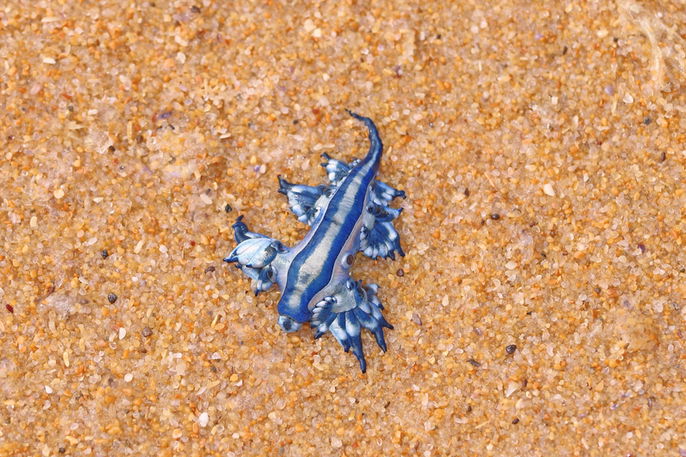
Symptoms of a blue dragon sting
The main symptoms of a blue dragon sting are:
-
Sharp pain or burning in the affected area
-
Redness and visible marks on the skin
-
Local swelling and itching
-
In some cases, general discomfort, nausea, or headache
The severity depends on the amount of contact and a person’s sensitivity. Most reactions are mild, but the risk is higher for children, people with allergies, and those with preexisting health conditions.
Prevention and precautions
You can prevent a blue dragon sting by avoiding contact with the animal in areas where it is often found, especially in waters where Portuguese man o’ war are also present.
It is important not to touch a blue dragon, even if it looks harmless or has washed up on the sand, because its toxins remain active even after it dies. As a precaution, wear sandals when walking along the shore and avoid handling unknown sea creatures.
Medical attention is recommended after any sting, since symptoms can vary widely depending on individual sensitivity.
What to do after a blue dragon sting
Some first aid measures can help relieve pain and reduce complications:
-
Use tweezers or gloves to remove any remains of the animal, without rubbing the skin
-
Do not use fresh water or rub the area with sand or towels
-
Rinse the affected area with seawater
-
If possible, soak the area in hot water (104–113 °F / 40–45 °C) for 20 minutes, as heat often eases pain
After these steps, monitor symptoms closely. If the pain is severe or other general symptoms appear, it is best to see a doctor.
Treatment options
Medical treatment for a blue dragon sting usually focuses on relieving pain with pain relievers and reducing swelling and itching with corticosteroid or antihistamine creams.
Keeping the area in hot water may also be recommended, as long as it helps with discomfort.
It is important to watch for signs of a severe allergic reaction, such as trouble breathing or swelling of the face and lips. In rare cases, a sting can cause a life-threatening reaction called anaphylaxis, which requires immediate emergency care.
When to see a doctor
Seek medical attention if:
-
Pain does not improve with initial care
-
Nausea, vomiting, dizziness, or a severe headache develops
-
Hives appear in other parts of the body or breathing becomes difficult
People at higher risk, including children, older adults, pregnant women, and those with chronic health conditions, should also see a doctor to determine whether additional treatment is needed.