


- Blepharoplasty can improve droopy eyelids, under-eye bags, and in some cases vision blocked by excess upper eyelid skin.
- The procedure is usually outpatient, takes about 40 minutes to 1 hour, and recovery typically takes around 2 weeks.
- Swelling and bruising are common after surgery, while serious complications are rare and final results are usually seen after about 3 months.
Blepharoplasty is a plastic surgery procedure used to treat droopy eyelids by removing excess skin and/or fat from the eyelids. It can also reposition the eyelids to help reduce a tired or aged appearance.
This surgery may be done on the upper eyelid, lower eyelid, or both. In some cases, Botox may also be used along with blepharoplasty to improve cosmetic results, or a facelift may be done to create a younger-looking appearance.
Blepharoplasty is performed by an oculoplastic surgeon in a hospital and usually does not require an overnight stay. Early results may be seen about 15 days after surgery, but the final result is usually only fully visible after 3 months.
Indications for surgery
Blepharoplasty may be indicated for:
-
Droopy upper eyelids
-
Partial blockage of peripheral vision due to excess skin on the upper eyelids
-
Bags under the eyes
-
Excess skin or fat on the lower or upper eyelids
-
Sagging skin or muscles in the upper eyelids
-
A lower eyelid that turns outward, as if it is drooping, called eyelid ectropion
This surgery can remove excess skin or fat from the upper or lower eyelids or reposition fat deposits. According to the American Academy of Ophthalmology, drooping upper eyelids can interfere with vision, and blepharoplasty may be done to improve that obstruction as well as the appearance of the eyelids.
It is usually recommended after age 40, when signs of aging become more noticeable due to loss of skin elasticity.
Although it is more commonly performed in older adults with visible signs of aging, blepharoplasty can also be done in younger people when the problem is related to genetic factors.
How to prepare
To prepare for blepharoplasty, it is important to discuss any questions you have with the surgeon about the procedure, recovery, and expected results. You should also complete all tests requested by the doctor.
You should also tell the doctor about all medications, vitamins, and dietary supplements you are taking, as well as any allergies or health conditions you have.
It is also recommended to avoid smoking for at least 2 weeks before surgery and to stay out of the sun.
On the day before surgery, you should avoid alcohol and follow all fasting instructions as directed by your doctor.
Procedure steps
Blepharoplasty should be performed by a plastic surgeon or an ophthalmologist specialized in oculoplastic surgery to ensure eye health is protected throughout the procedure.
To perform the surgery, the doctor generally follows these steps:
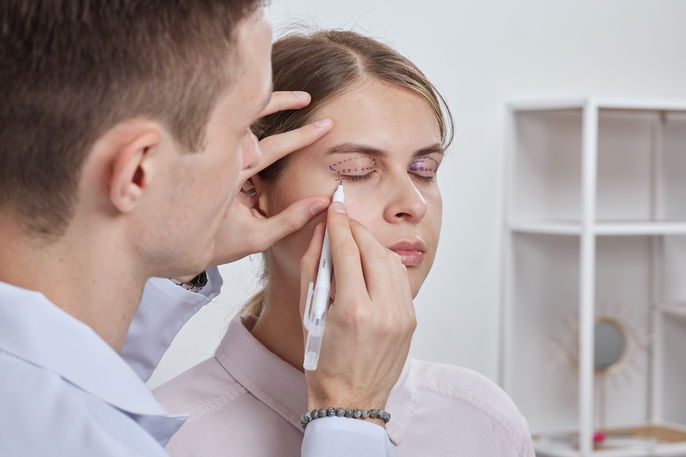
- Marks the area to be treated, which may include the upper eyelid, lower eyelid, or both
- Makes incisions in the marked areas, removes excess skin, fat, and muscle, and then closes the skin with stitches, which is known as classic blepharoplasty
- Closes the incisions and applies Steri-Strips over the sutures, which are adhesive strips placed on the skin and do not cause pain
The scar from classic blepharoplasty is usually small and thin. It is often hidden in the natural folds of the skin or under the eyelashes, so it is usually not noticeable.
This cosmetic surgery usually takes about 40 minutes to 1 hour. It is usually done under local anesthesia, although some people may prefer general anesthesia.
After the procedure, the person may stay in the hospital for a few hours while the anesthesia wears off. They are then discharged with instructions that should be followed carefully.
Transconjunctival blepharoplasty
In younger people without excess skin, transconjunctival surgery may be an option. In this procedure, the incision is made inside the lower eyelid, so there is no visible scar, and the excess fat is removed.
When there is excess skin, classic blepharoplasty is usually recommended.
Non-surgical blepharoplasty
Non-surgical blepharoplasty is done using a plasma jet, which is an aesthetic treatment that causes controlled burns on the eyelid skin. This makes the skin tighten and can improve the appearance of the eyelids.
Another technique used for non-surgical blepharoplasty is a CO2 laser, which stimulates collagen production in the eyelids and helps firm and rejuvenate the area.
Non-surgical, scar-free blepharoplasty is usually recommended for people who do not want to have eyelid plastic surgery.
Postoperative period
After blepharoplasty, it is common to have facial swelling, purple marks, and small bruises. These usually go away within about 8 days after surgery.
It is also possible to have intense itching, eyelid swelling, and a rounded eye appearance, which may happen if too much skin is removed from the lower eyelid.
Although rare, blurred vision and light sensitivity may occur during the first 2 days. Serious complications are very rare with this type of surgery, and scars are usually barely noticeable.
Recovery time
Recovery from blepharoplasty takes about 2 weeks on average, and during this period it is recommended to:
-
Apply cold compresses over the eyes to reduce swelling
-
Use eye drops, ophthalmic ointments, or oral pain relievers as directed by the doctor
-
Sleep on your back with a pillow supporting your neck and upper body, keeping your head higher than the rest of your body
-
Wear sunglasses when going outside to protect your eyes from sunlight
-
Avoid eye makeup, swimming, lifting heavy objects, or doing aerobic exercise
-
Do not wear contact lenses and do not smoke
-
Always apply sunscreen so the scars do not become darker
These precautions should be followed for up to 15 days after surgery. A follow-up visit with the doctor is also needed to remove the stitches.
To help support recovery and return to daily activities sooner, your doctor may recommend therapies such as manual lymphatic drainage or other rehabilitation techniques to reduce swelling and improve bruising, when appropriate.
Blepharoplasty before and after
Before blepharoplasty, a person will usually have excess skin on the eyelids or bags under the eyes. After blepharoplasty, the eyelids usually look firmer and less droopy, and under-eye bags are reduced, giving a more youthful appearance.
To compare the results before and after blepharoplasty, the doctor will usually take photos so the outcome can be evaluated.
Possible complications
Complications of blepharoplasty may include infection, bleeding at the surgical site, dry eye, and eyelid discoloration.
According to the American Society of Plastic Surgeons, other possible risks include temporary blurred vision, difficulty fully closing the eyes, eyelid malposition, scarring, drooping or retraction of the upper eyelid, and, rarely, vision loss.
Risk of regret
Some people may regret having blepharoplasty, especially if they do not follow postoperative care instructions properly, which can affect the final results.
Because the results are long-lasting, it is important to discuss expectations with the doctor before having the procedure.
In other cases, some people may wish they had undergone blepharoplasty sooner, since it can create a more rejuvenated appearance.
Long-term results
Blepharoplasty is a surgery with long-lasting results, but it does not stop the skin from aging naturally over time.
Because of this, it is important to continue daily skin care, such as moisturizing and using sunscreen every day, to help prevent droopy eyelids and under-eye bags from returning.
