


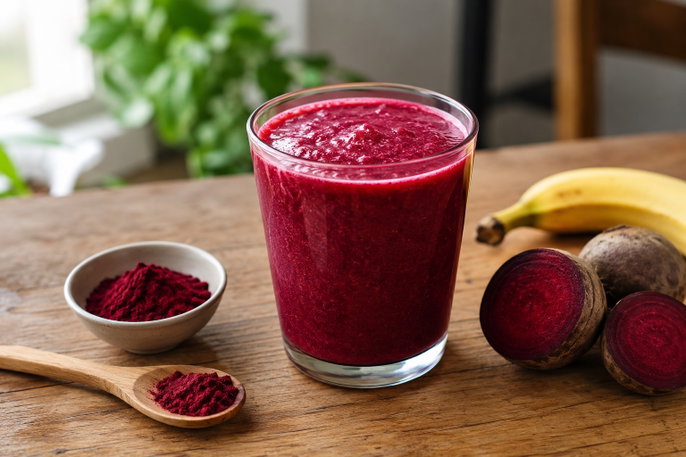
Beet root powder is made from dried red beets that are ground into a fine powder. It is commonly mixed into drinks, smoothies, sauces, and baked foods for its earthy taste, natural color, and nutrients.
Beets naturally contain nitrates, betalains, fiber, minerals, and plant compounds. These substances may support blood flow, exercise performance, antioxidant activity, and general heart health.
Beet root powder is not a medicine and should not replace treatment for high blood pressure, diabetes, kidney disease, or any other health condition. Its effects can vary depending on the product, dose, nitrate level, and overall diet.
Health benefits
Beet root powder may contain health benefits such as:
1. May help lower blood pressure
Beetroot contains nitrates, which the body can convert into nitric oxide. Nitric oxide helps blood vessels relax and widen, which may support better blood flow and lower blood pressure in some people.
This effect may be more noticeable in people with high blood pressure or older adults. However, not all studies show the same benefit, especially in adults with normal blood pressure.
2. May improve exercise performance
Beetroot-based supplements may help improve muscular endurance and strength, especially during fatigue. This may happen because nitrates can improve oxygen use and muscle efficiency during physical activity.
Studies have used different forms of beetroot, including juice and powder. Benefits may depend on the nitrate dose, type of exercise, training level, and timing of intake.
3. May support heart and blood vessel health
The nitrate-nitrite-nitric oxide pathway may help support healthy blood vessel function. Beetroot also contains antioxidants that may help protect blood vessels from oxidative stress.
Some research suggests beetroot products may help reduce arterial stiffness at rest. However, the effects are not always strong, and beetroot powder should be seen as a supportive food rather than a treatment.
4. May have antioxidant effects
Beetroot contains betalains, which are natural pigments that give red beets their deep color. Betalains and other plant compounds may help reduce oxidative stress in the body.
Oxidative stress is linked to cell damage and inflammation. Eating antioxidant-rich foods, including beetroot products, may help support overall health as part of a balanced diet.
5. May help reduce inflammation
Beetroot contains bioactive compounds with possible anti-inflammatory effects. These include betalains, polyphenols, and other antioxidants.
This may be one reason beetroot is studied for cardiovascular, metabolic, inflammatory, and gastrointestinal conditions. More research is still needed to understand how much beetroot powder is needed for these effects.
6. May support blood sugar control
Red beetroot products have been studied for their possible effects on glycemic profiles. Some research suggests beetroot may help support metabolic health, but the evidence is still developing.
Beet root powder should not replace diabetes medication or a diabetes eating plan. Products may also differ in carbohydrate content, so nutrition labels should be checked when blood sugar control is important.
7. May support digestive health
Beetroot contains fiber, and fiber helps support normal bowel function. Fiber can also help with fullness and may support a healthy gut when eaten as part of a varied diet.
Beetroot has also been studied for possible gastrointestinal effects. However, beetroot powder usually contains a smaller amount of fiber per serving than whole beets.
Overall, beet root powder may be a practical way to add beet compounds to the diet, but product quality and nitrate content can vary widely.
Nutritional information
Beet root powder is a concentrated form of dried beetroot, so its nutrient levels can vary from one product to another. The final composition depends on the type of beet used, how it is dried, how finely it is processed, and whether it is sold as a regular food powder or a more concentrated extract.
In general, beet root powder contains natural carbohydrates and small amounts of fiber. It may also provide minerals such as potassium and iron, as well as folate, vitamin C, and other micronutrients naturally found in red beets.
Beet root powder also contains plant pigments called betalains, which are responsible for its red-purple color. The amount of betalains can vary by product and may decrease with processing or storage.
Some beet root powder products are made to contain higher nitrate levels, while others are mainly intended for cooking, color, or flavor. For this reason, the nutrition facts label and supplement facts label should be checked to understand what each product provides per serving.
Recommended daily dose
There is no single standard daily dose for beet root powder. A practical food-based serving is often around 2 teaspoons, or 5 g, but research studies and supplement products use different amounts.
For exercise performance, studies on beetroot-based supplements have used nitrate doses of about 316 to 985 mg per day. Some technical sources suggest sports-nutrition servings that provide about 300 to 400 mg of nitrate, which may require around 15 to 20 g of powder depending on the nitrate concentration.
Because nitrate content can vary greatly between powders, dose should be based on the product label rather than powder weight alone. People with medical conditions or those taking medication should seek medical guidance before using beet root powder regularly.
Ways to eat it
Beet root powder can be mixed into water, juice, or smoothies. It has an earthy flavor and a strong red color, so small amounts are often enough for drinks and recipes.
It can also be stirred into yogurt, oatmeal, pancake batter, salad dressings, sauces, soups, or homemade energy bites. In baked goods, it may add color and a mild beet flavor.
Beet root powder may also be sold in capsules or as part of sports supplements. These products can be more concentrated than culinary beetroot powder and may provide different nitrate amounts.
Possible side effects
Beet root powder may turn urine or stool pink, red, or purple. This is called beeturia and is usually harmless.
Some people may have bloating, gas, stomach discomfort, or changes in bowel habits after taking beetroot products. This may be more likely when larger amounts are used.
Beetroot products may lower blood pressure in some people. This can cause dizziness or lightheadedness, especially in people who already have low blood pressure or who take blood pressure medication.
Beetroot is also a source of oxalates. High oxalate intake may be a concern for people who are prone to certain kidney stones.
Beetroot-based supplements can vary in quality. Some products may differ in nitrate level, mineral content, betanin content, and possible contaminants.
Contraindications for use
People with low blood pressure should be cautious with beet root powder because it may lower blood pressure further. This is especially important for people who feel dizzy easily or who take medication for hypertension.
People with a history of kidney stones should avoid high intakes of beetroot products unless approved by a healthcare professional. Beetroot contains oxalates, which may increase the risk of oxalate kidney stones in susceptible people.
People with kidney disease should speak with a healthcare professional before using beetroot powder regularly. Beetroot contains minerals such as potassium, and mineral intake may need to be controlled in some kidney conditions.
Pregnant people should not use beetroot powder as a treatment for high blood pressure in pregnancy. Research is still being studied in this area, and pregnancy-related hypertension needs medical care.
People taking medications for blood pressure, heart disease, kidney disease, or diabetes should check with a healthcare professional before using beet root powder as a supplement. This is important because beetroot products may affect blood pressure and may be used alongside other treatments.
Recipes with beet root powder
You can incorporate beet root powder into the following recipes:
1. Beetroot smoothie
Ingredients:
-
1 banana
-
1 cup milk or unsweetened plant-based milk
-
1 to 2 teaspoons beet root powder
-
½ cup plain yogurt
-
1 tablespoon oats
Preparation:
Blend all ingredients until smooth. Serve cold.
2. Beetroot yogurt bowl
Ingredients:
-
1 cup plain yogurt
-
1 teaspoon beet root powder
-
½ cup berries
-
1 tablespoon chia seeds or oats
-
1 teaspoon honey, optional
Preparation: Mix the beet root powder into the yogurt until the color is even. Add the berries, chia seeds or oats, and honey if using.
3. Beetroot salad dressing
Ingredients:
-
2 tablespoons olive oil
-
1 tablespoon vinegar or lemon juice
-
1 teaspoon beet root powder
-
1 teaspoon mustard
-
Black pepper to taste
Preparation: Whisk all ingredients until smooth. Use over salads, cooked vegetables, or grain bowls.
4. Beetroot pancakes
Ingredients:
-
1 cup pancake mix or oat flour
-
1 egg
-
¾ cup milk or unsweetened plant-based milk
-
1 to 2 teaspoons beet root powder
-
1 teaspoon baking powder, if using oat flour
Preparation: Mix all ingredients until a batter forms. Cook small pancakes in a lightly greased pan over medium heat until both sides are set.