


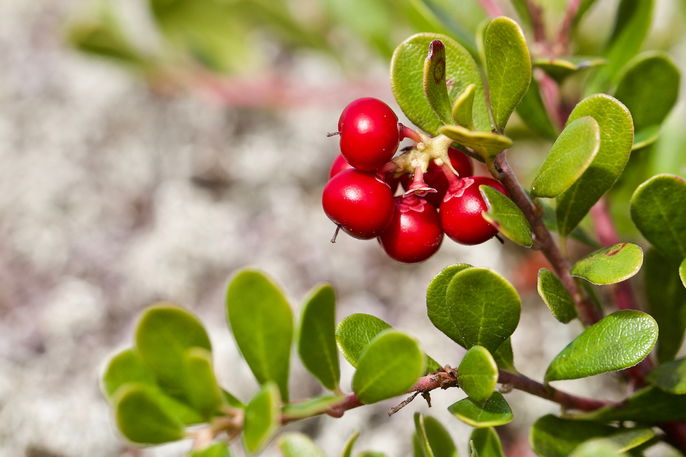
Bearberry is a medicinal plant commonly used to support the treatment of urinary tract infections, kidney stones, and acute diarrhea. This low-growing shrub contains antibacterial, anti-inflammatory, antiseptic, and diuretic properties that help explain its traditional use.
The leaves of bearberry, from plants in the Arctostaphylos species, are the main part used for medicinal purposes. These leaves are processed to prepare tea, capsules, tinctures, or poultices, depending on the condition being treated.
Bearberry products are available in health food stores and compounding pharmacies, but they are not meant to replace medical treatment. Because improper use can cause side effects, bearberry should be taken only with guidance from a doctor or a medicinal plant specialist.
Health benefits
Bearberry is a medicinal plant traditionally used to support urinary, digestive, and skin health. Its effects are mainly attributed to compounds such as arbutin, flavonoids, tannins, hydroquinones, and ursolic acid, which provide antibacterial, anti-inflammatory, antiseptic, and diuretic actions.
1. Helps treat urinary tract infections
Bearberry is commonly used to support the treatment of urinary tract infections, including cystitis and urethritis. Arbutin is converted in the urine into hydroquinone, a substance with antibacterial activity that helps reduce the growth of bacteria in the urinary tract.
2. Supports kidney stone elimination
Due to its diuretic properties, bearberry increases urine production, which may help flush the urinary system. This effect can support the elimination of small kidney stones and help prevent mineral buildup.
3. Helps reduce kidney inflammation
Bearberry may assist in cases of kidney inflammation, such as pyelitis, by helping reduce swelling and irritation in the urinary system. Its anti-inflammatory compounds contribute to this supportive effect.
4. Improves urinary symptoms linked to an enlarged prostate
By promoting urine flow and reducing urinary irritation, bearberry may help ease urinary discomfort associated with an enlarged prostate, especially symptoms like difficulty urinating or frequent urination.
5. Helps relieve uterine cramps
The anti-inflammatory and antispasmodic properties of bearberry may help reduce uterine cramps. This makes it a traditional option for managing menstrual discomfort.
6. Aids in treating skin abscesses and boils
When applied externally as a poultice, bearberry leaves may help treat abscesses and boils. Its antiseptic and antibacterial properties can support skin healing and help prevent infection.
7. Supports vaginal health
Bearberry’s antiseptic properties may help support the treatment of vaginitis by reducing the growth of harmful microorganisms, especially when used under professional guidance.
8. Helps manage acute diarrhea
The tannins found in bearberry have astringent properties that may help reduce intestinal inflammation and fluid loss, supporting the management of acute diarrhea.
Although bearberry offers several potential health benefits, it should not replace medical treatment. Its use should always be guided by a doctor or a medicinal plant specialist, as excessive or prolonged use may cause side effects.
Can bearberry lead to weight loss?
Bearberry does not influence weight loss, as it has no effect on the elimination and reduction of body fat.
However, as it has a naturally diuretic action and triggers the elimination of water from the body. This can give the false sensation of weight loss.
How to use
The bearberry leaves can be used to prepare tea, a poultice, capsules or tincture, for example.
1. Bearberry tea
Bearberry tea increases urine elimination, and can cleanse the urinary tract and reduce swelling. It can be prepared to treat cystitis, urethritis, kidney stones or kidney inflammation.
This tea has antimicrobial activity, and can reduce the growth of microorganisms like E. coli bacteria that cause infections in the bladder, urethra and kidneys. It is a great home remedy the treatment of urinary tract infections.
Ingredients
- 2 tablespoons of dried bearberry leaves
- 1 liter of water
Directions
Boil the water and bearberry leaves for approximately 15 minutes. Strain and drink while warm 2 to 3 cups a day, for a maximum of 5 days. Do not repeat this treatment more than 5 times a year.
Also recommended: Home Remedies for UTI: 11 Teas, Juices & Natural Treatments tuasaude.com/en/home-remedies-for-uti2. Bearberry capsules
Bearberry can also be found in the form of capsules, in compounding pharmacies or health food stores. They are prepared with the dry extract of this medicinal plant.
Doses may vary depending on the amount of dry extract in the capsule composition. The recommended dose is about 1 to 6 g of bearberry per day, for a maximum of 7 days.
Therefore, for 500 mg bearberry capsules, the recommended dose is one capsule, taken up to 3 times a day. As for the 350 mg capsules, the recommended dose is 2 capsules in the morning and 2 capsules in the afternoon.
Bearberry capsules should only be taken as guided by a doctor or medicinal plant specialist, as dosing can vary depending on the condition being treated.
3. Bearberry tincture
A bearberry tincture in a 20% concentrated solution is administered through 20 drops diluted in water, taken twice a day.
The use of the tincture should only be done as guided by a doctor
4. Bearberry poultice
A bearberry poultice can be used to treat skin abscesses or boils.
Ingredients
- Bearberry leaves
Directions
Crush the bearberry leaves and add a small amount of water. Then apply this mixture over the area of the skin with an abscess or boil.
Possible side effects
Bearberry can cause side effects when used in larger amounts than recommended. High doses can lead to ringing in the ears, nausea, vomiting, irritability, insomnia, feeling short of breath, or seizures.
Furthermore, when used in excess, bearberry can cause liver poisoning, due to the hydroquinones present in its composition.
Contraindications for use
Bearberry should not be used by children under 12 years of age, pregnant or breastfeeding women, or by anyone with a history with stomach problems such as gastritis or ulcers, for example.